Manuela Funes


Other projects

The artisanal fisheries of Mar del Plata, located along the southeastern coast of Buenos Aires, Argentina, have undergone rapid and largely undocumented growth in recent years. Two distinct small-scale fisheries — kayak fishing and inflatable boat fishing — have emerged and expanded within a 3 nautical mile radius of the coast, driven in part by subsistence needs during the pandemic and a growing local market for fresh seafood.
Despite their increasing socioeconomic importance, these fisheries operate outside existing regulatory frameworks, in an area identified as having the highest climate risk index along the Buenos Aires coast, and with one of their primary target species classified as Critically Endangered by the IUCN.
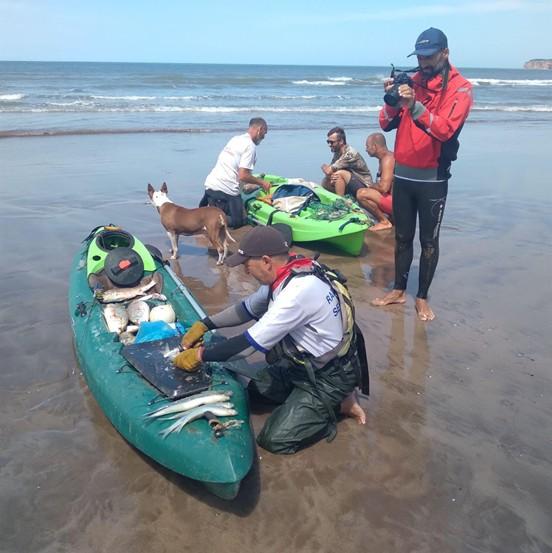
Artisanal fishers display their catch on the shore of Mar del Plata, drawing the interest of tourists and local residents — reflecting the growing public connection with fresh, locally caught seafood. (c) Alejo J. Irigoyen
This project aims to characterize the interaction between these small-scale fisheries and elasmobranch species — including sharks, rays, and guitarfishes — several of which are threatened or endangered. The fisheries are known to capture up to six species of conservation concern: the Narrownose Smoothhound (Mustelus schmitti), the Brazilian Guitarfish (Pseudobatos horkelii), the Shortnose Guitarfish (Zapteryx brevirostris), the Sand Tiger Shark (Carcharias taurus), the Copper Shark (Carcharhinus brachyurus), and the Broadnose Sevengill Shark (Notorynchus cepedianus). These species are currently captured and traded in the informal market with little awareness of their vulnerable conservation status.
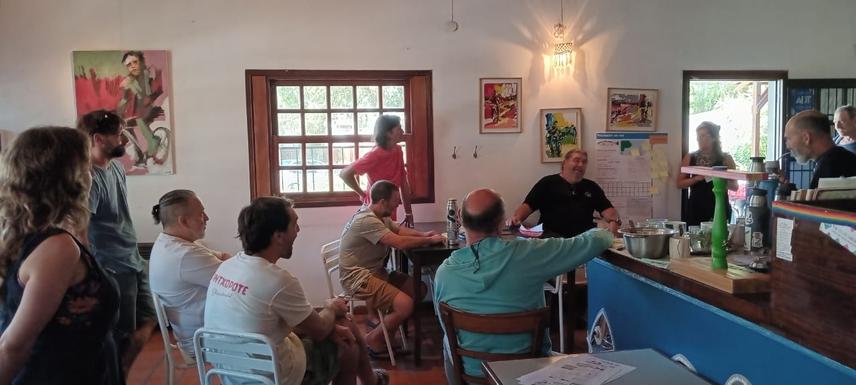
Fishers gather to discuss fish identification charts during a project workshop, Mar del Plata, Buenos Aires, Argentina. (c) Manuela Funes
To address these knowledge gaps, the project will combine semi-structured interviews and surveys with active fishers to document socioeconomic profiles, fishing practices, elasmobranch capture dynamics, and the factors influencing catch patterns. Two participatory workshops will bring together approximately 100 fishers, providing targeted information from experts in ichthyology, parasitology, and meteorology, while also facilitating group exercises such as social mapping and collective timelines to foster community identity and co-produce local knowledge.
The findings will be disseminated through scientific publications, social media, brochures, and community outreach, in collaboration with the NGO Proyecto Arrecife and the National University of Mar del Plata. Ultimately, this project seeks to generate the foundational information needed to co-design management tools that improve the sustainability and resilience of these fisheries, while contributing to the conservation of critically endangered elasmobranch species.