Lucas de Oliveira Bezerra


The project investigates reef-associated mangroves along the Espírito Santo coast (eastern Brazil), aiming to map their biogeographic distribution while quantifying their carbon stocks and associated microbiomes.
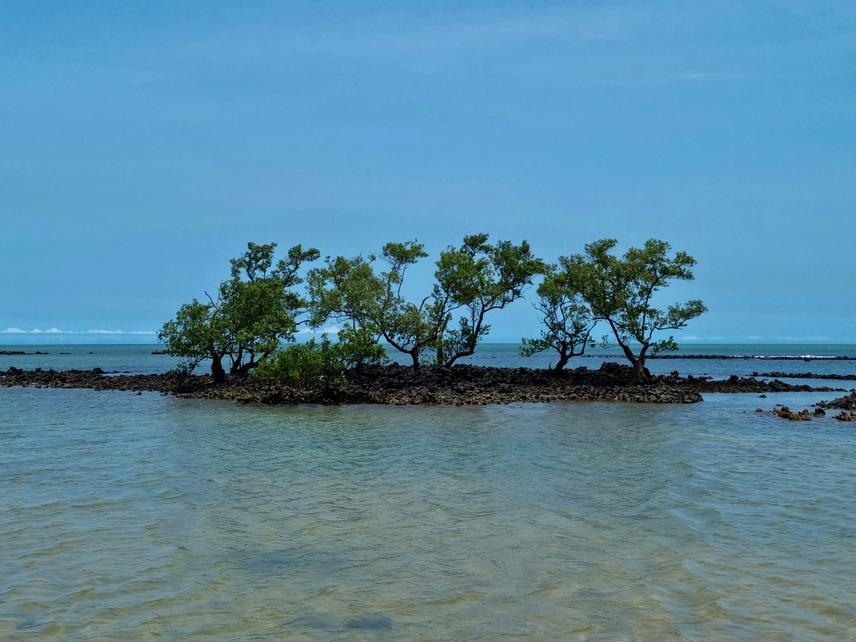
Figure 1 © Daniel Oliveira Sabbagh.
Reef-associated mangroves are rare and understudied in Brazil; their omission from national assessments could cause risks to local biodiversity, ecosystem services and climate mitigation opportunities. The study therefore addresses critical knowledge gaps to inform conservation, coastal management and inclusion in Nationally Determined Contributions (NDCs).
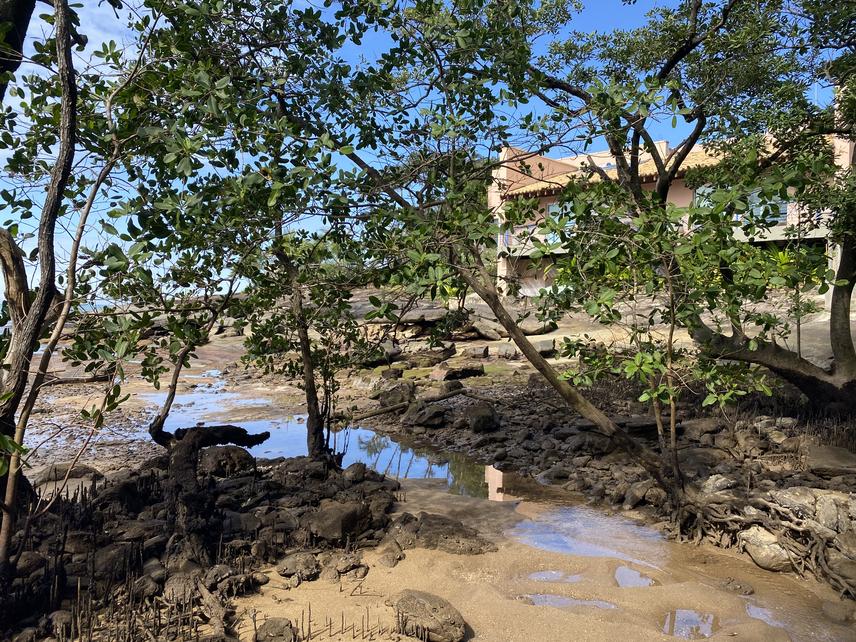
Figure 2 © Lucas de Oliveira Bezerra.
Planned outputs include georeferenced distribution maps, quantitative estimates of soil and vegetation carbon stocks, microbiome composition and functional profiles, scientific manuscripts targeted at high-impact journals, and educational materials for local communities and stakeholders. Indicators of success comprise mapped area (km²), number of georeferenced occurrences, processed sample counts, remote classification accuracy and dissemination metrics (workshops, outreach visits, and partner training).
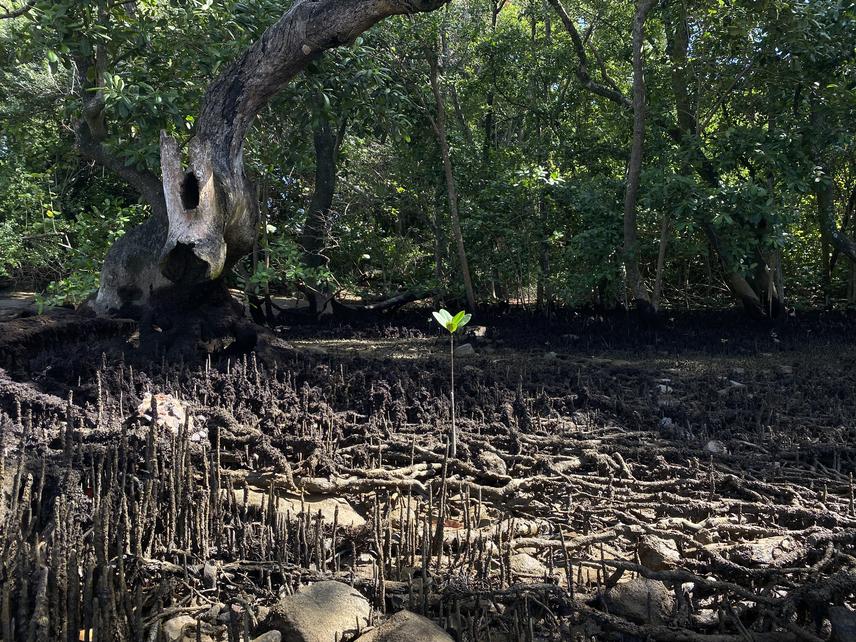
Figure 3 © Lucas de Oliveira Bezerra.
Environmental education activities—guided interpretive visits, brochures and training sessions—will promote local engagement and ocean literacy.
By integrating remote sensing, field ecology, carbon accounting and microbial ecology, the project is positioned to deliver actionable data for policy and management, to enhance recognition of reef-associated mangroves (including implications for threatened species such as Cardisoma guanhumi), and to support long-term conservation and climate mitigation strategies in the region.
Picture captions:
Figure 1: Lateritic rocky reef formation colonized by black mangrove trees (Avicennia schaueriana Stapf & Leechm. ex Moldenke) during low tide, highlighting the location of the ecosystem in the coastal region of Aracruz, Espírito Santo, Brazil.
Figure 2: Mangrove ecosystem established on a rocky reef composed of gneisses, colonized by white mangrove (Laguncularia racemosa (L.) C.F.Gaertn.), black mangrove (A. schaueriana), and red mangrove (Rhizophora mangle L.), in an urbanized area in direct contact with built environments along the coastal region of Guarapari, Espírito Santo, Brazil.
Figure 3: Natural regeneration of a rocky mangrove: red mangrove seedling (R. mangle) emerging among the roots of black mangrove (A. schaueriana) growing on a gneissic rocky substrate in the coastal region of Guarapari, Espírito Santo, Brazil.