Andrés Moreira-Mendieta


Other projects
21 Apr 2021
Assessing the Presence of Microplastics in Galapagos Sea Lions’ Scats as a Bioindicator of Pollution in the Galapagos Marine Reserve

10 Mar 2023
Effects of Microplastic Bioaccumulation on the Endangered Galapagos Sea Lions and its Relationship with their Feeding Patterns
The Galapagos sea lion (Zalophus wollebaeki) is an endangered endemic marine mammal facing increasing threats from environmental degradation, pollution, and infectious diseases. Although previous studies have documented exposure to contaminants and pathogens separately, little is known about how these stressors interact to affect individual health and the long-term conservation of the species. This project will address this knowledge gap by applying a One Health approach that integrates wildlife health, environmental quality, and ecosystem conservation.
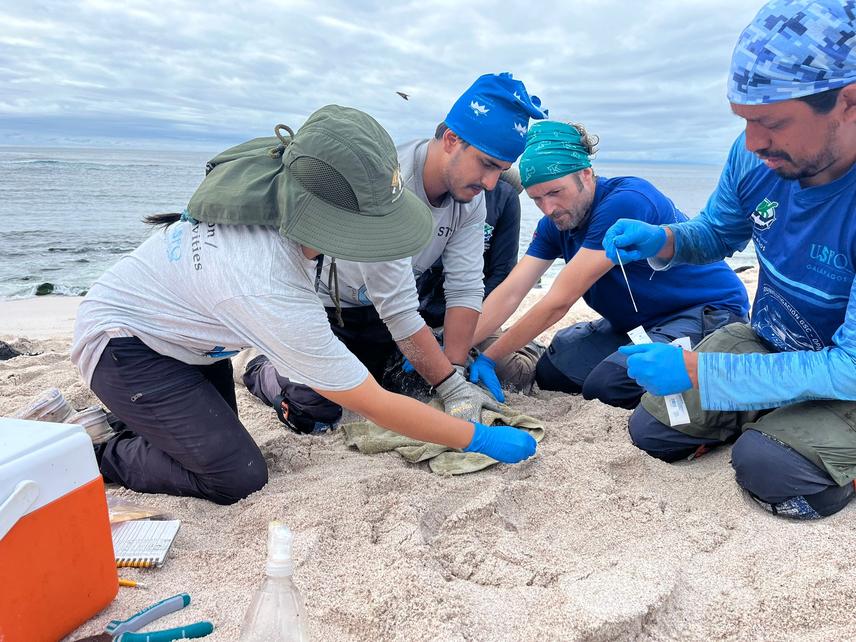
Biological sampling of a juvenile Galápagos sea lion (Zalophus wollebaeki) during health assessments. (c) Andrés Moreira-Mendieta.
The project will be conducted across eight Galapagos sea lion rookeries distributed along a gradient of anthropogenic influence, ranging from urbanized coastal areas to remote protected sites. Biological samples will be collected to assess exposure to zoonotic pathogens, including bacteria, viruses, and parasites with potential implications for wildlife and human health. Hair samples will also be analyzed to quantify heavy metals and trace elements associated with environmental contamination.
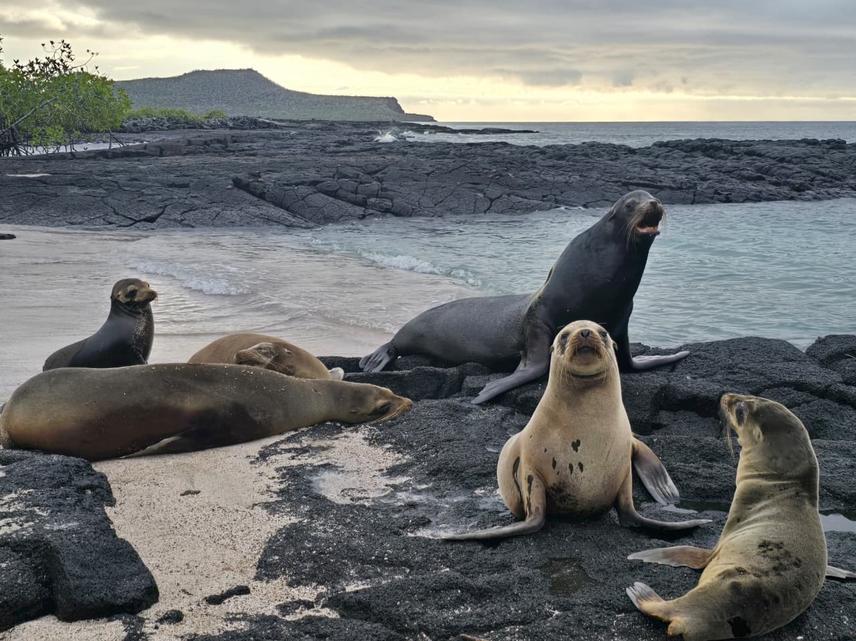
Galápagos sea lions (Zalophus wollebaeki) from different age-categories at Post Office rookery, Floreana Island. (c) Andrés Moreira-Mendieta.
To identify early physiological responses to these stressors, the project will use untargeted metabolomics, an advanced technique capable of detecting subtle alterations in metabolic pathways before visible signs of disease occur. By integrating epidemiological, toxicological, and metabolomic data, we will identify potential health biomarkers and evaluate how pathogen exposure and contaminant accumulation vary across the archipelago.
Satellite telemetry data from adult females will further be incorporated to evaluate habitat use, connectivity among rookeries, and potential pathways for pathogen and contaminant dispersal. Together, these approaches will provide the first comprehensive One Health assessment of cumulative health risks in the Galapagos sea lion.
The project will generate practical conservation outcomes by identifying high-risk areas, establishing baseline health indicators, and providing evidence-based recommendations for management. Findings will be shared with the Galapagos National Park Directorate, local stakeholders, and the scientific community through technical reports, outreach activities, and peer-reviewed publications. Ultimately, this project will strengthen conservation efforts for the Galapagos sea lion while improving understanding of the links between environmental change, wildlife health, and ecosystem resilience in the Galapagos archipelago.