Vishal Kumar Prasad


Other projects
27 Sep 2021
Conservation of Amphibians in Human Dominated Mountain Landscape in Nainital, Uttarakhand, Indian Himalayas through Citizen Science and Education

4 Apr 2024
Climate Change — Resilient Conservation: Safeguarding Threatened Amphibians in Uttarakhand's Western Himalayas Through Participatory Research and Education
Amphibians are recognised as the most threatened group of vertebrates on Earth, with 41% of species globally at risk and declines continuing across most regions (). The latest global review, Conservation priorities for global amphibian biodiversity (Borzée et al. 2025), emphasises that habitat loss, climate change, disease, and invasive species together drive widespread population declines, and that evidence-based, locally grounded conservation projects are urgently needed to reverse these trends. The review shows clearly that genuine improvements occur when targeted field data, local stewardship, and management action come together. In parallel, the 2024 Amphibian Conservation Action Plan (ACAP) stresses the need for landscape-level monitoring, stronger local partnerships, improved data for Data Deficient regions, and integration of amphibians into national conservation frameworks.
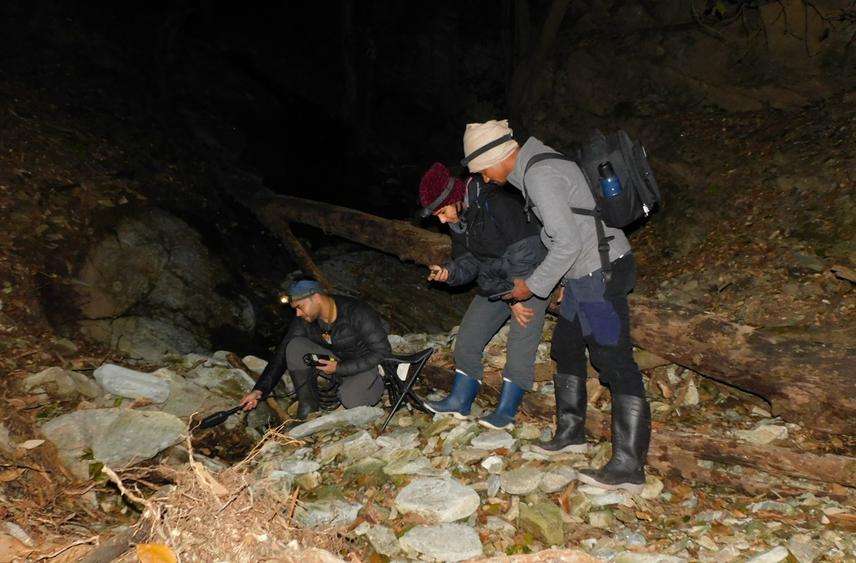
On the frontlines of Himalayan conservation, the research team surveys amphibian habitats in remote mountain terrains to uncover the region’s vanishing biodiversity. © Photo: BRCF Team.
This project directly aligns with these international priorities by focusing on a Himalayan region where amphibians receive little conservation attention but face accelerating environmental pressures. It aims to update baseline distributions, identify important habitats, assess emerging pressures - including those linked to climate shifts - and highlight priority areas for conservation attention. The project will generate fine-scale ecological information essential for understanding how amphibians are responding to environmental change across mid-hill and high-altitude systems. It will also identify knowledge gaps that hinder effective conservation planning, thus addressing one of the major global challenges highlighted by the Global Amphibian Assessment.
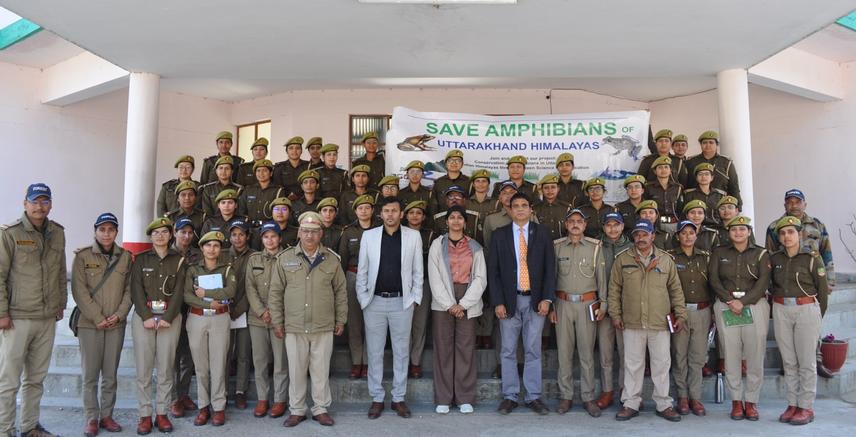
Capacity building with the Forest Department: Our team delivers a conservation awareness workshop for State Forest officials in Dehradun, Uttarakhand, strengthening institutional stewardship for Himalayan amphibians. © Photo: BRCF Team.
A central pillar of this project is its strong local engagement. Through district-level workshops, training programmes, school outreach, and citizen-science activities, the project will empower communities, students, and frontline staff to recognise amphibians, understand their ecological importance, and contribute to long-term monitoring. Broadening local participation aligns directly with ACAP guidance, emphasising community partnerships, behaviour-change interventions, and cross-sector collaboration.
The project’s approach is also consistent with the newly adopted 2025 IUCN Resolution on amphibian conservation, which calls for strengthened national actions, improved data collection, climate-informed monitoring, and long-term investment in local capacity.
By combining updated scientific evidence, community leadership, and strong collaboration with regional institutions, this project will contribute to securing amphibian habitats, informing future conservation planning, and building a network of local champions capable of sustaining amphibian conservation across the Uttarakhand Himalaya.