Siavash Ghoddousi


Other projects

Jaguar-focused tourism in the northern Pantanal of Brazil has grown rapidly over the past decade, particularly in Porto Jofre and Encontro das Águas State Park, an area that hosts the highest density of jaguars in the world. Daily boat-based tourism has reduced retaliatory killing and generated conservation revenue, but it has also intensified pressure on riverine habitats, altered wildlife behaviour, and deepened social inequalities. While jaguars have become a lucrative tourism attraction, many Pantaneiro, Indigenous Guató, and Quilombola communities continue to face restricted access to decision-making, uneven benefit sharing, and limited opportunities to shape how tourism and conservation are managed.
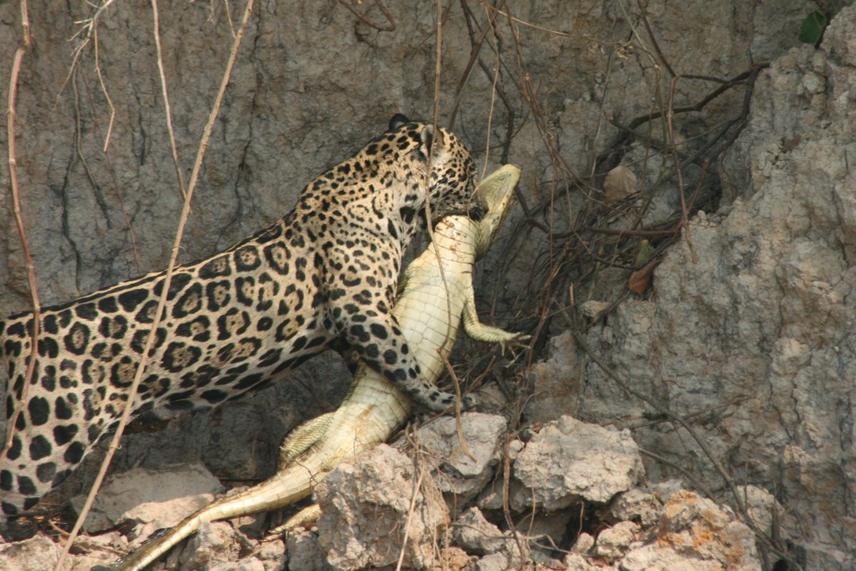
Multispecies Interactions in EASP © Photo Credit - Siavash Ghoddousi
This project builds directly on my previous Rufford-funded research and focuses on turning research findings into locally grounded conservation action. Its aim is to support sustainable human–jaguar coexistence by combining ecological monitoring with community-led knowledge exchange and capacity building.
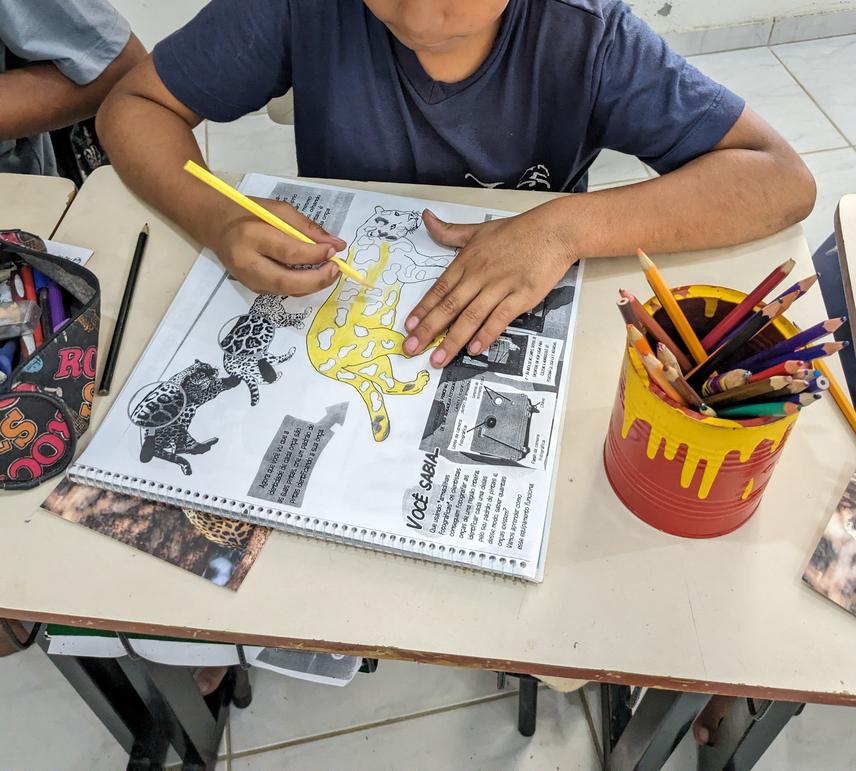
Mapping workshop with school children in Porto Jofre © Photo Credit - Siavash Ghoddousi
First, the project will share existing research results with local communities, tour guides, conservation NGOs, and policymakers through a series of targeted meetings in Poconé, Porto Jofre, and Cuiabá. These sessions will use visual materials, maps, and simplified summaries in Portuguese to communicate findings on jaguar tourism, habituation, and social impacts, creating space for dialogue and feedback from those most affected by tourism development.
Second, the project will strengthen local ecological monitoring by training guides and conservationists in camera-trap deployment, calibration, and data analysis. Participants will learn to manage camera-trap data using Agouti software and to produce pilot wildlife density estimates using Random Encounter Models (REM). In parallel, EarthRanger will be introduced as a tool for recording daily field observations such as wildlife sightings, prey carcasses, and tourism activity. Together, these methods will generate baseline data on jaguar behaviour, prey dynamics, and tourism intensity that local partners can continue collecting beyond the project period.
Third, the project will facilitate Indigenous- and community-led storytelling workshops focused on traditional ecological knowledge of jaguar coexistence. Local youth will receive training in ethical documentation and visual storytelling to support these workshops, contributing to the co-production of a community-owned educational booklet combining stories, drawings, and narratives approved by participating communities.
By integrating scientific tools with local and Indigenous knowledge, this project moves beyond viewing jaguars as tourism commodities. Instead, it promotes coexistence-based conservation that strengthens local stewardship, informs better tourism practices, and supports the long-term ecological resilience of the Pantanal.