Micol Montagna

Other projects
19 Mar 2018
TurtleWatch – Egypt: Photo Identification and Citizen Science-Based Marine Turtle Monitoring Program in the Egyptian Red Sea

27 Jan 2021
Marine Turtle Conservation During a Pandemic: Promoting Online Citizen Science Training and Best Practices to Protect Endangered Marine Species
Marine turtles in the Egyptian Red Sea face increasing human-related threats despite the region being an important habitat for green and hawksbill turtles. Over the past 15 years, TurtleWatch Egypt has built the country's largest marine turtle citizen science programme, engaging divers, tourism operators, local communities, and government authorities to monitor turtle populations and promote conservation. The project has documented more than 12,000 sightings, identified more than 1,000 individual turtles through photo-identification, and established partnerships with over 90 dive centres across the Red Sea.
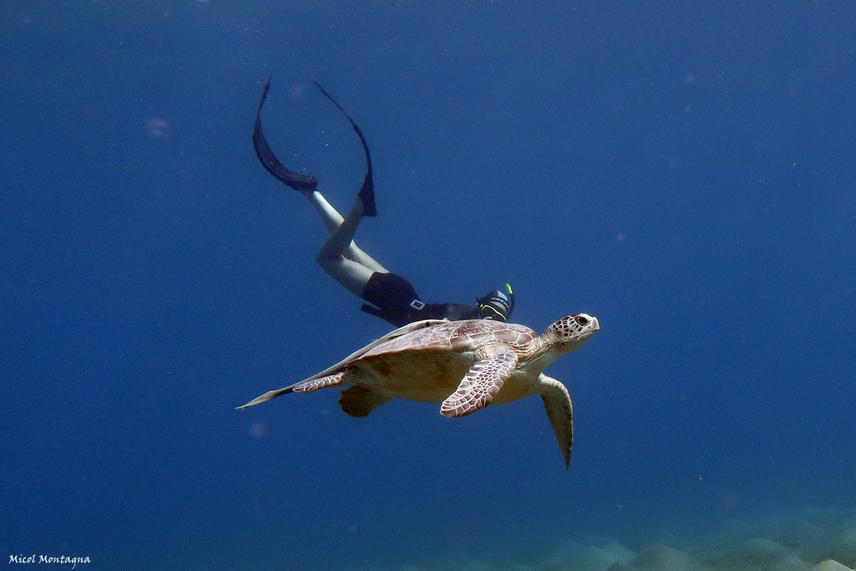
TurtleWatch Egypt team conducting underwater surveys for marine turtle monitoring and photo-identification. (c) Micol Montagna, TWE team.
This project will build on these achievements by addressing two key conservation priorities: injuries caused by speedboat collisions and the potential impacts of fisheries on marine turtles. Citizen science monitoring will be strengthened to document turtle injuries and diseases, identify high-risk areas, assess injury frequency and severity, and evaluate the feasibility and need for establishing Egypt's first marine turtle rehabilitation facility. Collaboration with international veterinary specialists will support the scientific assessment of injury patterns and rehabilitation requirements.
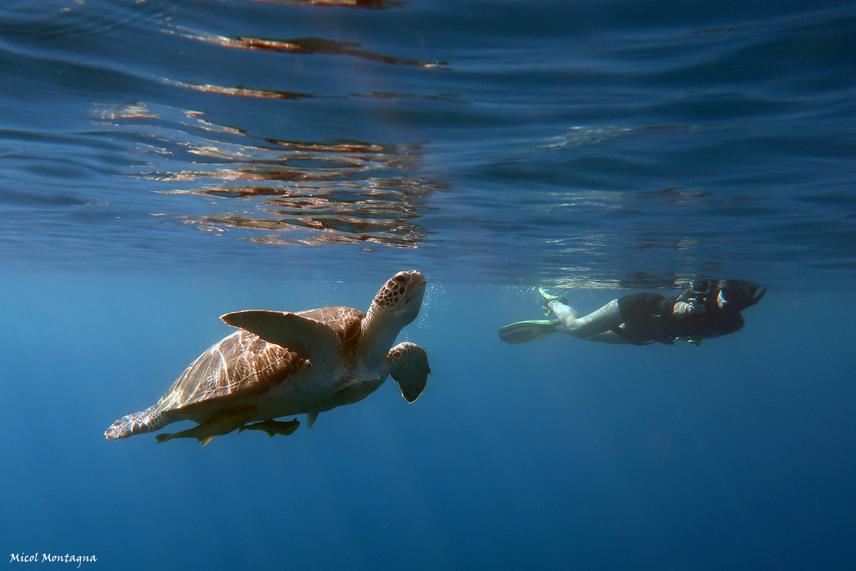
TurtleWatch Egypt team conducting underwater surveys for marine turtle monitoring and photo-identification. (c) Micol Montagna, TWE team.
For the first time, TurtleWatch Egypt will work directly with fishing communities through surveys, workshops, and citizen science activities developed in collaboration with the Red Sea Protectorate and supported by an international expert in fisher engagement. As information on bycatch and other fishery-related impacts in the Egyptian Red Sea is currently very limited, the project will first assess the nature and extent of these interactions before identifying appropriate conservation measures. The project aims to improve understanding of fisheries-related threats while promoting collaboration between fishermen and conservation practitioners.
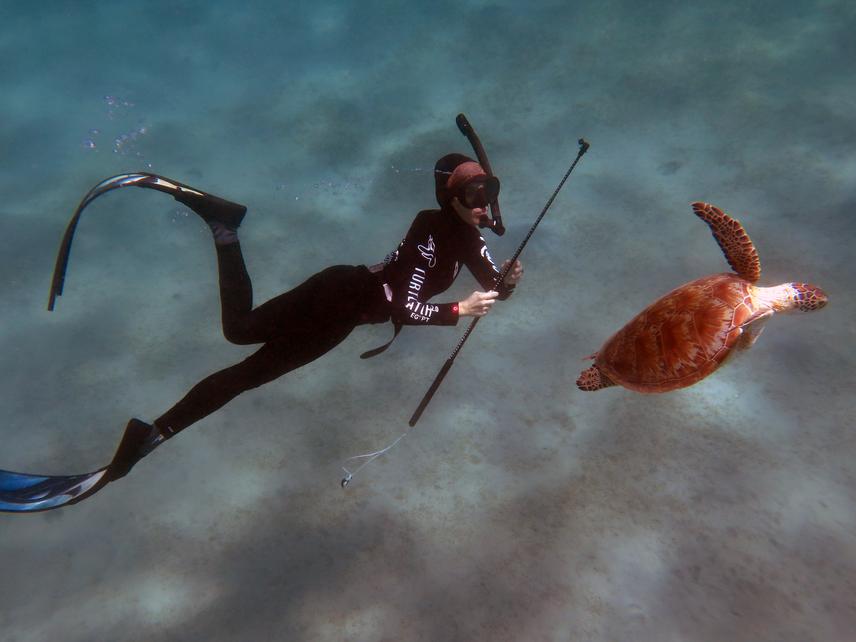
TurtleWatch Egypt team conducting underwater surveys for marine turtle monitoring, measurements and photo-identification. (c) Abdallah Rabia Taher, TWE team.
Education and community engagement remain central to the project. Dive centre staff, speedboat captains, school students, families, and local communities will participate in targeted training programmes, awareness campaigns, clean-up events, and citizen science initiatives. Bilingual (Arabic and English) educational resources will support outreach activities, and the Travelling Turtle Trunk programme developed and donated by Inwater Research Group will expand environmental education to underserved communities along the Red Sea coast.
By combining scientific monitoring, community participation, stakeholder collaboration, and capacity building, the project will generate the evidence needed to guide future conservation actions while reducing human pressures on marine turtles. Ultimately, it aims to strengthen local stewardship, improve protection of critical marine habitats, and establish a sustainable model for marine turtle conservation throughout the Egyptian Red Sea.