Keilor E. Cordero-Umaña


Parque Nacional Marino Las Baulas, located in Northwest Costa Rica, is a protected area of regional and international importance. It safeguards nesting areas for the critically endangered East Pacific Leatherback turtle and a mosaic of vulnerable ecosystems, such as mangrove forests, tropical dry forest remnants, and coastal wetlands. However, despite its importance, the protected area surroundings experienced heavy development that has been accompanied by inadequate waste management and a lack of awareness.
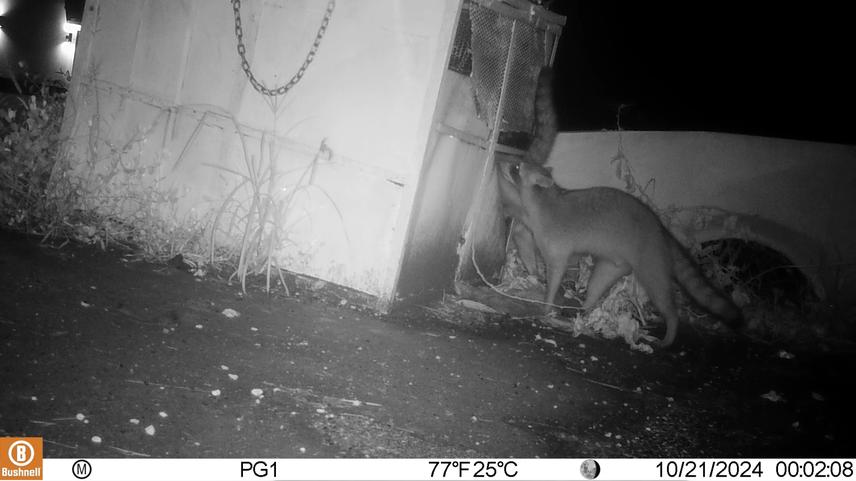
Northern raccoons (Procyon lotor) exploiting anthropogenic food waste from trash containers around Parque Nacional Marino Las Baulas, Costa Rica © The Leatherback Trust
Consequently, during peak tourist seasons, garbage containers routinely overflow, creating abundant food sources for opportunistic species such as raccoons. Along with urban expansion and as raccoons increasingly exploit urban waste, their numbers and reproductive success appear to have risen, becoming frequent visitors to the nesting beaches. This has led to dramatic increases in sea turtle nest predation, especially for olive ridley nests, and increased the risk for hatchlings of all species (green, olive ridley, and leatherback hatchlings).
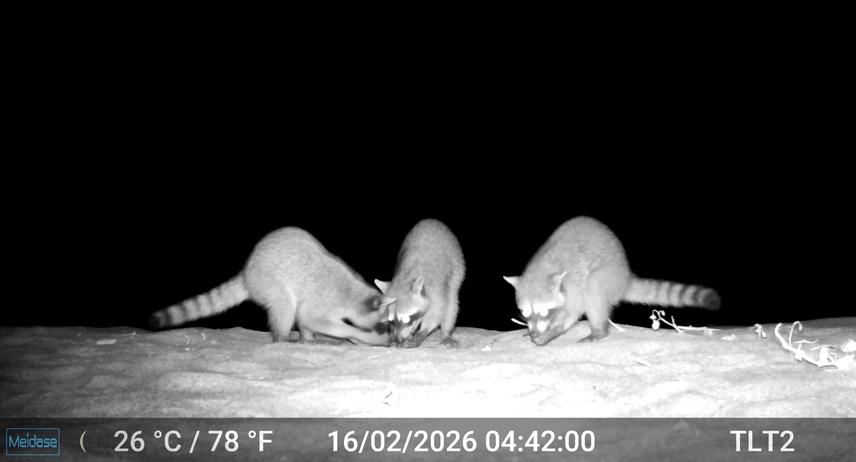
Northern raccoons (Procyon lotor) attempting to dig a sea turtle nest at Las Baulas National Park Nesting Beaches © The Leatherback Trust
In this context, our project aims to monitor raccoon movements between urban areas and sea turtle nesting beaches using satellite telemetry. This is key as it will show the direct link between urban expansion, access to anthropogenic food resources, and sea turtle nest predation. We will use these findings to raise awareness of how human activities affect the National Park, its ecosystems, and endangered species, while developing a pilot project to reduce the availability of food waste for opportunistic predators. Ultimately, we aim to engage local communities in conservation efforts and strengthen the long-term protection of threatened sea turtle populations.
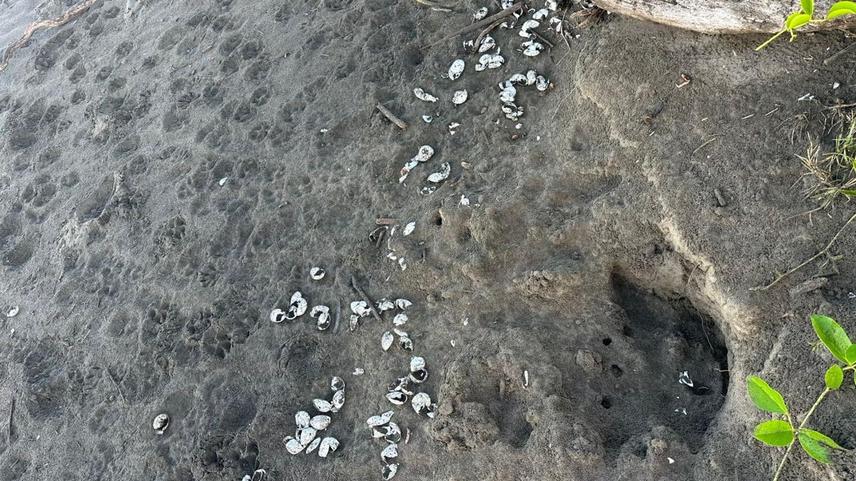
Olive ridley nest predated by Northern raccoons (Procyon lotor) at Las Baulas National Park. © Gineth Matos