Gerardo Peña Mis


The Southern Gulf of Mexico, specifically the coastal waters near Tamiahua, Veracruz, and Sabancuy, Campeche, host a network of artificial structures, including decommissioned and active oil rigs that function as surrogate reef systems.
Despite their increasing prevalence, these artificial reefs remain understudied. There is a lack of comprehensive data regarding their ecological health, biodiversity, and the diverse ways human communities interact with them. This information gap creates a barrier to effective marine management and conservation strategies in a region heavily reliant on marine resources.
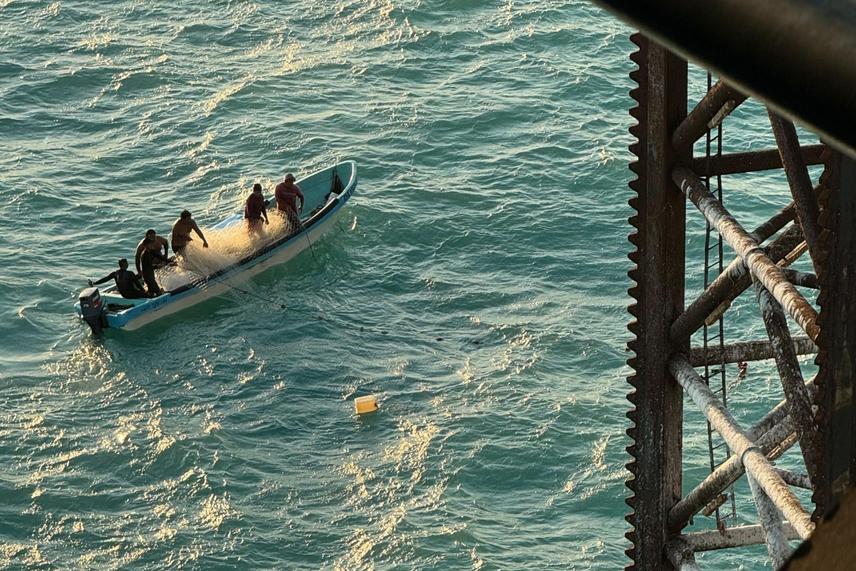
Artisanal fishermen using a dragnet in a rig. Copyright: Gerardo Peña
The primary aim of this project is to assess the ecological status and socio-ecological roles of these artificial reefs to support sustainable management. Our research adopts a multidisciplinary approach, integrating biological surveying with social science. Ecologically, we will employ a dual-methodology approach: initial recognition SCUBA dives will be conducted to assess site conditions, followed by systematic Remote Operated Vehicle (ROV) surveys.
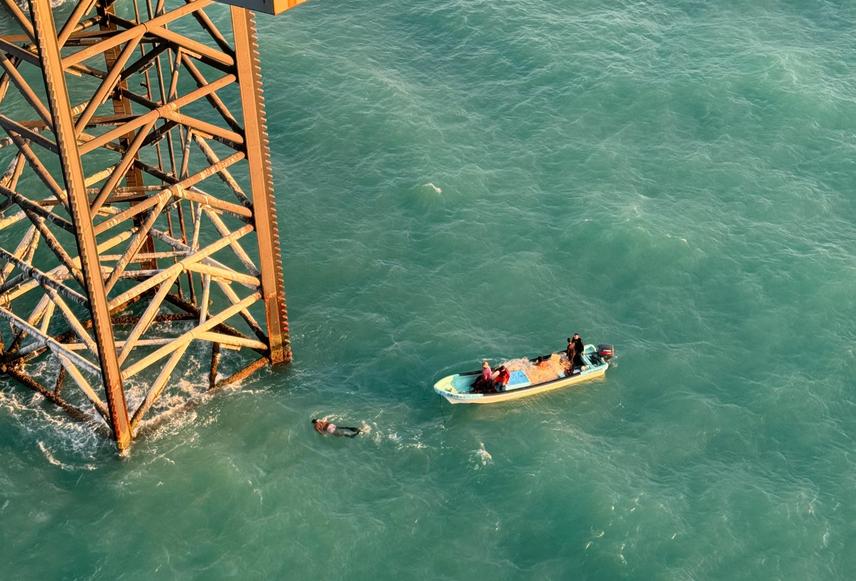
Artisanal fishermen spearfishing in a rig. Copyright: Gerardo Peña
These surveys will utilize specific protocols—including fixed-point counts and continuous roving transects—to quantify species abundance, diversity, and vertical distribution across the structures. This will provide a high-resolution map of how these platforms support marine life.
Simultaneously, the project will conduct human-use assessments through structured interviews and surveys with local stakeholders, including artisanal fishers and local tour operators. By integrating traditional ecological knowledge with our biological data, we aim to understand the socio-economic dependencies on these reefs.
The overall goal is to generate a robust baseline dataset that informs the transition from unmanaged extraction to sustainable use. By identifying key habitats and human-use patterns, this project will provide the evidence base needed to enhance local fish stocks and promote ecological tourism.
This transition is vital for the resilience of local communities, offering alternative livelihoods that decrease pressure on overexploited natural reefs while preserving the biological integrity of the Southern Gulf of Mexico.
Through this integrated assessment, we seek to bridge the gap between industrial infrastructure and marine conservation, ensuring these artificial ecosystems provide long-term benefits to both nature and people.