Chee Yoong Woo


Other projects
16 Jul 2020
Niche Overlap and Partitioning Among Three Sympatric Otter Species: The Hairy-Nosed Otter, Smooth-Coated Otter and Asian Small-Clawed Otter

16 Jun 2022
Spatial Distribution of Three Sympatric Species of Globally Threatened Otters in a Coastal Ecosystem in Selangor, Peninsular Malaysia
The Asian small-clawed otter (Aonyx cinereus) and the smooth-coated otter (Lutrogale perspicillata) are two vulnerable otter species native to Peninsular Malaysia. As top predators in freshwater and coastal ecosystems, they help maintain healthy food webs and act as indicators of ecosystem integrity. Along the North-Central Selangor Coast (NCSC), a rapidly developing coastal landscape, these otters face growing pressures from habitat loss, water pollution, and increasing human activity. Although both species are known to occur in this region, very little is understood about how their populations are connected, how they respond to habitat fragmentation, or how they share resources when living in the same areas. This lack of ecological and genetic information limits the development of effective conservation strategies.
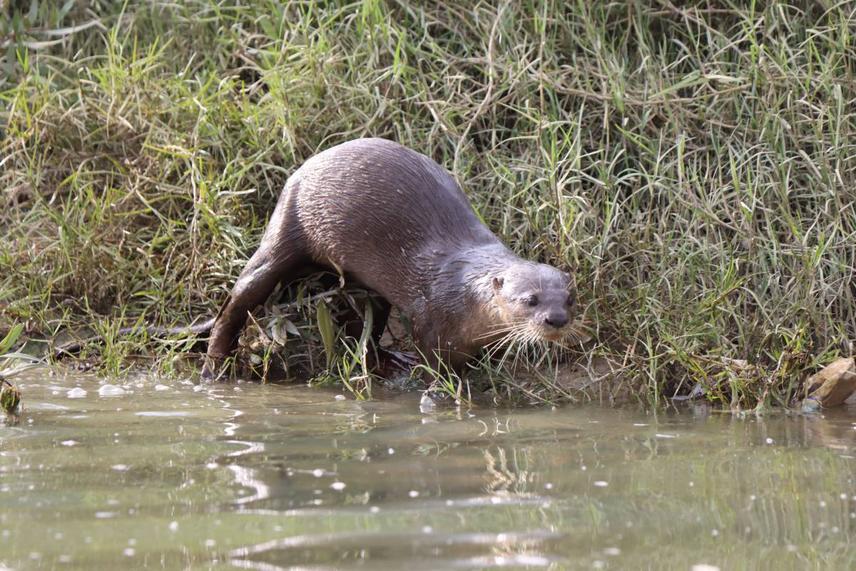
Smooth-coated otter along a riverbank © photo credit_Chee Yoong
This project aims to fill these knowledge gaps by (1) assessing the population genetic structure of both otter species along the NCSC, and (2) identifying and comparing their diet using DNA metabarcoding of otter spraints. The study will rely entirely on non-invasive sampling, ensuring no disturbance to the otters. DNA extracted from spraints will be used to understand how genetically connected populations are across the landscape and to identify the prey species that each otter relies on. Species identification of samples will also be confirmed using a simple molecular method (PCR-RFLP) to ensure accuracy.
The results of this work will provide the first detailed information about the otter population connectivity and feeding ecology along the NCSC. Understanding genetic diversity and movement patterns is essential for identifying isolated populations and areas where habitat restoration or protection is most needed. Insights into diet will also help determine whether the two species rely on different prey resources, which is important for reducing potential conflict with aquaculture and small-scale fisheries.
Overall, this project will generate practical, science-based information that can guide local conservation actions, inform coastal habitat management, and support long-term monitoring of otter populations in Peninsular Malaysia. The findings will also contribute to national efforts to conserve the country’s declining wetland biodiversity.