Vitor Guniel Cunha

The project aims to generate the first standardized dataset on medium- and large-sized mammals in municipal Protected Areas of Guapimirim, within the Central Fluminense Protected Areas Mosaic, in the Atlantic Forest. Despite the high ecological importance of these areas, there is currently no systematized information on mammal communities, limiting effective conservation planning and management.
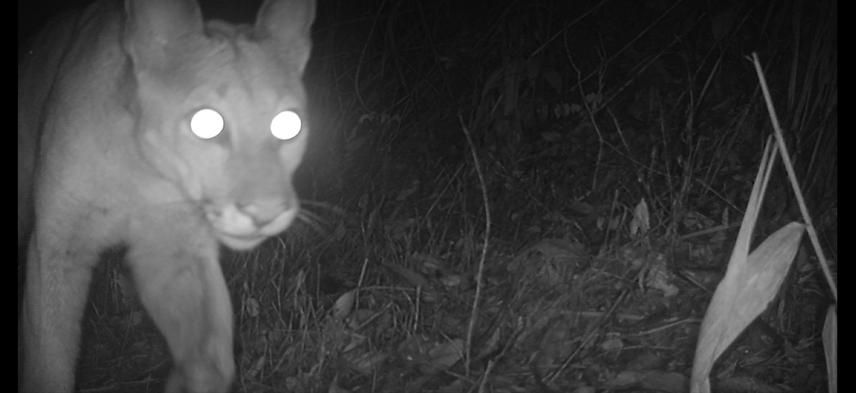
Cougar (Puma concolor) photographed by camera trap (c) Vitor Cunha
To address this gap, the project will combine camera trapping and line transect surveys, two complementary methods widely used in Atlantic Forest studies. Sampling will follow a standardized design, with monthly cycles, systematic relocation of camera traps, and consistent effort across sites. Data analysis will include camera-trap effort (camera-hours), species richness estimators, and rarefaction curves to assess sampling sufficiency and enable comparisons among areas.
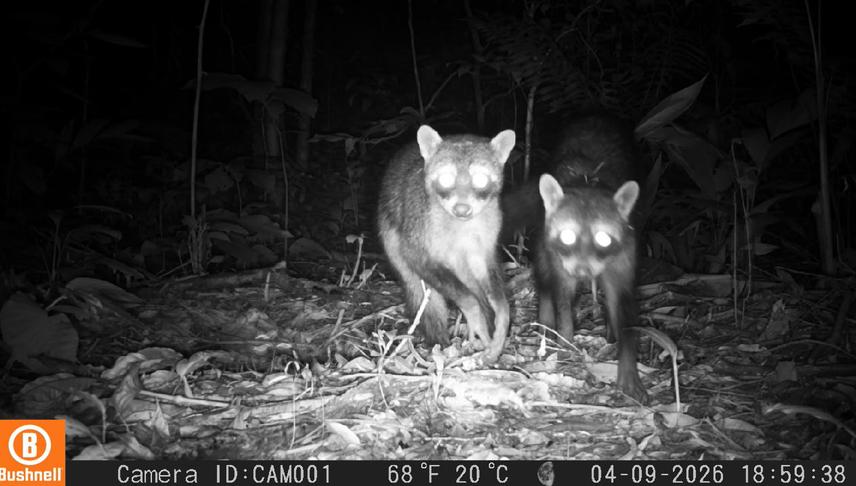
Crab-eating raccoon (Procyon cancrivorus) photographed by camera trap (c) Vitor Cunha
The project will produce species lists for each Protected Area, identify patterns of habitat use, and detect potential pressures such as hunting or human disturbance. These results will be directly shared with the Municipal Secretariat of Environment and incorporated into conservation actions, including enforcement planning, environmental education, and territorial management.
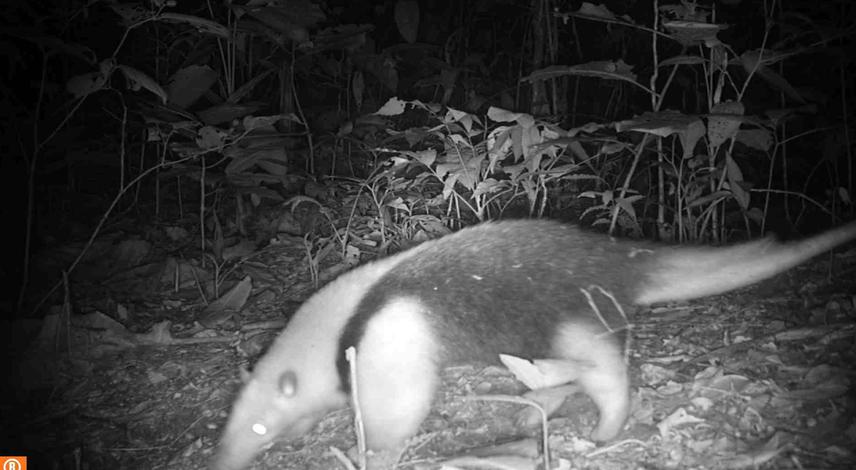
Southern tamandua (Tamandua tetradactyla) photographed by camera trap (c) Vitor Cunha
Additionally, the project will support habitat connectivity by identifying priority areas for conservation within the Guapi-Guapiaçu Environmental Protection Area (APA), promoting the creation of Private Natural Heritage Reserves (RPPNs) in private lands. This strategy will contribute to strengthening ecological corridors and expanding conservation efforts beyond public protected areas.
Community engagement will be ensured through institutional support from the Secretariat, which will use project data in existing environmental education programs and outreach activities with local schools.
By integrating robust biodiversity monitoring with practical conservation applications, the project will provide essential baseline data and support evidence-based decision-making, contributing to the long-term conservation of Atlantic Forest ecosystems at both local and regional scales.