Seyma Beril Tezel


The striped hyena (Hyaena hyaena) is one of Türkiye's most elusive and least-studied large carnivores. Although historically widespread across Anatolia, its distribution has become increasingly fragmented due to habitat degradation, road mortality, illegal killing and growing human pressures. Southeastern Anatolia now represents one of the species' last national strongholds, yet little site-specific information exists to guide effective conservation, and negative perceptions continue to threaten its long-term survival.
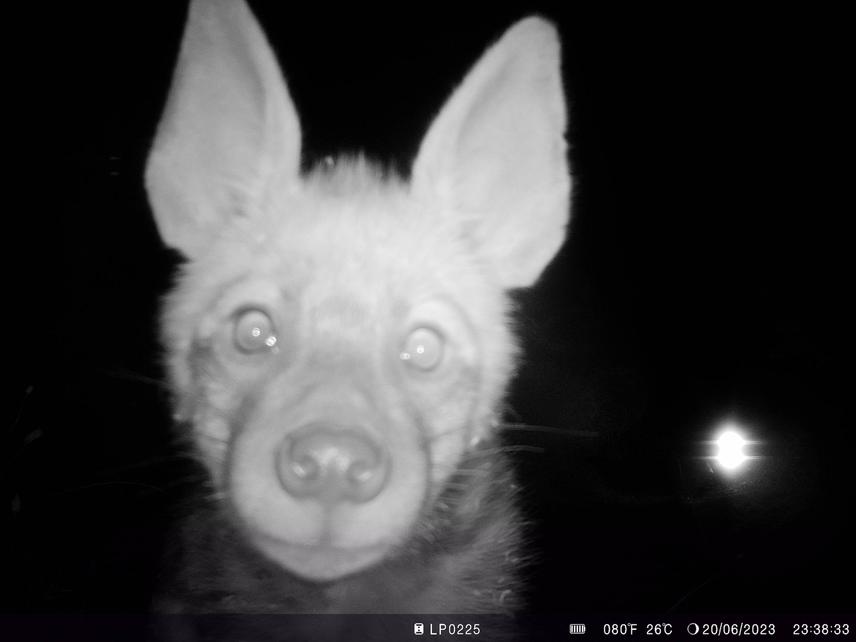
A striped hyena (Hyaena hyaena) recorded by a camera trap during preliminary field surveys in the Birecik region, southeastern Türkiye. © Seyma Beril Tezel
This 12-month project aims to establish the first community-led conservation programme for the striped hyena in southeastern Anatolia. Working across the Birecik, Esemkulu and Kızılin landscapes, the project combines ecological field surveys with active community participation to generate practical conservation outcomes. Camera trapping, sign surveys and local ecological knowledge will be used to identify denning areas, movement corridors and conflict hotspots, while structured interviews will improve understanding of local attitudes, livestock management practices and the drivers of human–hyena interactions.
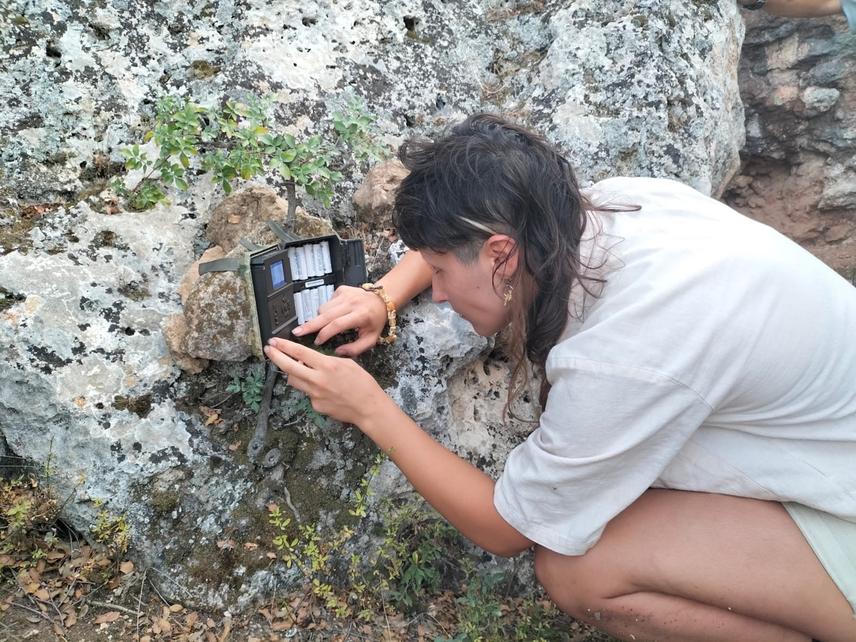
Project leader installing a camera trap in suitable striped hyena (Hyaena hyaena) habitat in southeastern Türkiye © Emre Keskin
Beyond ecological research, the project places local communities at the centre of conservation. Awareness workshops, coexistence training and a volunteer "Hyena Scouts" network will empower local residents to participate in monitoring, reporting threats and promoting non-lethal conflict mitigation. The project will work closely with the General Directorate of Nature Conservation and National Parks (DKMP), local authorities and the Biodiversity Research Association to translate scientific evidence into practical conservation action.
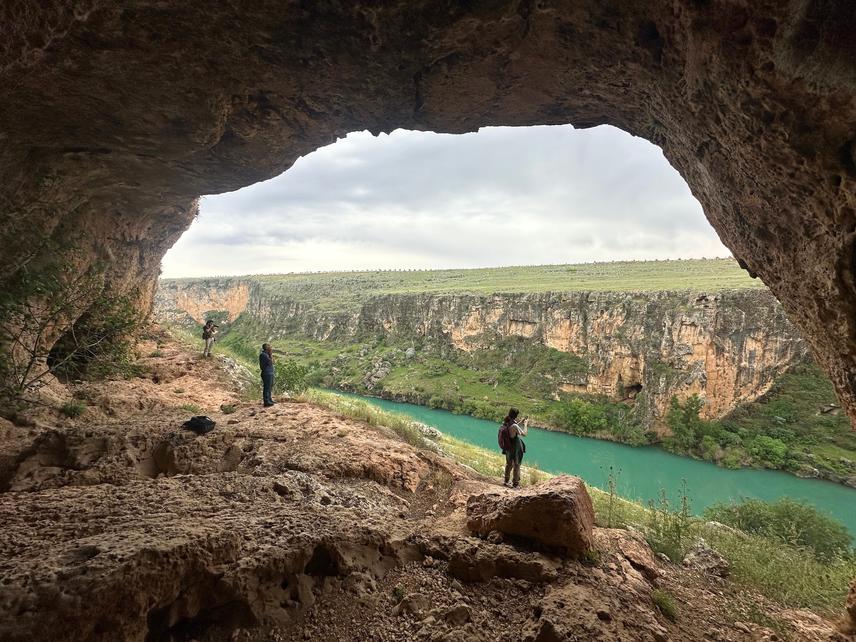
Project team surveying a rocky cave habitat in the Kızılin landscape, southeastern Türkiye. © Seyma Beril Tezel
By integrating conservation science with local knowledge and stakeholder engagement, the project aims to reduce preventable persecution, improve tolerance towards striped hyenas and strengthen protection of den sites and ecological corridors. The project will also produce the first locally endorsed Striped Hyena Conservation Action Plan for the region, providing an evidence-based framework that can support long-term conservation of one of Türkiye's most overlooked carnivores while demonstrating how community participation can contribute to the conservation of threatened scavengers across the Mediterranean region.
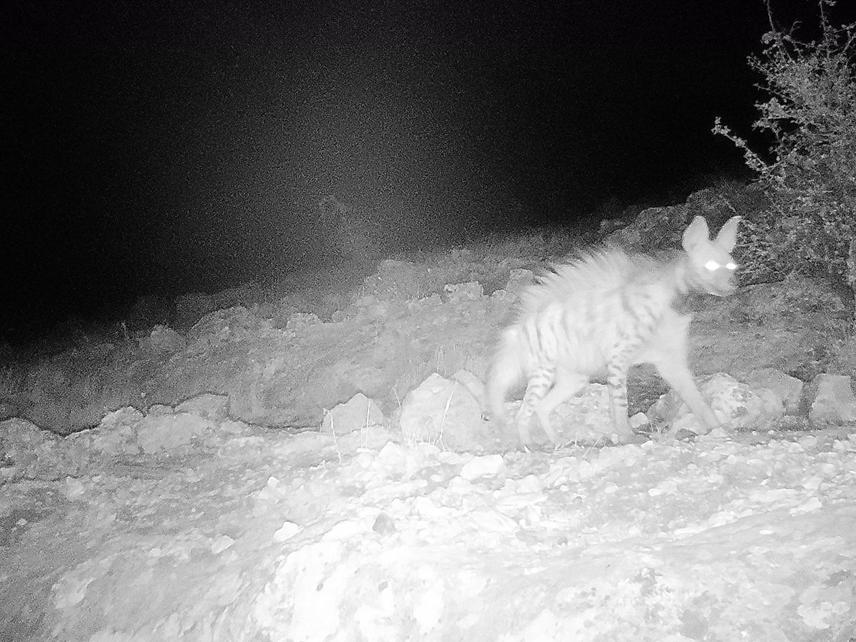
A striped hyena (Hyaena hyaena) recorded by a camera trap during preliminary field surveys at the Esemkulu study site in southeastern Türkiye. © “The Anatolian Beast: Striped Hyena” Project Team