Rocío López de la Lama

Other projects
11 Oct 2012
A Critical Insight into Peruvian Seafood Cuisine Preferences: What Restaurants Choose is Relevant!

Our project aims to contribute to local empowerment and ecological recovery through participatory research. It builds on over two years of active engagement with the coastal community of Ancón, which was severely impacted by a major marine oil spill in 2022. The project addresses the interconnected challenges of environmental degradation, gender inequality, and loss of livelihoods by placing local women at the center of restoration and stewardship efforts.
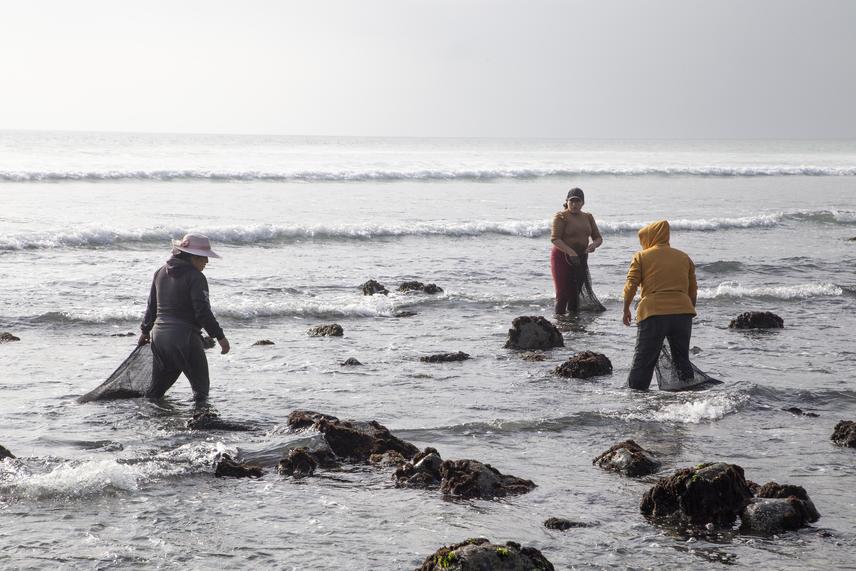
Seaweed gatherers collecting yuyo at sunset with their nets. (c) Felipe Sangiorgi
The main aim is to strengthen the social, ecological, and leadership capacities of female seaweed gatherers, locally known as yuyeras, enabling them to reclaim their role as key stewards of coastal ecosystems. To achieve this, the project adopts participatory, arts-based, and science-informed approaches across three interconnected components. First, it will establish safe, women-only empowerment spaces where participants can build confidence, strengthen social cohesion, and develop practical skills identified through a co-design process. These spaces will also help rebuild trust and collective agency following the socio-economic disruptions caused by the oil spill.
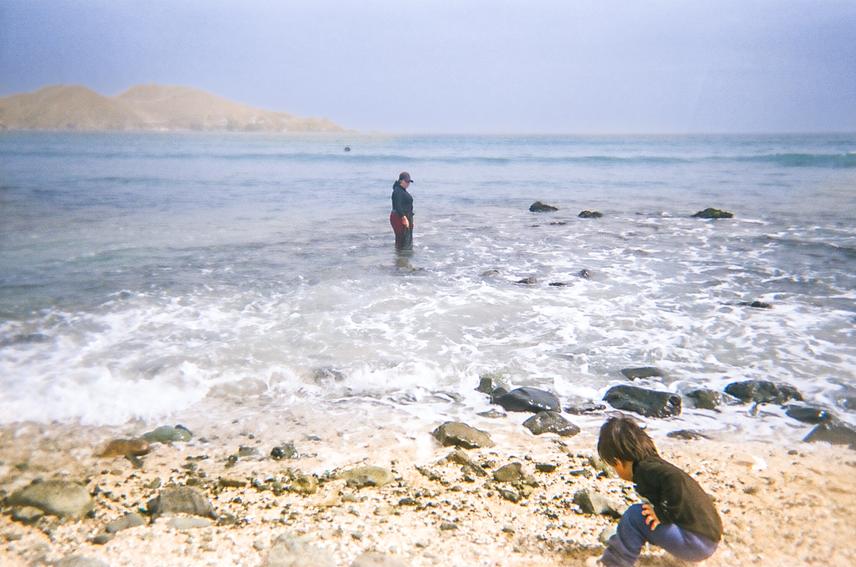
Seaweed gatherer and her son at “Las Conchitas” beach, where she carries out her daily work. Photo by a Photovoice participant (anonymous)
Second, the project will document and validate local ecological knowledge (LEK) related to the culturally and ecologically important seaweed species Chondracanthus chamissoi (“yuyo”). Through workshops and creative methods such as photography and storytelling, this knowledge will be safeguarded and translated into both a community-friendly booklet and a technical report to inform policy and management decisions.
Third, the initiative will support the co-design and implementation of a community-led ecological restoration pilot focused on seaweed habitats, alongside the development of participatory monitoring tools. These efforts will enhance local capacity to track environmental changes, respond to ongoing pollution threats, and contribute to long-term sustainable management.
By integrating gender equity, local knowledge, and ecological restoration, Seaweed Guardians seeks to generate lasting impacts beyond the project’s duration. It will support the recovery of Ancón’s marine ecosystems while strengthening the resilience, visibility, and leadership of women whose knowledge and stewardship are essential for equitable and sustainable coastal conservation.