Ravinder Kaur Kirpal Singh


Other projects

Endangered hornbills are facing lack of nesting sites. Due to historical logging practices, large cavity- bearing trees were removed. The hornbills are unable to create tree cavities for themselves. Hence, there are two scientific approaches to create nesting opportunities for hornbills; by creating artificial nests and by restoring existing tree cavities. In this final round of funding, after much growth in the team thanks to Rufford's continued funding, we aspire to target taller tree cavities for restoration, to help create nesting spaces for the critically endangered Helmeted hornbill. We also want to identify hornbill diet and improve artificial nest designs.
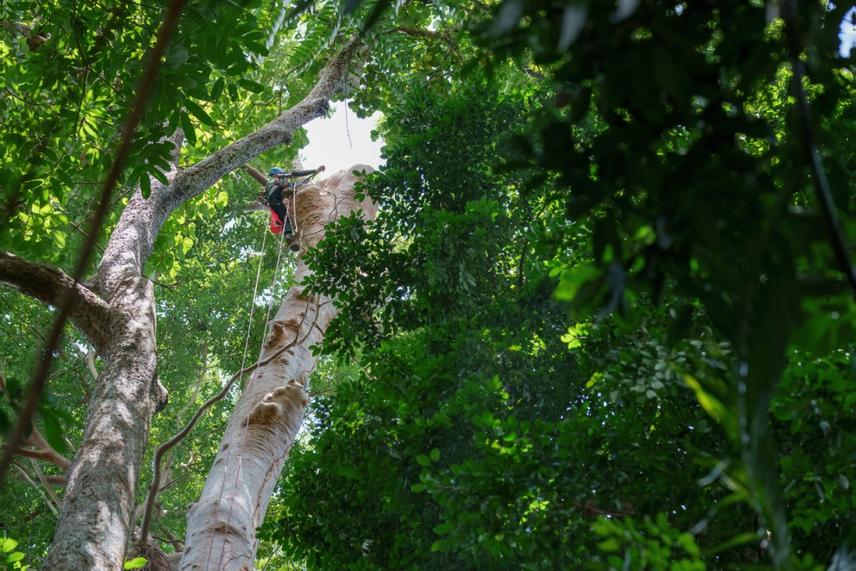
Reaching the work zone on a mature host tree © Ryan Lim
In this final round of funding, after much growth in the team thanks to Rufford's continued funding, we aspire to target taller tree cavities for restoration, to help create nesting spaces for the critically endangered Helmeted hornbill. We also want to identify hornbill diet and improve artificial nest designs.
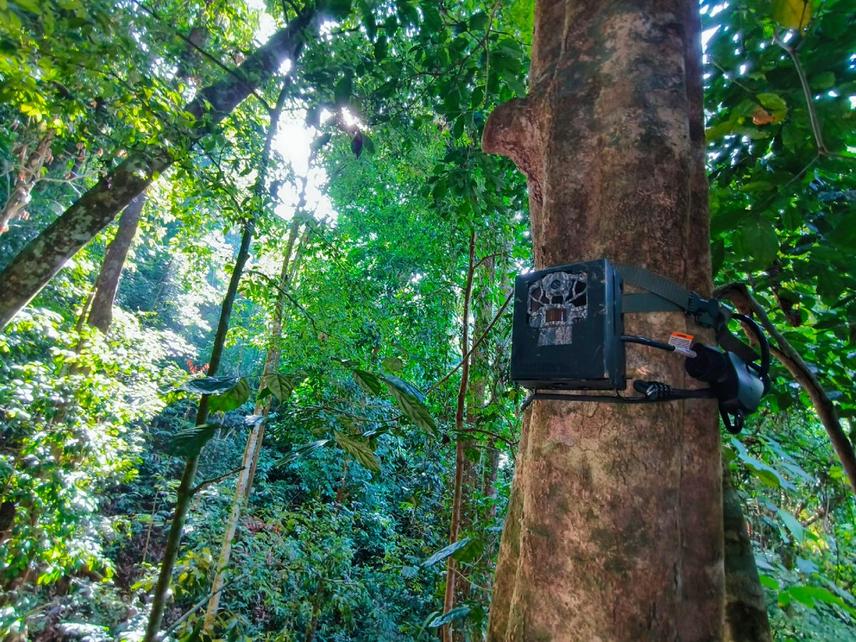
A secured camera trap is installed near the restored nest tree to record visits and confirm activity over time. Reducing repeated human entry while providing evidence of adoption, behaviour, and breeding attempts. © Gaia
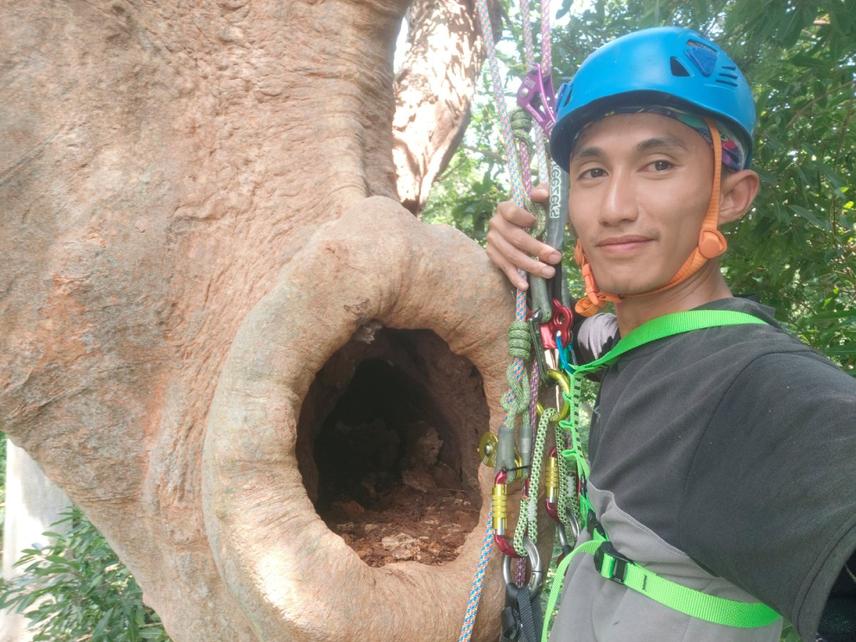
Close-up assessment of a natural hornbill cavity © Raihan Rhasidi