Prabal Bir Jung Rana

The Asiatic wild dog, or dhole (Cuon alpinus), was historically widespread across Nepal’s mid-hills but has declined drastically due to hunting, snaring, and habitat loss. Recent camera trap surveys in the Annapurna Conservation Area have captured only a few individuals, indicating a fragile recolonization. Livestock losses and human-wildlife conflict contribute to negative perceptions among local communities, which can hinder the species recovery. Understanding these perceptions and the history of coexistence is essential for ensuring a sustainable future for dholes in the region.
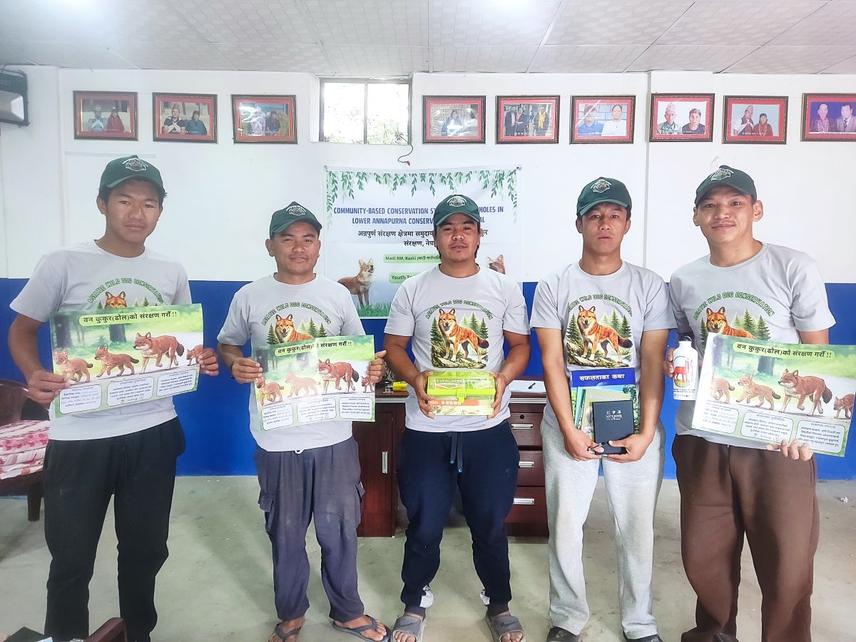
Youth participants displaying educational materials following a training session aimed at strengthening local conservation leadership for dhole conservation in Sikles. © Prabal Bir Jung Rana
This project aims to assess community views on dholes and promote their conservation through a community-based approach. By engaging forest-dependent households and herders in two-way dialogues, the project will explore past coexistence and conflict patterns and build local stewardship for wildlife protection. Through conservation awareness camps, school-based workshops, and youth participation programs, the project seeks to increase knowledge of the dhole’s ecological importance, strengthen conservation leadership among young people, encourage sustainable land-use practices, and reduce negative interactions. By combining traditional knowledge with modern conservation strategies, the project aims to establish a foundation for long-term human-dhole coexistence. Ultimately, these efforts will support the recolonization of dholes while fostering the preservation of the rich biodiversity and cultural heritage of the Sikles and Tangting villages within Nepal’s largest protected area.
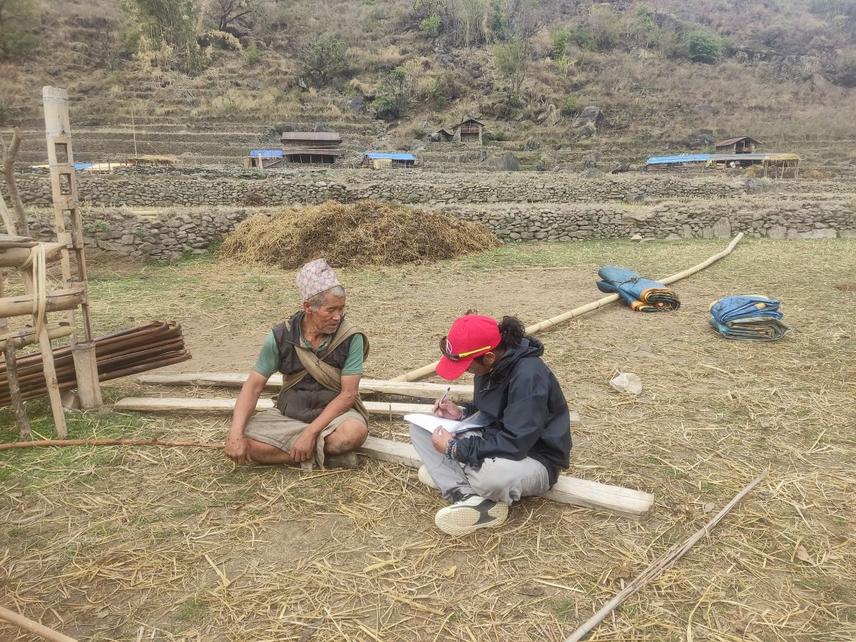
Conducting interviews with local herders in Sikles and Tangting to understand livestock depredation, forest dependency, and perceptions towards dholes. Copyright: © Prabal Bir Jung Ran
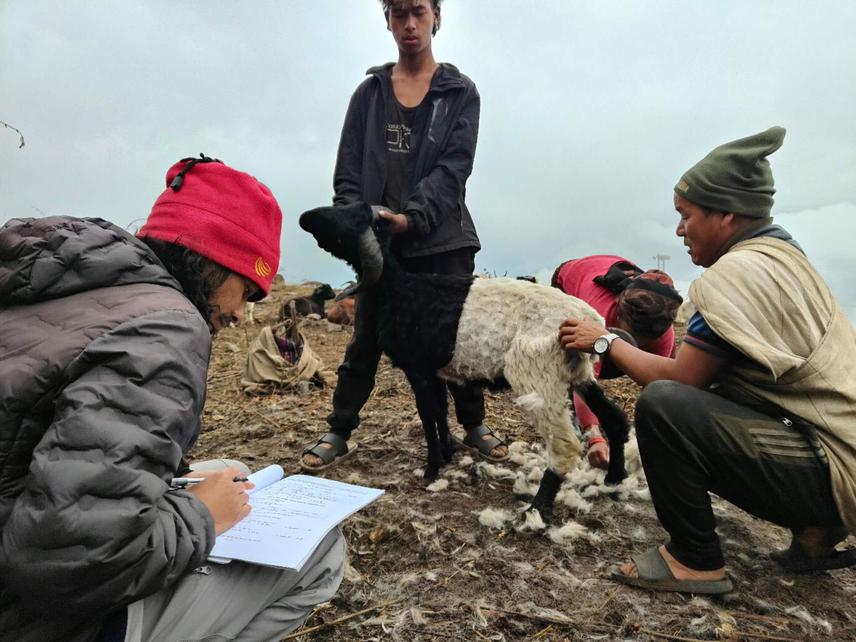
Conducting interviews with local herders in Sikles and Tangting to understand livestock depredation, forest dependency, and perceptions towards dholes. Copyright: © Prabal Bir Jung Ran