Nicolás Fuentes-Allende


Other projects
9 Sep 2022
Effect of Seasonal Humidity on the Competition and Disease Transmission Between Wild Ungulates and Livestock in the Rural Areas of the Highland Atacama Desert

25 Apr 2024
Effect of Seasonal Humidity on Crop Damage and Interspecific Interactions Between Wild and Domestic Large Herbivores in the Rural Areas of the Atacama Desert
The humid ravines of the Atacama Desert are scarce yet vital for the survival of large herbivores in this arid environment, as they provide water and nutritious vegetation throughout the year. Because of their humidity and water availability, these sites also attract local communities, who use the resources for agriculture. Unfortunately, conflicts arise when animals feed on and damage crops, and locals sometimes resort to poaching to protect their agricultural production. Since local communities often oppose the creation of protected areas where they farm, and given the lack of government funding, conservation efforts should instead focus on fostering healthy coexistence between people and wild herbivores. This approach helps to secure the survival of threatened species while respecting local livelihoods.
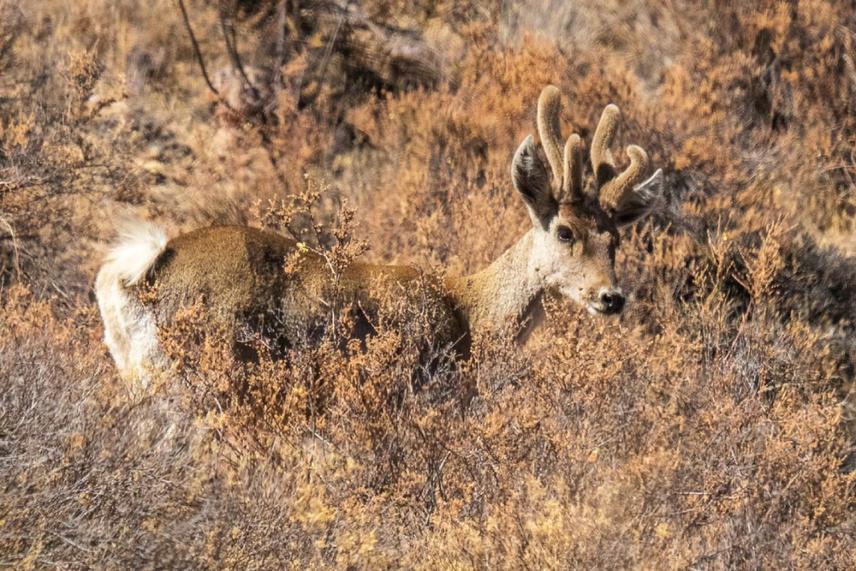
Taruka deer in Chapiquiña Village ©Facundo
This Rufford project is part of a long-term initiative that seeks to improve wildlife conservation in the rural areas of the Atacama Desert by studying the ecological dynamics between wild and domestic large herbivores, and by informing decision-makers and local stakeholders on how to prevent and manage taruka–farmer conflict. Our research includes studying habitat preferences, estimating populations, and assessing parasite transmission between wild and domestic species. The aim is to provide stakeholders with the knowledge needed to balance agricultural production with wildlife conservation in rural areas. We want to promote the protection of wildlife within productive landscapes, where threatened species are rarely prioritised.
In this project we will: i) continue our long-term monitoring of abundance, habitat preferences, and disease transmission between wild and domestic large herbivores; ii) use GPS-collar data from taruka to identify priority conservation areas within productive and human-modified landscapes; and iii) maintain a website and other communication channels to share information with environmental authorities, local communities, and the wider public. We will also maintain continuous contact with local communities and environmental authorities through direct communication with key members via WhatsApp and Google Groups, as well as by arranging virtual and face-to-face meetings. In addition, we will produce a documentary film—featuring both past and current work from this initiative—to raise awareness of this conservation challenge and promote coexistence. The film will be released online at the end of the project.