Melisa Cordero

Other projects
5 Jul 2022
Effects of the Recreation in the Presence and Activity of Medium and Large Mammals in Natural Areas of the Yunga, Argentina

The Upper Bermejo Basin in northwestern Argentina encompasses a key portion of the Yungas ecoregion and represents an important ecological corridor connecting the Andes, Yungas forests, and the Chaco. Its high biodiversity and extensive forest cover make this region a priority for conservation. Protected areas within this landscape provide essential refuges for wildlife and contribute to maintaining ecological connectivity and genetic diversity.
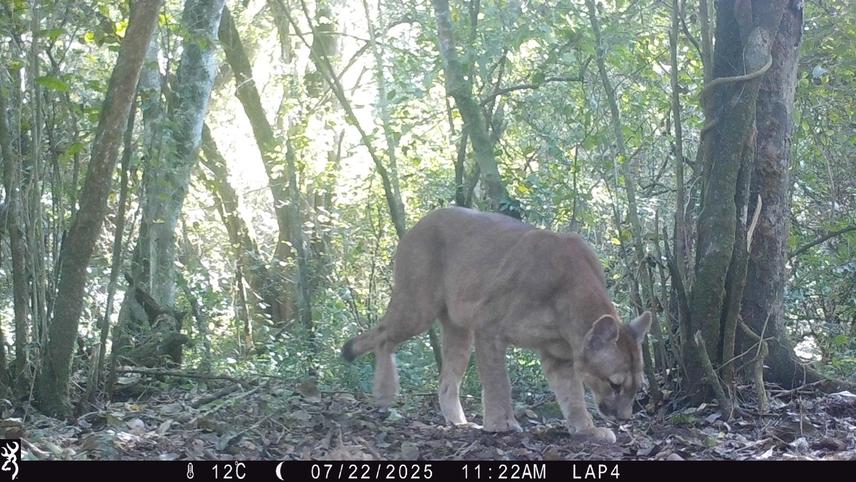
Puma concolor. Camera trap photograph. © Melisa Cordero
However, these ecosystems face increasing pressures, including habitat loss and fragmentation, fires, livestock grazing, unregulated access, roadkill, and the expansion of urban areas, which leads to an increase in recreational activities in the natural environment, including hiking, tourism, roads, and trails. While tourism and recreation provide important opportunities for connecting people with nature, their effects on wildlife in the Argentine Yungas remain poorly understood. Medium and large mammals are particularly vulnerable to these pressures because many species require extensive and connected habitats to maintain viable populations.
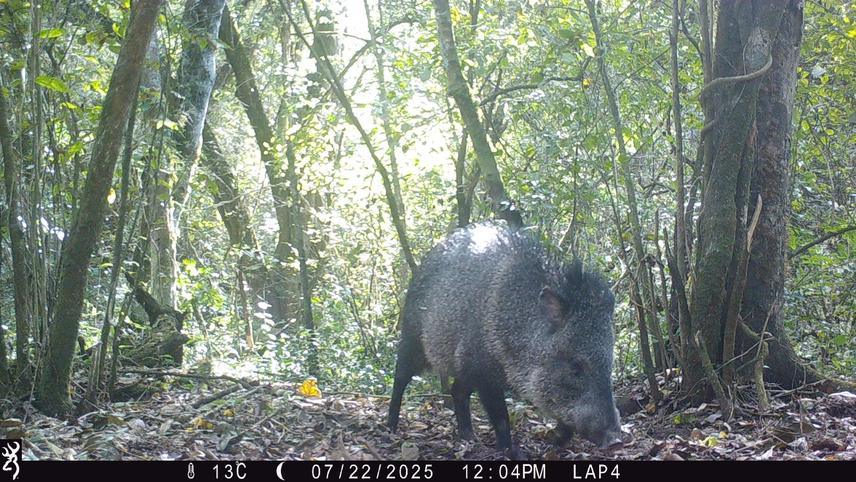
Pecari tajacu. Camera trap photograph. © Melisa Cordero
Although previous studies have documented high mammal richness in the region, quantitative information on community diversity, relative abundance, and spatial ecology remains limited. In particular, the effects of increasing recreational use of natural areas and the associated infrastructure development are still poorly understood. However, these issues may alter species occurrence, activity patterns, spatial distribution, and habitat use, potentially affecting long-term population viability.
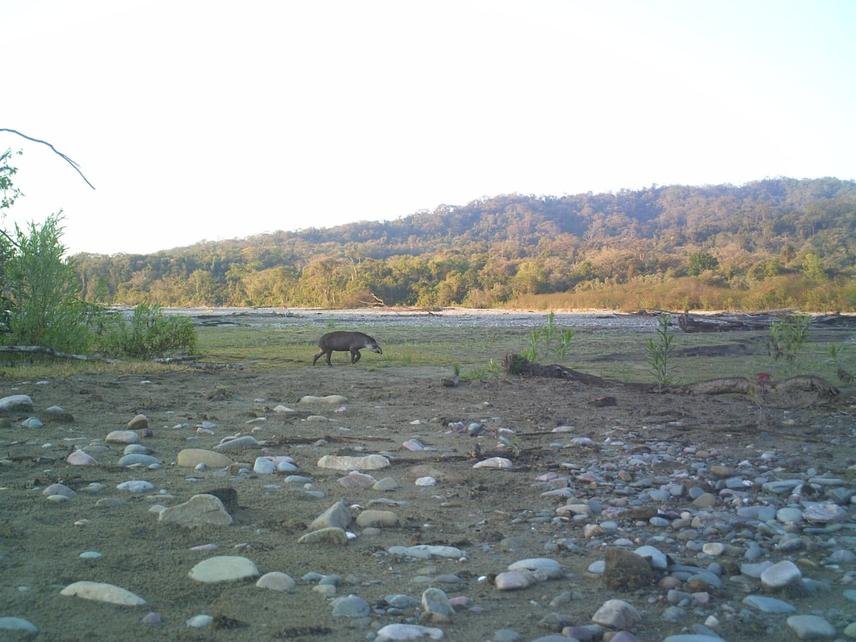
Tapirus terrestris photographed in the Upper Bermejo Yungas. Salta, Argentina. © Melisa Cordero
The main objective of this project is to evaluate how the intensity of public use of natural areas, particularly roads and trails, affects the occurrence, activity patterns, and spatial use of medium and large mammals in the Upper Bermejo Yungas. To achieve this, we will characterize the composition and diversity of the mammal community and assess ecological patterns across gradients of human disturbance.
The project will also incorporate a social dimension by assessing the perceptions, attitudes, and behaviours of local residents and visitors toward wildlife and conservation. This integrated ecological and social approach will provide a more comprehensive understanding of the interactions between human use and wildlife conservation. The results will generate baseline information on mammal diversity and spatial ecology and provide evidence to support protected-area management and conservation planning. In particular, the findings will help identify areas and levels of public use requiring management attention and inform strategies to reduce wildlife disturbance and road mortality.
Ultimately, the project will contribute to improving habitat suitability, maintaining ecological connectivity, and supporting the long-term conservation of medium and large mammals in the Upper Bermejo Basin.