Maria Lina Rinaldi García


The Pampas cat (Leopardus colocolo) is one of Argentina’s least known and most threatened small wild felids. Once widespread across the country’s open habitats, today it has become increasingly rare in southern Buenos Aires Province, where native habitats have been replaced by crops and intensive livestock production. This species is currently listed as Near Threatened globally and as Vulnerable in Argentina, mainly due to habitat loss, road mortality, and persecution related to small livestock predation. Sharing this landscape is another elusive species, the Geoffroy’s cat (L. geoffroyi), which still persists but faces similar challenges. Both species depend on the last remnants of the grasslands, one of Argentina’s most altered and least protected habitats.
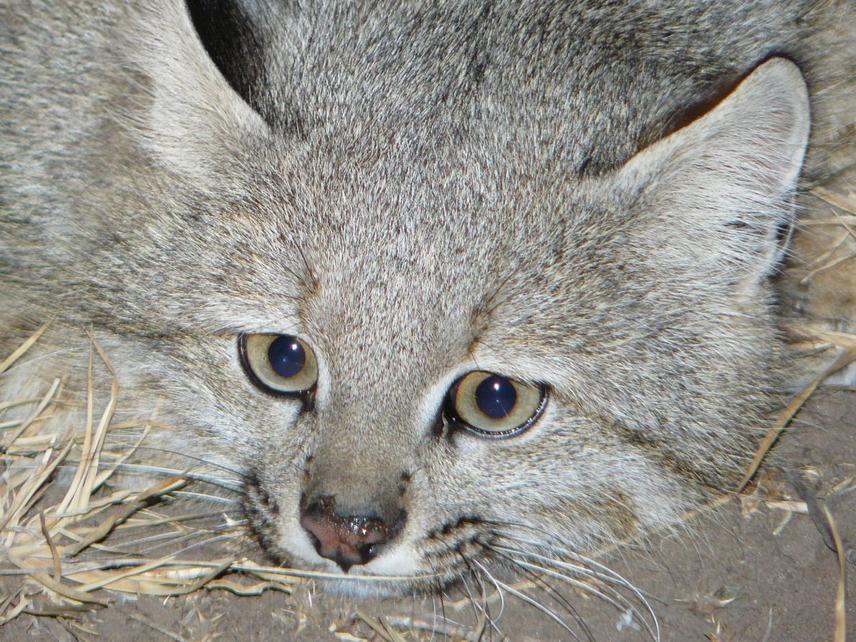
Close-up of a Pampas cat (Leopardus colocolo) in southern Buenos Aires Province, Argentina. ©GECM (Ecología Comportamental de Mamíferos Group)
This project seeks to better understand why the Pampas cat has become so rare and to promote its coexistence with local people. Through a combination of ecological research, community engagement, and education, our goal is to protect the Pampas cat and the Espinal ecoregion habitats in southern Buenos Aires Province, Argentina.
Fieldwork involves extensive camera trap surveys across ranches in southern Buenos Aires to detect the presence of the Pampas cat and identify key habitats they still use. We also aim to record roadkill incidents to locate hotspots and promote the #lentoporlafauna global campaign, which encourages drivers to slow down and watch for wildlife on the roads.
Because conflict with poultry production is one of the main threats, we seek to work directly with ranchers to improve poultry enclosures and encourage the use of non-lethal methods to prevent predation. Accompanying these actions, we aim to engage in conversations, workshops, and collaboration with local schools, where we are going to share educational materials and illustrated storybooks that help children discover and value the wildlife that lives around them.
This project aims to build bridges between people and wildlife by combining conservation actions, local knowledge, and education.
Expected outcomes include a clearer understanding of the Pampas cat’s current distribution and habitat use, a reduction in threats such as roadkill and persecution, and an increased sense of pride among local residents, especially children, for their native habitats and the wildlife that depends on them.