Luma Astun Lopes


Anthropogenic impacts on natural areas, whether through infrastructure development or the presence of humans and domestic dogs, can alter important ecological aspects of species, such as habitat use, food resources, and temporal activity.
In the Brazilian Cerrado, a vast tropical savanna, large carnivores face negative consequences from landscape transformation, yet little is known about the effects of anthropogenic disturbance in areas with some degree of protection. One particularly sensitive is the maned wolf (Chrysocyon brachyurus), the largest canid in South America, an iconic Cerrado species currently classified as vulnerable in Brazil because of habitat loss and population declines.
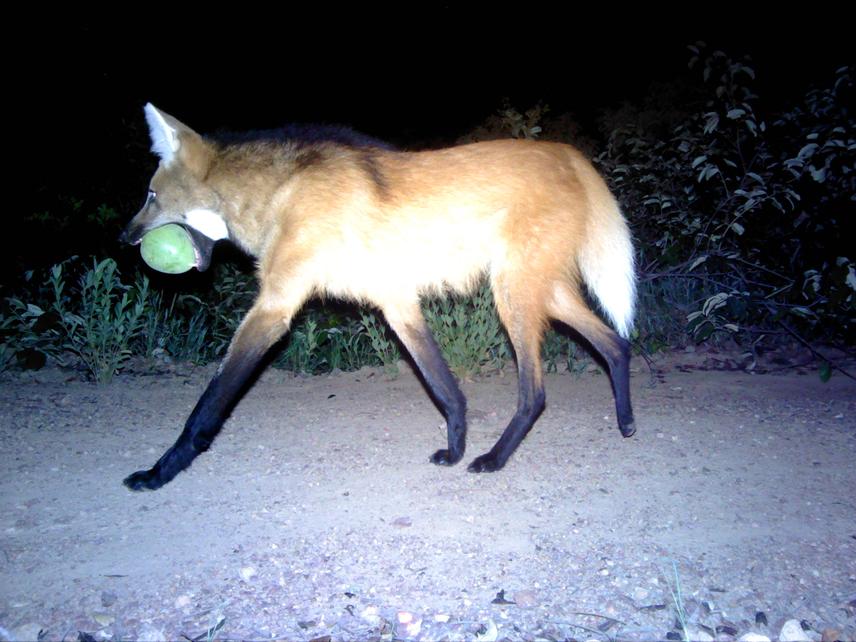
Maned wolf (Chrysocyon brachyurus) recorded by a camera trap, carrying a wolf apple (Solanum lycocarpum). (c) Pró-Onça Institute.
The aim of this study is to assess how different levels of anthropogenic disturbance in the Cerrado influence its spatial use, temporal activity, and diet. Field data will be collected in the Planalto Central Environmental Protection Area and in Brasília National Park, Federal District. Data will be collected primarily through camera trapping, allowing the assessment of spatial use and temporal activity. Additionally, dietary analysis will be conducted using metabarcoding of fecal samples collected from maned wolves at the study sites. The level of anthropogenic disturbance will be quantified using an index based on landscape variables, such as the presence of buildings, domestic dogs, roads, and other infrastructure. This approach will enable comparisons across sites with varying degrees of disturbance, providing a comprehensive understanding of how anthropogenic factors shape ecological patterns.
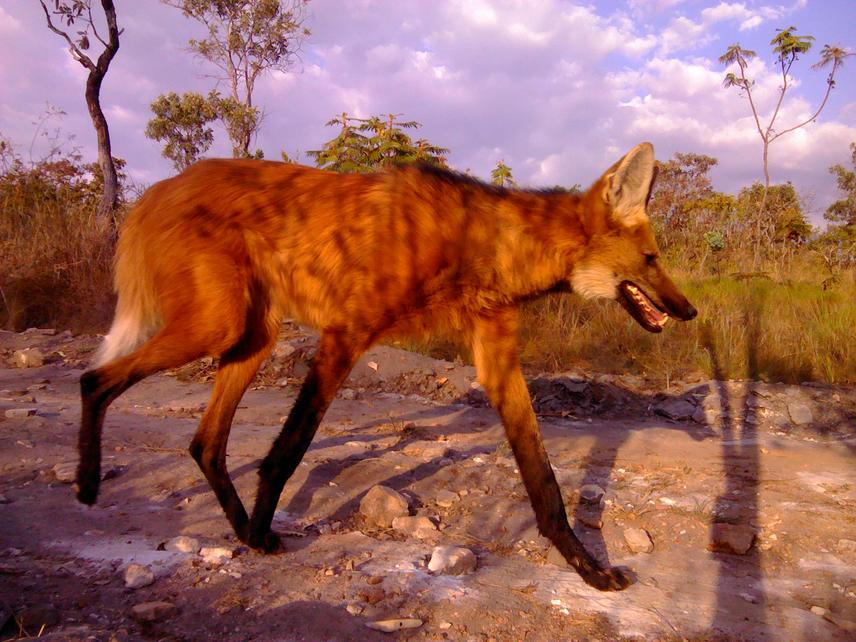
Maned wolf (Chrysocyon brachyurus) recorded by a camera trap. (c) Pró-Onça Institute.
The results will provide valuable information for the planning and management of protected areas, as well as for understanding the current status of maned wolf populations in the central Cerrado. In addition, environmental education activities will be carried out with local communities surrounding Brasília National Park, aiming to raise awareness about the species and the negative impacts that domestic dogs can have on native mammal communities. By combining ecological research with community engagement, the project seeks to contribute to long-term conservation outcomes for both the species and the Cerrado biome.
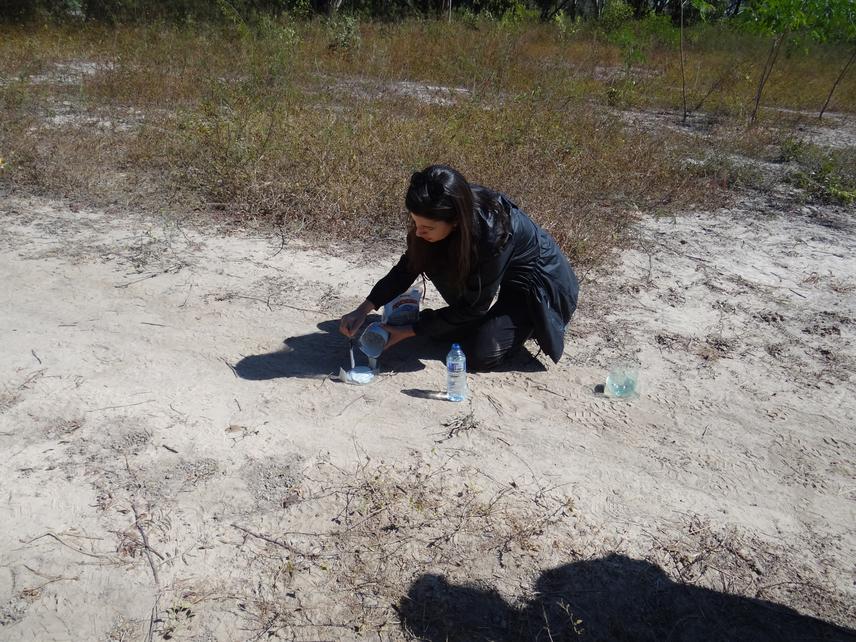
Luma preparing a plaster cast of mammal tracks for environmental education activities. (c) Zélia Souza