Justus Mulinge Munywoki


Other projects
13 May 2020
Conservation of Threatened Plant Species in Makueni, Kenya, through Community Mobilisation I

27 Apr 2022
Conservation of Threatened Plant Species in Makueni, Kenya, through Community Mobilisation II
5 Dec 2023
A Citizen Science-Based Conservation of Threatened Biodiversity through Protection of Sacred Natural Sites in Makueni, Kenya
The Nzaui–Makuli landscape in Makueni County forms part of an emerging biodiversity hotspot in Kenya’s lower eastern region (Sebsebe et al., 2017). Situated within the broader Somali–Masai phytogeographical zone, it lies at ecotonal interface between Kenya’s central highlands and coastal lowlands. This transition zone is characterised by numerous inselbergs functioning as ecological refugia, providing specialised niches for species unsuited for either wetter highland ecosystems or arid lowland plains. Adhoc botanical surveys have recorded over 800 plant species, including more than 70 endemic/threatened taxa (Malombe et al., 2015). Remarkably, this diversity rivals Mount Kenya World Heritage Site, which, despite being five times larger, records fewer than 12 unique taxa (Bussmann, 1994; Musila et al., 2008).
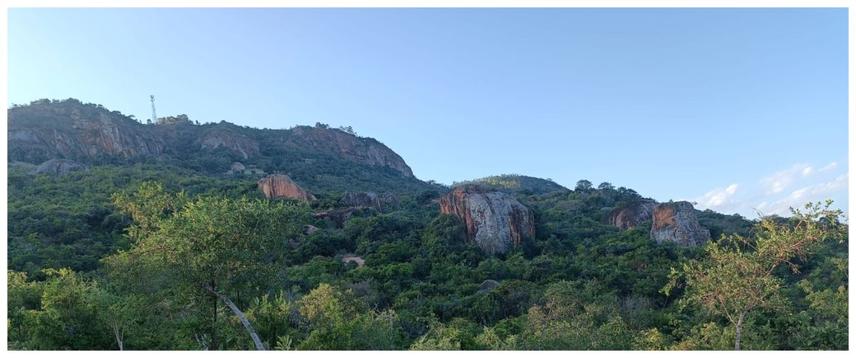
Matooi Hill Forest Ecosytem © Justus Mulinge Munywoki
Despite its ecological significance, the landscape has experienced sustained and accelerating environmental degradation over the past three decades. Forest cover has declined by 43.4% and scrublands by 20.96%, driven largely by rapid agricultural expansion (+271%) and urbanisation (+3594%) (Munywoki et al., 2021). The resulting fragmentation and degradation have impaired ecosystem functionality, species persistence, and the provision of essential ecosystem services for the local communities. Species distribution models developed under a worst-case climate scenario (RCP 8.5) further predict up to a 60% contraction in suitable habitat for globally threatened Milletia vatkei, Euphorbia friesiorum, Pavetta teitana, and Thunbergia napperae. Unfortunately, only a small portion of the landscape is formally protected, and it remains undesignated as an Important Plant Area (IPA) or Key Biodiversity Area (KBA).
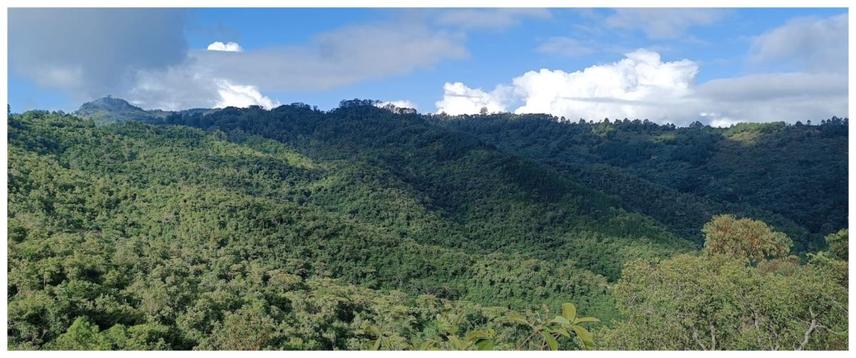
Nzaui Hill Forest Ecosystem © Justus Mulinge Munywoki
Therefore, the proposed project aims to:-
1. Profile key forest fragments within the landscape for consideration as Key Biodiversity Areas (KBA), Important Bird Area (IBA), or Other Effective Area-based Conservation Measures (OECM). This approach shifts from previously used species-specific strategies to a more holistic, ecosystem-based conservation model. By focusing on protecting entire ecosystems, the project aims to conserve threatened habitats, enhance ecological resilience, and support biodiversity.
2. Accelerate the implementation of forest landscape restoration programs and complementary initiatives in the area, promoting an integrated approach to sustainable resource management. Makueni County has conducted a Restoration Opportunities Assessment Methodology study, identifying priority county restoration opportunities. To guide these efforts, it has developed Makueni County Forests and Landscape Restoration Implementation Plan (FOLAREP) 2023-2030, which will serve as the backbone of our project.
3. Strengthen community income-generating activities that sustain biodiversity while improving livelihoods. By promoting techniques such as modern beekeeping, commercial climate-smart pasture development, and energy efficiency, the project provides alternatives to harmful land-use practices.