Gertruide Dalila Massoh


Other projects
12 Jun 2023
Distribution, Habitat Use and Population Status of African Wild Dog in the Tchabal Mbabo Mountain Range, Adamawa Region, Cameroon

14 Jan 2025
Combining Camera Trapping and Local Hunters' Monitoring Approaches to Assess Status of the African Wild Dog in a Key Ecological Area (Adamawa, Cameroon)
The leopard (Panthera pardus), was once widely distributed large felid throughout Africa, but is now experiencing increasing population fragmentation, with documented declines and local extinctions across much of its historical range.
Similarly, the African golden cat (Caracal aurata), the only forest-dwelling felid in Africa, is one of the least studied carnivores, with limited ecological data and growing evidence of population declines. Both species are classified as Vulnerable on the IUCN Red List and face escalating threats. Leopards are affected by habitat fragmentation, prey depletion, poaching, and retaliatory killings linked to livestock depredation, while African golden cats are particularly vulnerable to forest loss and snare-based bushmeat hunting.
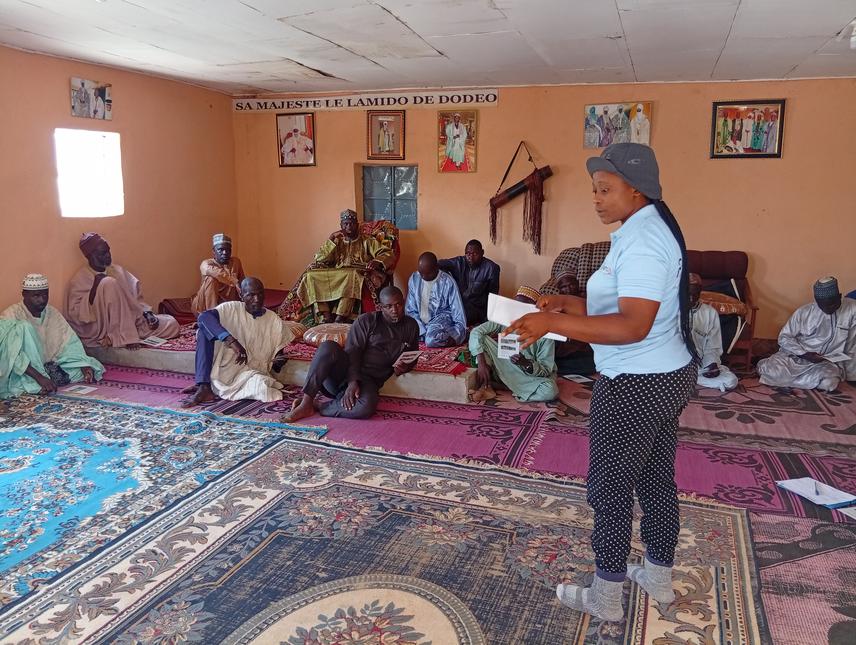
Photo 2_Massoh
Many areas in Cameroon, particularly remote highland ecosystems such as the Tchabal Mbabo mountain range (TMMR), remain poorly studied. Yet, these areas are increasingly recognised as critical refuges for elusive carnivores such as leopards and African golden cats. Our recent surveys provided the first confirmed records of both species in the TMMR, highlighting the importance of conserving this previously overlooked montane ecosystem. However, this area is under increasing pressure due to overgrazing, frequent fires and agricultural encroachment. These factors contribute to habitat degradation and reduced prey availability, putting additional pressure on carnivore populations.
In this area, little information is currently available on the distribution, activity patterns, and habitat use of leopards and African golden cats, nor on their interactions with local communities. The absence of these ecological and socio-ecological data represents a significant gap that limits the development of effective conservation strategies for the TMMR.
Therefore, this project aims to adopt an integrated approach by generating baseline ecological and socio-ecological information on leopards and African golden cats, while promoting community-based actions that address the underlying causes of habitat degradation in the TMMR. Specifically, the project will:
- assess local communities' perceptions, knowledge, and attitudes towards leopards and African golden cats, identifying potential threats linked to human–wildlife coexistence using semi-structured questionnaires;
- generate essential baseline data on species distribution, activity patterns, and habitat use through a systematic camera trap survey;
- promote sustainable pasture management, particularly by cultivating Brachiaria ruziziensis to reduce habitat degradation and limit the use of fire, thereby improving the ecosystem for predators and their prey; and
- strengthen conservation awareness through targeted education initiatives to increase community engagement and commitment to conserving the target species in the TMMR.