Cecilia Cerrilla


Other projects
28 Sep 2021
Evaluating the Biology, Population Trends, Threats and Conservation Interventions for South Africa's Most Threatened Migratory Freshwater Fish

This project is an essential next step in a long-running initiative focused on saving the Endangered Clanwilliam sandfish, South Africa’s most threatened migratory freshwater fish. The species’ range and populations have shrunk dramatically in the last decades due to dams that block spawning migrations, invasive alien fish that prey on the young, and declining flows that leave fry stranded in drying rivers. This has resulted in a concerning lack of young fish surviving to adulthood.
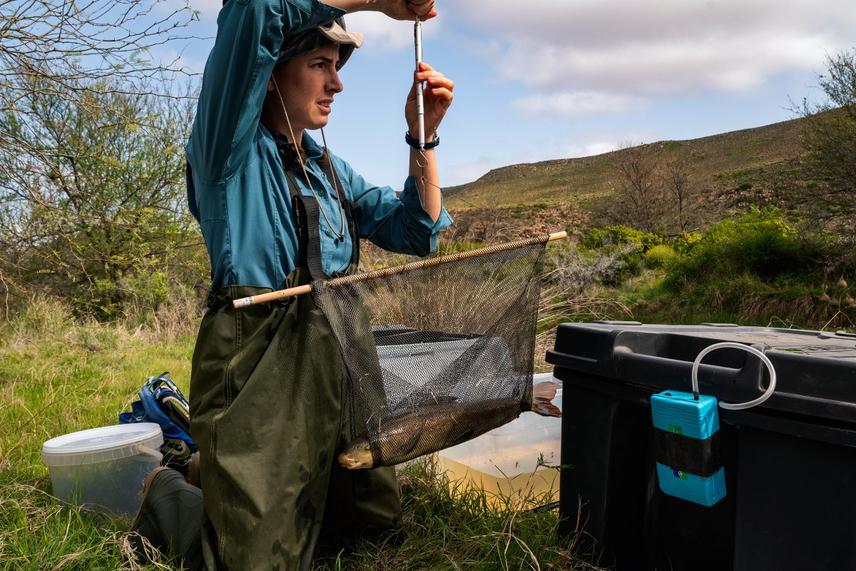
Freshwater Research Centre researcher Cecilia Cerrilla weighs an adult sandfish in the Biedouw River © Jeremy Shelton
To prevent the species’ extinction, we have adopted a ‘head-start’ approach. Since 2020, we have been proactively addressing the broken life cycle of the sandfish by maximizing juvenile survival. First, we rescue thousands of tiny juveniles from drying river pools where they face certain death and transport them to predator-free sanctuary reservoirs. Once they have grown large enough to evade most predators, we reintroduce them back into the wild. Our efforts so far have been encouraging, with over 41,000 juveniles rescued, nearly 6,000 subadults returned to the wild, and a near tripling of the size of the spawning run in a critical tributary – the Biedouw River.
This grant will allow us to continue and evaluate this important work. First, we will continue the essential, ongoing rescue and reintroduction operations to keep boosting the adult population. This project also provides employment and training to our partners in the local Heuningvlei community, who carry out the rescue operations. Second, we will conduct a system-wide survey of one of the sandfish’s last strongholds, the Doring River, to assess the recovery of the sandfish population five years into the project. This survey will provide the data we need to answer important questions about the fish's recovery, reveal the programme’s wider impact, and help us adapt our conservation strategy for years to come.