Bruno Alzugaray

The Uspallata Mountains ("Sierras de Uspallata") are home to a unique endemic flora of the high Andes and the Puna region, which is increasingly threatened by climate change and habitat alteration. The region is characterized by its aridity, where high-altitude steppes and grasslands develop under extreme conditions.
Much of the study area is located within the Villavicencio Nature Reserve, which is also a Ramsar site and part of the IUCN Green List of Protected Areas. This is a key area for conservation, education, and tourism, hosting over 90,000 visitors and 7,000 students each year.
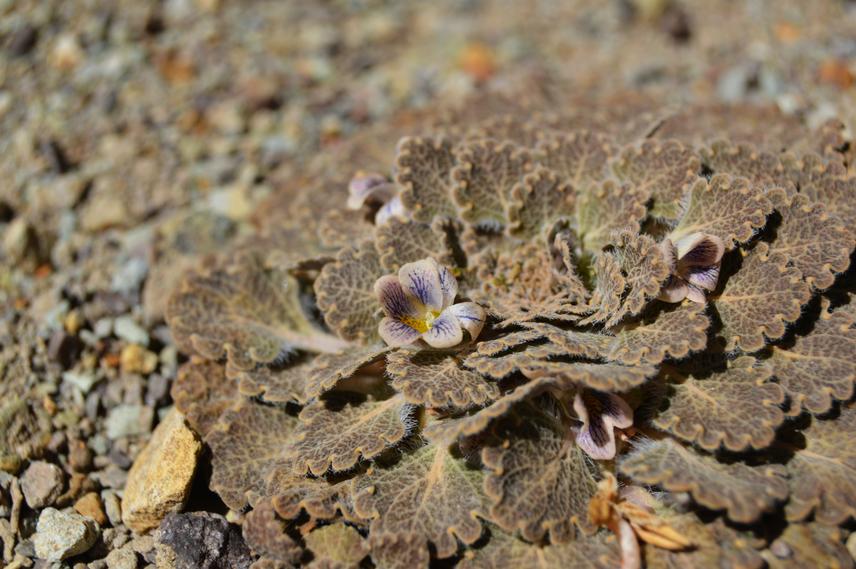
Viola flos-idae (Violaceae) in bloom. (c) Bruno Alzugaray
This project aims to assess species distributions and their relationships with environmental change, while contributing to environmental education for the local community, tourists, and mountaineers. We will focus on six species that inhabit the high elevations of the Uspallata Mountains: Adesmia stenocaulon (VU), Oxalis chachahuensis (EN-IUCN; VU-National), Viola flos-idae (NT), Valeriana descolei (EN), Gomphrena pumila (NT), and Azorella echegarayii (VU).
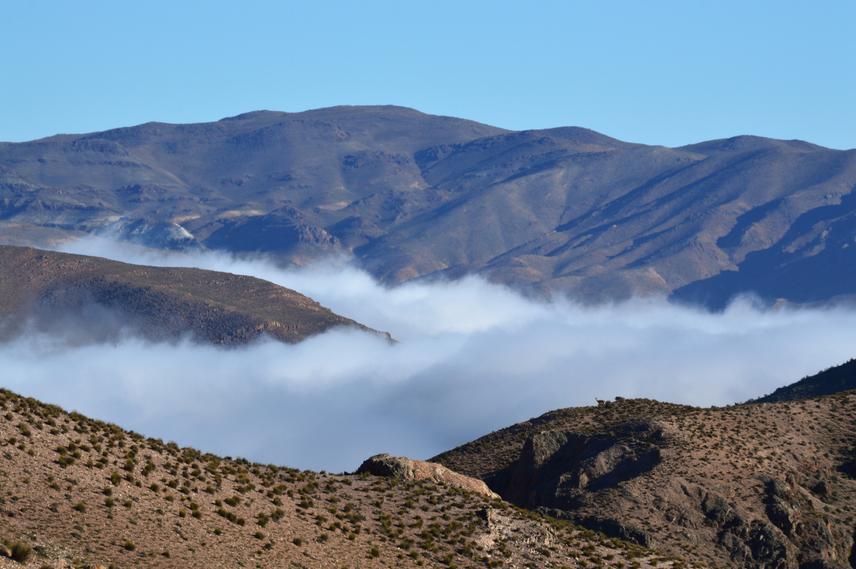
Clouds trapped between the hills of the Pampa de Canota, Uspallata Mountains. (c) Bruno Alzugaray
Studies of abiotic variables and functional traits will provide valuable information for predicting species vulnerability and developing effective in situ conservation strategies.
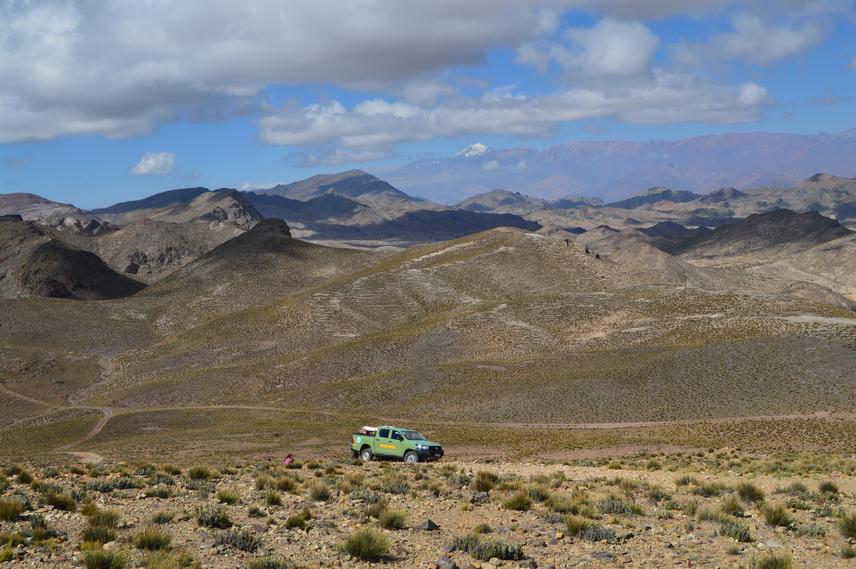
Summer in the Uspallata Mountains. (c) Bruno Alzugaray
This project will generate key information on species distributions, habitat characteristics, and responses to climate change, providing concrete input for global (IUCN) and national assessments, and contributing to the design of management and conservation measures at the regional level. At the same time, we seek to have a positive impact on the local community, park rangers, and tourism stakeholders by providing information and knowledge about these species and the conservation values of the Sierras de Uspallata ecosystems. By raising awareness and disseminating knowledge, the project aims to foster responsible and sustainable practices in the area.
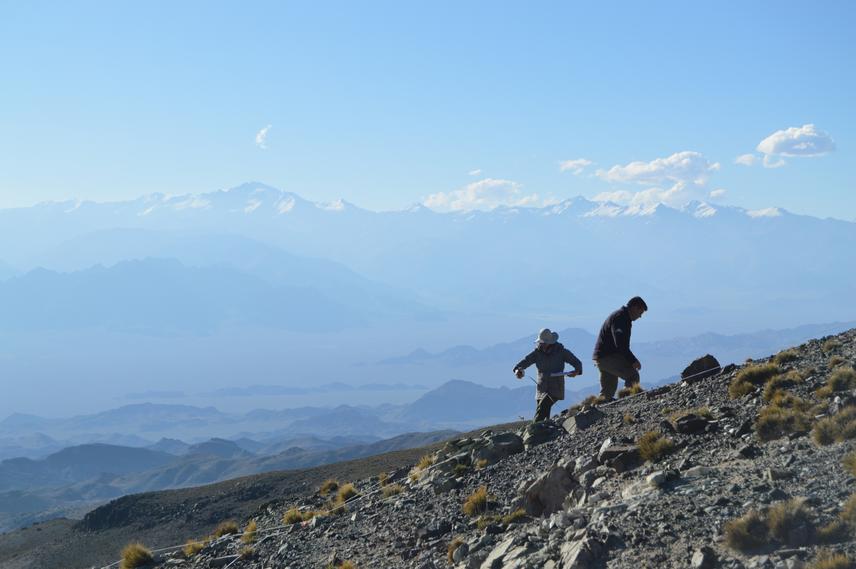
Technicians from the Villavicencio Reserve (J.M and M.B) collecting vegetation samples in the Uspallata Mountains during GLORIA surveys. (c) Bruno Alzugaray