Beatriz Lima


Fragmentation is one of the greatest threats to biodiversity because it involves reducing the habitat for most species. This leads to the isolation of populations, which can limit gene flow, increase inbreeding, and increase competition for resources and the likelihood of extinction, since small and isolated populations are more susceptible to these factors.
The dynamics of free-living organisms are influenced by the spatial distribution of habitat fragments, as this organization has an impact on their daily movements, dispersal processes, search for food, and reproduction partners. These processes are influenced by the spatial arrangement of habitat fragments and the matrix environments that surround them.
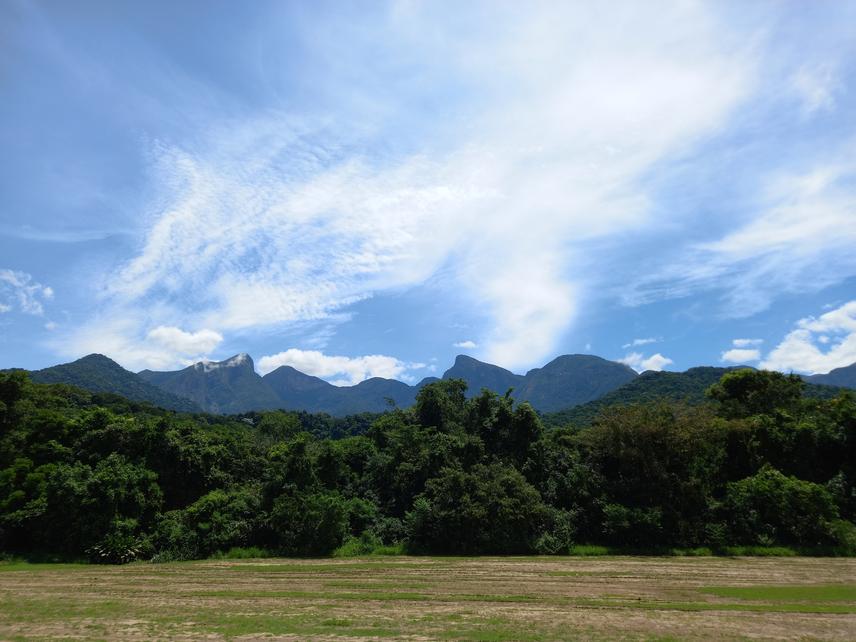
Study area: a remnant of the Atlantic Forest in Rio de Janeiro, RJ, Brazil, surrounded by deforested areas. ©Beatriz Lima.
To understand this influence, it is necessary to consider the organism and its relationship with the dynamics of the landscape. In this context, perceptual range, which can be defined as the organism's ability to recognize and orient towards a suitable habitat, is an important aspect to consider. However, studies on the ability of organisms to move in these environments are scarce. In general, for flying insects, such as butterflies, wing size data are the only information available, especially regarding species in tropical environments. In this sense, the incorporation of mechanisms involved in flight behavior (such as, for example, linearity vs. tortuosity) can provide deeper elements for understanding the ecology of tropical butterfly movement in fragmented environments.
Our main objective is to investigate how butterflies move in a fragmented landscape of the Atlantic Forest. Given that these landscapes have already been deforested, what is the best configuration that this landscape can have to allow for greater movement of butterflies?
Our study area is a remnant of the Atlantic Forest surrounded by deforested areas. We want to show the local community the importance of preserving small areas of vegetation within their lands to boost the movement of butterflies in this region. By favoring the movement of butterflies, they may even be facilitating pollination, a process that is extremely useful for the productivity of their lands.
Header image: Morpho helenor (Lepidoptera: Nymphalidae: Satyrinae) release. ©Lucas Santos.