Alberto González Gallina


Other projects
22 Aug 2017
Jaguar and Other Mammal Use of Wildlife Crossing Structures on a Highway on North-Eastern Quintana Roo State (Mexico)

Human-wildlife coexistence occurs in a variety of shared ecosystems, including along linear infrastructure (roads, railways, etc). Once a road is built it becomes nearly a permanent element in the landscape and have long term consequences for both society and the environment (van der Ree et al. 2015).
The “road effect zone” is defined as the area over which the ecological effects of roads and traffic extend into the adjacent landscape (Forman and Deblinger 2000). Roads and traffic can significantly affect individual wildlife, populations and communities. There is an evident habitat loss because of clearing of vegetation at and adjacent to roads together with further development after road construction.
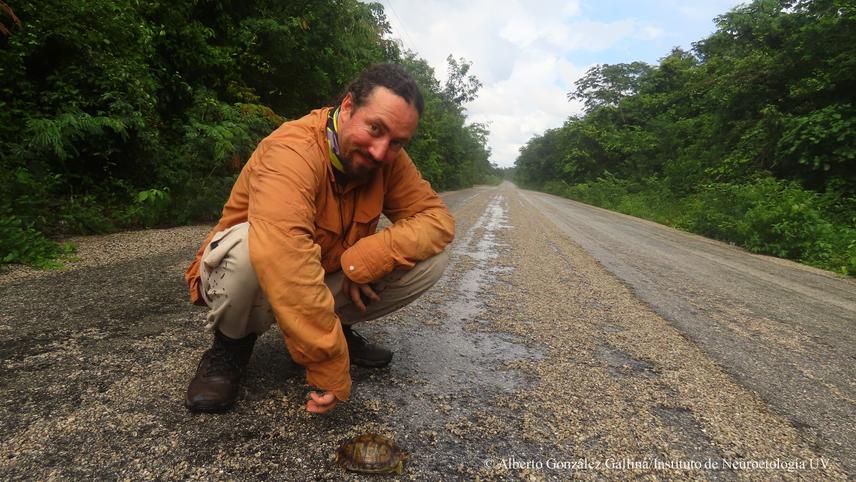
Alberto González Gallina, team leader about to move a Furrowed wood turtle or Chakpool (in maya) (Rhynoclemys areolata) a near threatened species, across one of the roads near the town of Juárez (c) Pedro Nahuat-Cervera
Due to a range of interacting biotic and abiotic effects, habitat quality often declines adjacent to roads, causing an indirect loss of habitat that can exceed the amount of habitat directly cleared (van der Ree et al. 2015). The Nuevo Xcan-Playa del Carmen highway in Quintana Roo, Mexico is one that cuts through the natural vegetation corridor linking Yum Balan and Sian Ka´an natural protected areas since it´s construction in 2014.
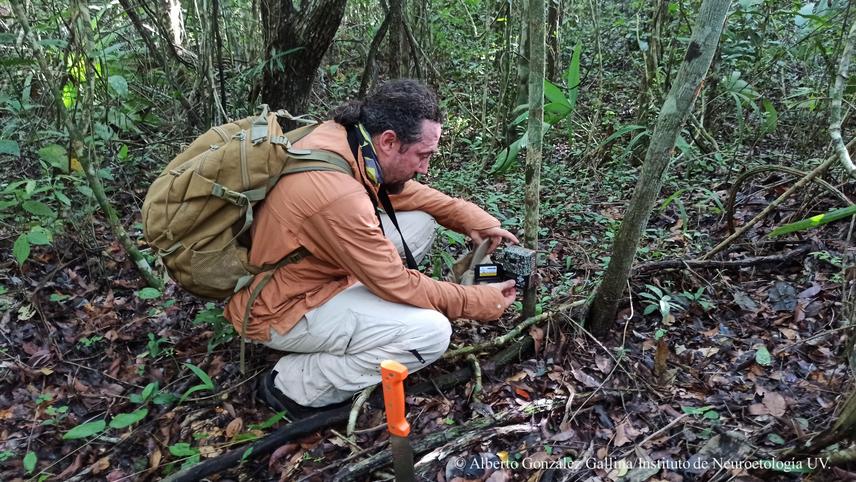
Alberto González Gallina installing a camera trap for surveying medium to big size mammals to assess if the community has changed over time after the NuevoXcan-Playa del Carmen highway was built. (c) Pedro Nahuat-Cervera
Unlike other highway projects in southern Mexico, we collected population data on the mammal community before (one year) and after (4 years later) construction via camera trapping. This is a unique opportunity to assess long-term impacts of linear infrastructure (more than a decade of operation; 2014-2025) on tropical mammal communities. Our goals are to compare using Hill´s numbers with different biodiversity indexes (q0-q2) and range-abundance graphics the assemblage of the mammal community in the site to assess if there have been any significant changes since we first study it in 2013 to the date. Also, we will assess the human-wildlife conflict/coexistence in the area through inquiries with locals so we can better understand changes in the mammal community.
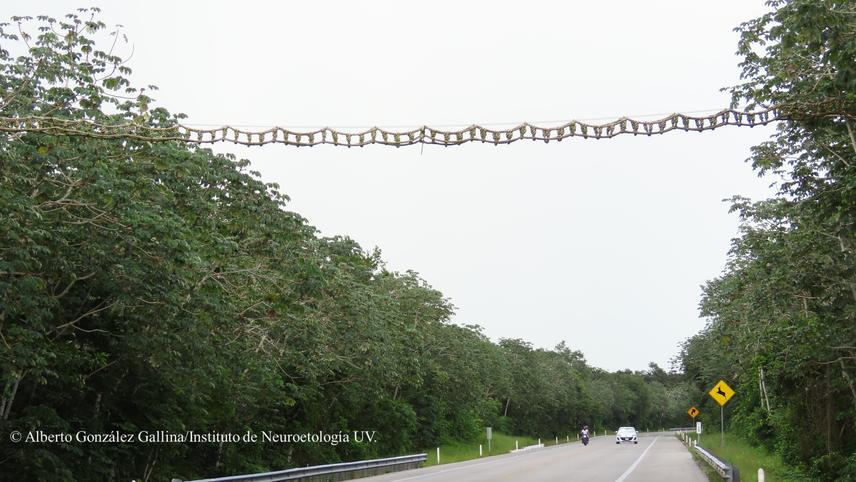
A photo of the NuevoXcan-Playa del Carmen highway with one of the rope bridges used as aerial crossings for wildlife, originally designed with spider monkeys Ateles geoffroyi as focal species. (c) Alberto González Gallina
Depending on the changes in the mammal community and human-wildlife conflicts found, we can better understand the synergy of roads with undergoing wildlife conflict and thus develop actions that can lead to a better coexistence.
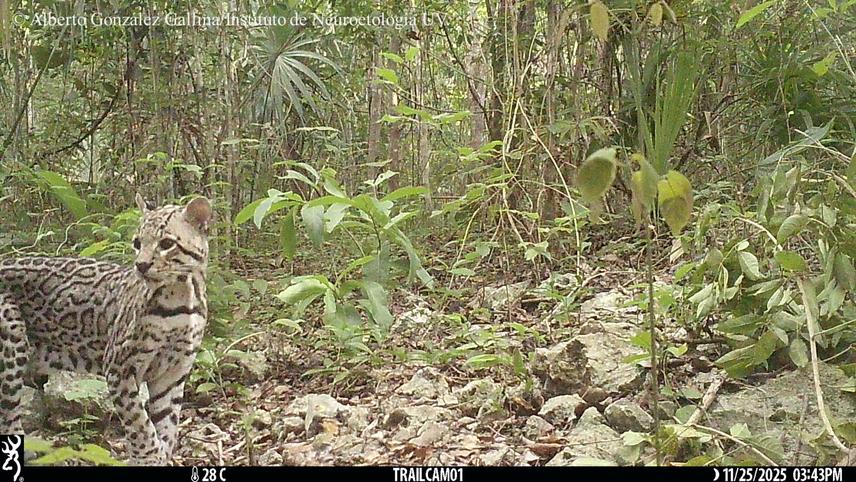
The ocelot (Leopardus pardalis) is a medium sized cat considered to be Least Concern by the IUCN but endangered by the Mexican law. (c) Alberto González Gallina.
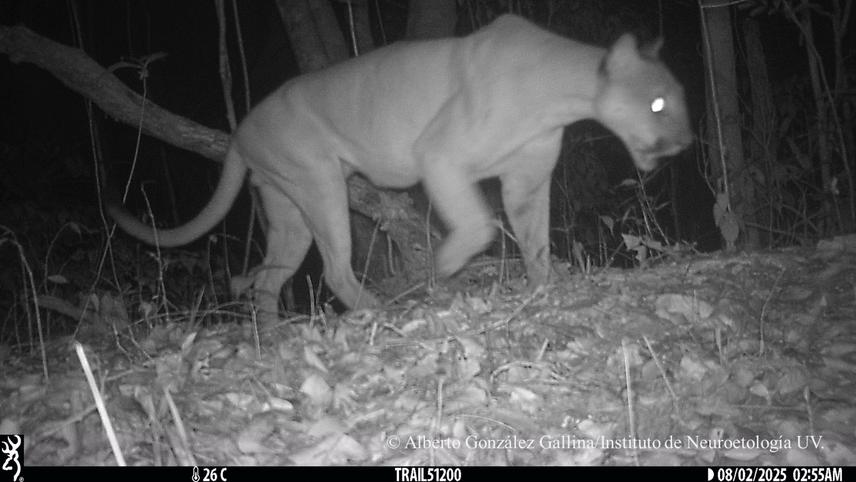
The puma; second largest carnivore in the Yucatan Peninsula after the jaguar. It is an important species that often gets in conflict with humans due to cattle predation. (c) Alberto González Gallina.
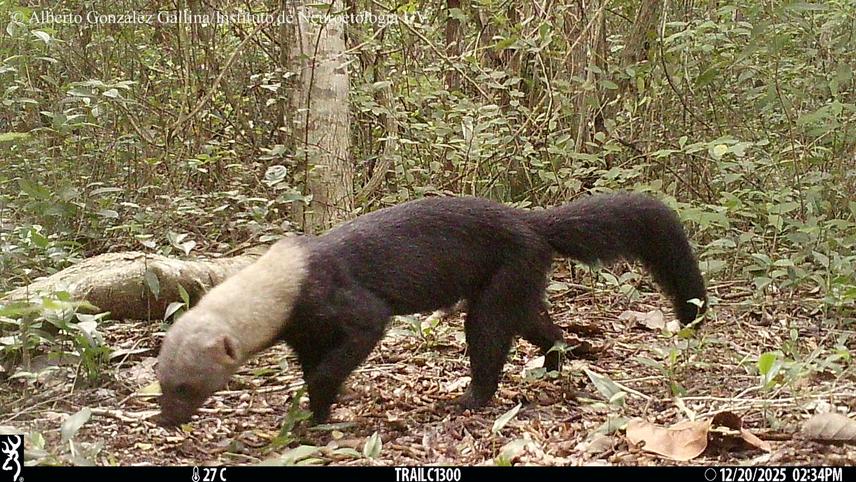
The Tayra (Eira barbara) is one of Mexico´s biggest mustelids, although considered of Least Concern by the IUCN, it is considered endangered by Mexican law. (c) Alberto González Gallina.