Viet Dai Phan

Other projects
7 May 2021
Population Status, Distribution and Threats of the Endangered Forest Musk Deer (Moschus berezovskii) in Huu Lien Nature Reserve, Vietnam

8 Dec 2023
Monitoring Behaviour Activities of Forest Musk Deer at Latrine Sites for Conservation Implementations
The forest musk deer (Moschus berezovskii) is a solitary, crepuscular ungulate endemic to central and southern China and northeastern Vietnam (Dang et al., 2008; Wang & Harris, 2017). It is listed as Endangered (EN) on the IUCN Red List due to severe population declines driven by poaching and habitat degradation (IUCN, 2023). Since 2020, our team has carried out systematic field surveys and camera-trap monitoring in Huu Lien Nature Reserve (NR), a karst-dominated landscape in Lang Son Province, to clarify the conservation status of this species.
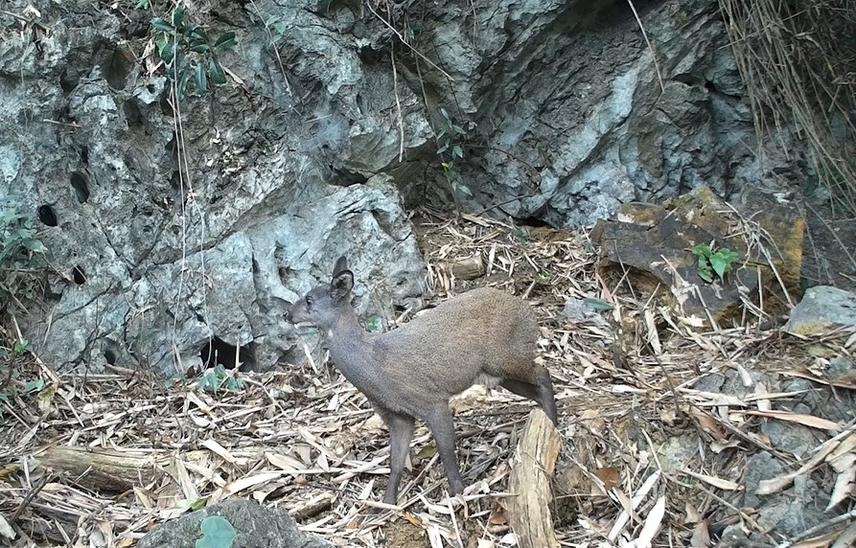
Forest musk deer in Huu Lien NR (c) Dai Phan & Dung Tran/ VNUF
Our surveys confirmed the continued presence of M. berezovskii in Huu Lien NR (Tran et al., 2021). A subsequent population assessment using spatially distributed camera traps suggested that fewer than 10 individuals remain, indicating an extremely small and fragmented population. In 2023–2024, we conducted the first behavioral study of musk deer in Vietnam focused on latrine site use. Over one year, 25 visits were recorded at active latrines, with most activity during the breeding season. Importantly, we documented the first evidence of mating behavior at a latrine site in Vietnam, contributing new insights into reproductive ecology and olfactory communication (Tran et al. 2024).
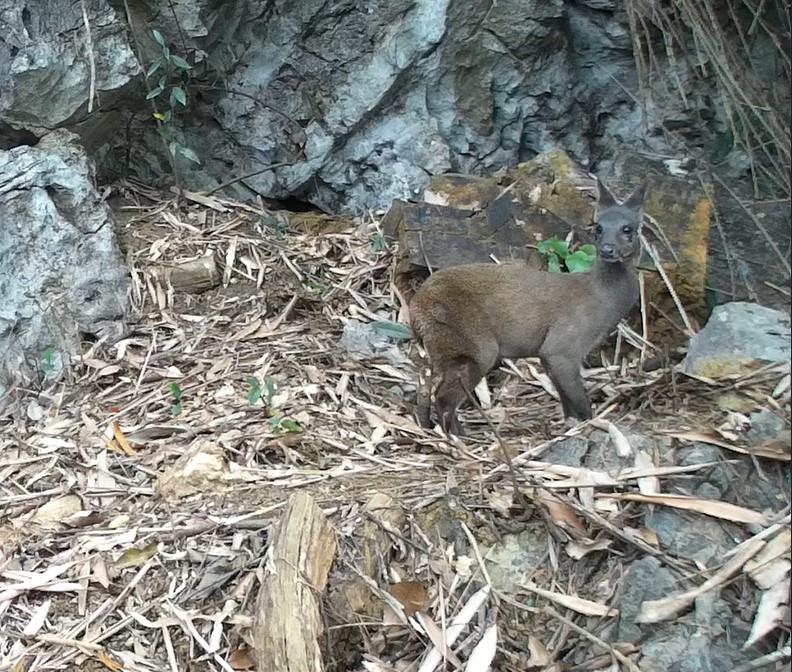
Forest musk deer in Huu Lien NR (c) Dai Phan & Dung Tran/ VNUF
To improve conservation planning, the proposed project will incorporate an assessment of habitat selection, a key ecological component that has never been examined for Vietnamese populations. Habitat variables will be measured at active latrine sites and compared with randomly selected control plots to identify environmental factors—such as vegetation structure, canopy cover, terrain, disturbance level, and distance to water—that influence habitat preferences in karst forests. This information will help prioritize patrol areas, locate additional latrine sites, and guide habitat protection.
In the study, we aim for four specific objectives:
1. Assessing community awareness and attitudes toward musk deer
2. Assessing habitat selection of forest musk deer
3. Strengthening technical capacity of Huu Lien NR staff
4. Raising awareness among communities and schoolchildren.