Stephanie Itzel Villagómez Vélez

Other projects
26 Mar 2021
Assessment of Microplastic-Bound Persistent Organic Pollutants (POPs) in Whale Shark Aggregations in Bahía de los Angeles

13 Jun 2023
Polycyclic Aromatic Hydrocarbons and Organochlorine Pesticides in the World’s Largest Fish and its Food in the Whale Shark Refuge Area in Bahía de La Paz, Mexico
This project seeks to address key conservation challenges for chondrichthyan species along the coast of Oaxaca, Mexico—a region that supports high marine biodiversity and artisanal fishing communities but faces increasing threats from marine pollution, limited scientific data, and unsustainable tourism practices.
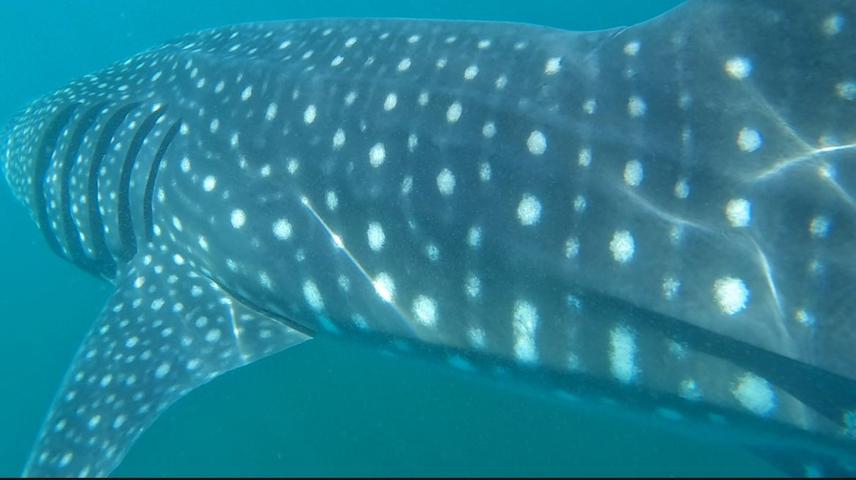
The Whale Shark Photo by Zoé Gracida Gómez © Whale shark photo/Zoé Gracida Gómez
Building upon previous Rufford-funded projects that first detected polycyclic aromatic hydrocarbons (PAHs) in whale shark skin, this initiative expands contaminant monitoring to a broader range of chondrichthyan species while integrating scientific research with citizen participation, environmental education, and the promotion of sustainable whale shark tourism.
The project aims to generate scientific knowledge on the presence and bioaccumulation of contaminants (PAHs, OCPs, and microplastics) in chondrichthyans and their habitats along the Oaxacan coast; strengthen community engagement through citizen science by involving local fishers, service providers, and residents in environmental monitoring and conservation activities; promote sustainable management practices for whale shark tourism through data-driven strategies, carrying capacity assessments, and the development of guidelines for responsible interaction; and foster environmental awareness and stewardship through forums, workshops, and creative participatory actions such as beach cleanups and monitoring events that encourage long-term commitment to conservation.
This collaborative effort with local communities will combine ecological monitoring, contaminant analysis, and participatory approaches to establish the first comprehensive baseline of contaminants in chondrichthyan species along the Oaxacan coast. The results will contribute to evidence-based conservation policies, strengthen sustainable tourism initiatives, and support coastal communities whose livelihoods depend on healthy marine ecosystems.