Singye Wangmo


Tigers are among the world’s most iconic yet endangered species, having lost more than 90% of their historic range. Bhutan remains one of the few important strongholds for the species and is therefore critical to its long-term survival. However, coexistence between people and tigers remains challenging. Between 2011 and 2022, more than 470 livestock were reported killed or injured by tigers, largely in central Bhutan.
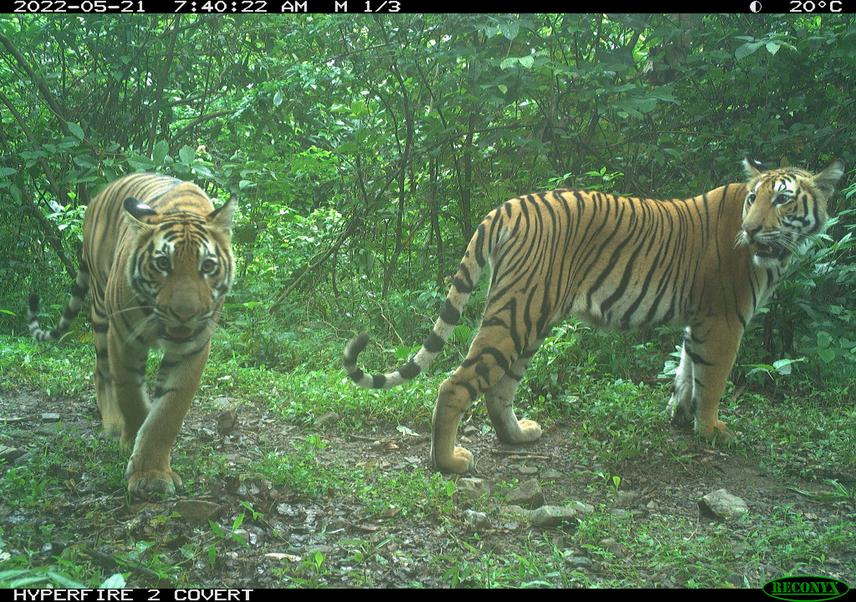
Tigers. (c) DoFPS, RGoB
As human activities and livestock increasingly extend into natural landscapes, managing human–carnivore conflict is particularly difficult in developing countries such as Bhutan. Affected communities are often low-income rural households that depend on agropastroralism, while the carnivores involved are globally threatened. There is therefore an urgent need for research that reconciles the ecological requirements of tigers with the social and economic realities of local communities and supports sustainable, landscape-level coexistence strategies.
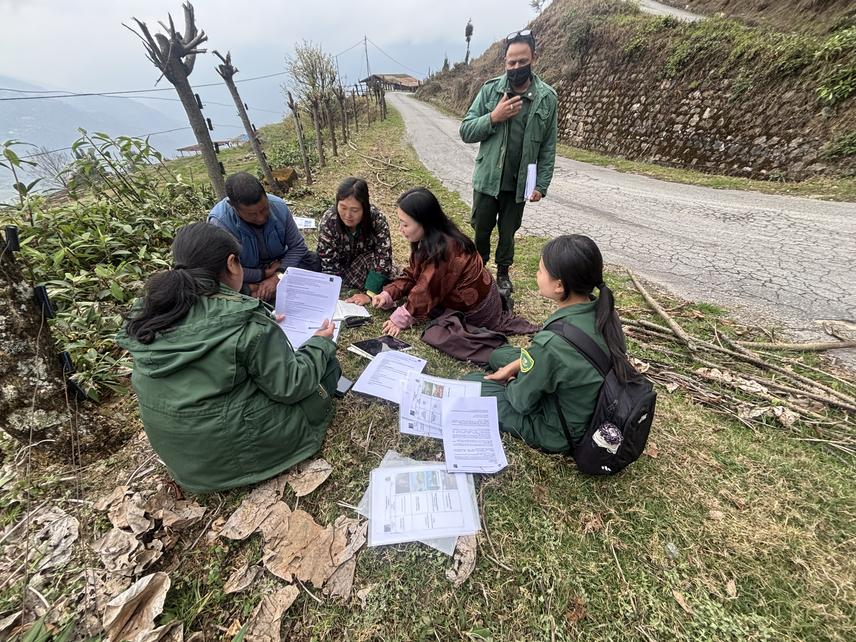
Field data collection. (c) Singye Wangmo
This project addresses one of Bhutan’s most pressing conservation challenges: improving coexistence between people and tigers (Panthera tigris tigris). It will provide a comprehensive assessment of the costs of living alongside tigers by quantifying both tangible impacts, such as livestock losses, and intangible impacts, including fear, stress, and changes in daily activities and behaviour.
The study will use a discrete choice experiment to assess community preferences and trade-offs associated with living alongside tigers across affected districts in central Bhutan. It will translate these preferences into comparable monetary and species-equivalent measures and evaluate which management interventions provide the greatest perceived social benefit relative to their cost. For example, the study will assess whether communities derive greater benefit from investments in predator-proof livestock corrals than from increased compensation payments. It will also examine how attitudinal and socioeconomic factors, including fear, trust, household wealth, livestock dependence, and ecocentric values influence people’s preferences.
The overall goal of the research is to directly inform decision-making and policy development for human–tiger coexistence in Bhutan. By integrating ecological, social, and economic perspectives, the study will provide policymakers with a clear, evidence-based understanding of what communities require to live safely and sustainably alongside tigers. The findings will support the development of policies and interventions that are economically efficient, socially equitable, culturally appropriate, and ecologically sustainable