Sasha Dines


This project advances the conservation of the Endangered Indian Ocean humpback dolphin (Sousa plumbea), listed on both the global and South African IUCN Red Lists due to escalating pressures from coastal development, vessel traffic, underwater noise, and declining habitat quality. In South Africa, national conservation planning groups prioritise long-term monitoring at key sites, with Mossel Bay identified as critical for the South Coast subpopulation. Global gap analyses for S. plumbea have also highlighted the absence of standardised pre-, during-, and post-construction monitoring as a major data deficiency, creating an urgent need for baseline datasets that quantify dolphin presence, behaviour, and soundscape conditions prior to coastal development.
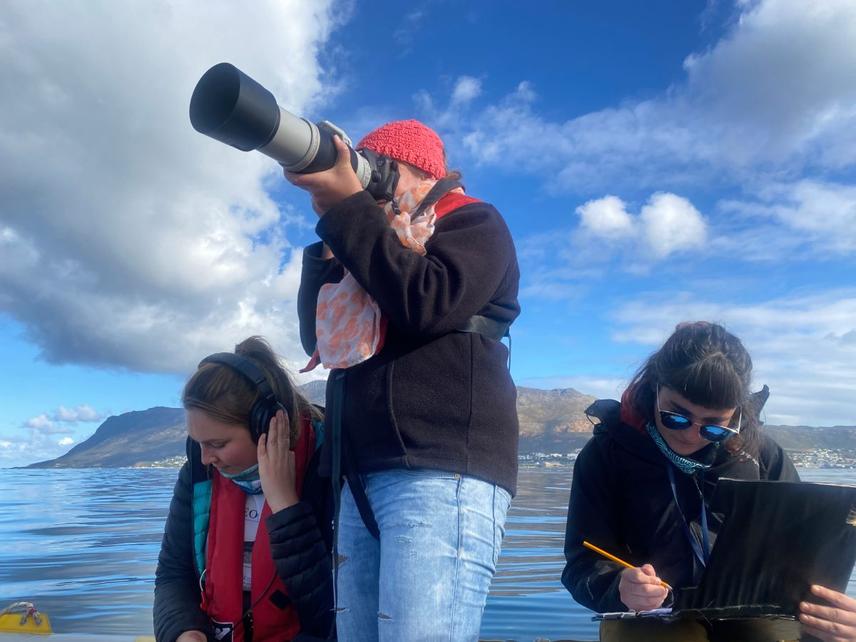
Seasearch team (L to R Sasha Dines, Tess Gridley, Cat Nadin) working with dolphins at sea off Cape Town, South Africa - collecting Underwater Acoustics, photo Id and behavioural data © Copyright Seasearch research and conservation
Therefore, Mossel Bay represents a rare, time-sensitive opportunity to address this gap. The site benefits from over a decade of acoustic and photo-identification data, established analytical pipelines, tested deployment locations, and a custom humpback dolphin whistle classifier developed during previous research. By combining long-term passive acoustic monitoring with boat-based photo-identification surveys (linked to the Happywhale platform), the project will generate individual- and population-level insights into habitat use, health, and noise exposure.
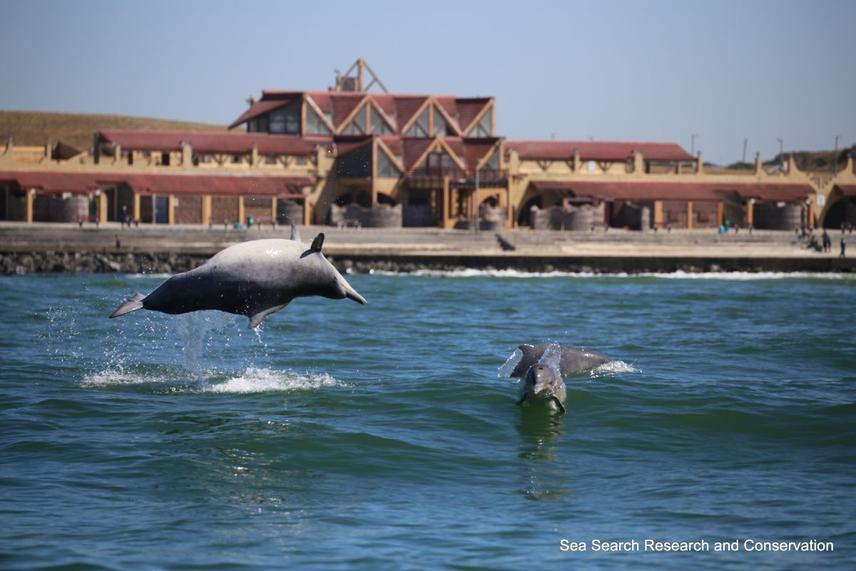
Humpback Dolphins at Strandfontein, Cape Town, putting on a show outside the old Pavilion. x © Copyright Seasearch research and conservation
With imminent harbour expansion posing a direct threat to key dolphin habitats, Mossel Bay provides an ideal case for implementing standardised baseline monitoring. The outputs will directly inform Environmental Impact Assessments, mitigation strategies, and policy decisions, delivering locally actionable data while providing a globally relevant model for pre-impact monitoring of coastal cetacean populations.
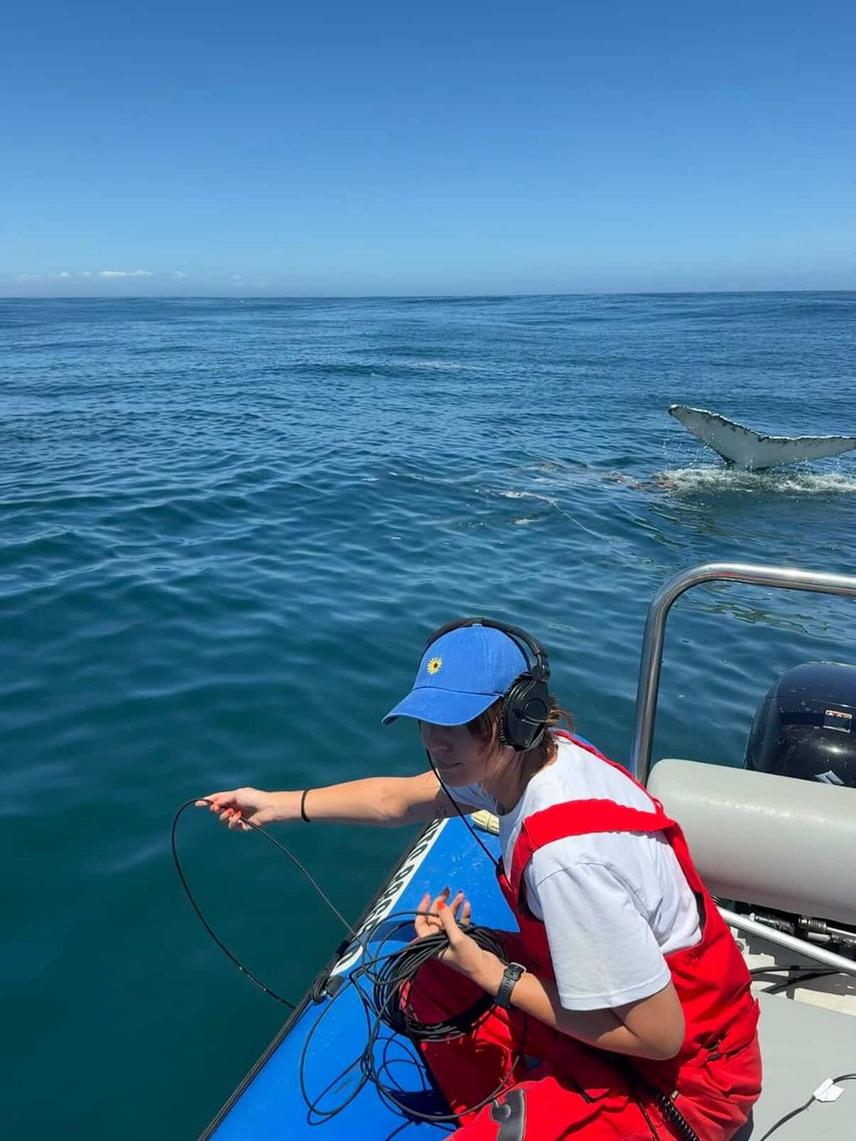
Sasha Dines recording underwater whale calls using an HTi hydrophone with Humpback whale supergroups off the west Coast, South Africa, January 2026 © Copyright Seasearch research and conservation
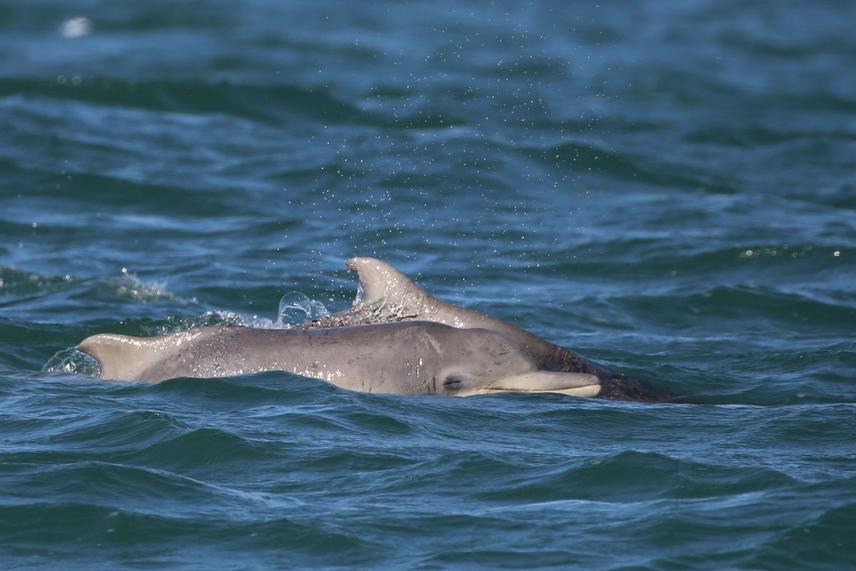
Two humpback dolphins at the surface during focal follows during sasha Dines’PhD data collection in Mossel Bay, South Africa © Copyright Seasearch research and conservation
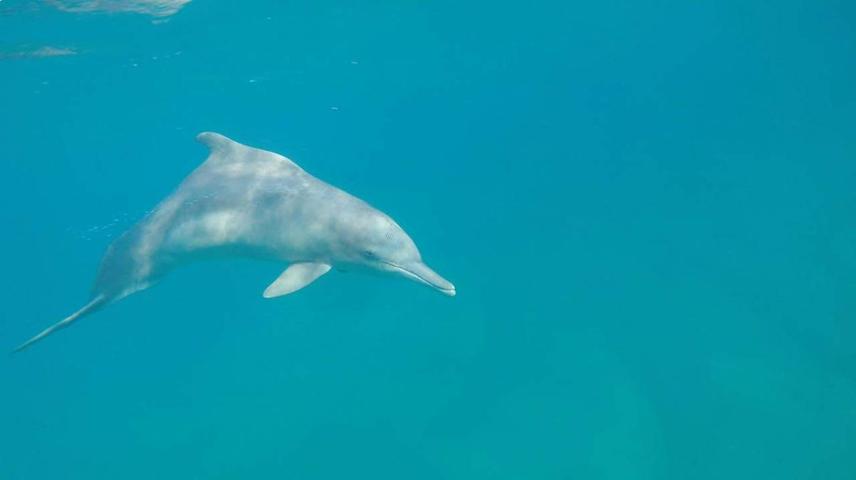
Herme, one of the resident humpback dolphins in Ponta do Ouro Marine Reserve, Mozambique, recorded in collaboration with the Dolphin Encounters Research Centre for Sasha Dines PhD © Copyright Seasearch research and conservation