Oruka Ivan


The Critically Endangered Rüppell’s Griffon Vulture (Gyps rueppellii) is one of eight vulture species foraging across Uganda’s protected areas and is now at the brink of extinction (Birdlife International, 2021). . Yet, it provides crucial ecosystem services by disposing of livestock and wildlife carcasses, thereby preventing the spread of zoonotic diseases that threaten both animals and humans while also recycling nutrients within ecosystems (Den Heever et al., 2021).. However, populations have declined drastically due to poisoning, habitat loss, electrocution, and belief-based uses (Buij et al., 2016; Ogada et al., 2012; Ogada et al., 2016). Between 2009 and 2013, only 232 individuals were recorded across Uganda’s four major national parks (Pomeroy et al., 2015). The Ngolonyako nesting site in Luku Central Forest Reserve, approximately 60 km north of Murchison Falls National Park remains the only known breeding site for this species in the country (Oruka et al., 2025).
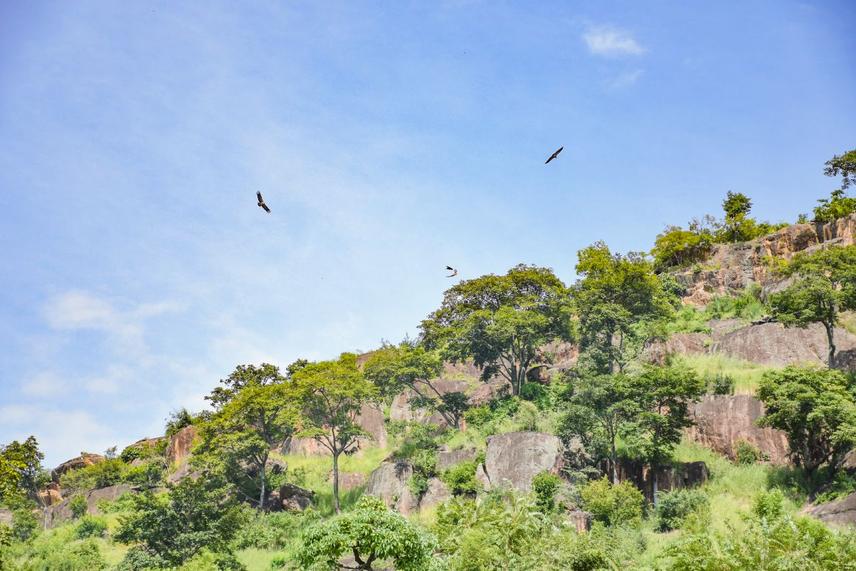
Nesting cliff with the white wash areas denoting nesting ledges for the under study Ruppell's vulture © Ivan oruka
The Ngolonyako site lies within a fragile socio-economic landscape influenced by both host communities and a large refugee population from South Sudan and the Democratic Republic of Congo. Over 90% of residents depend directly on natural resources for their livelihoods (Arua District Investment Profile, 2017). This dependence places immense pressure on forests through farming, charcoal burning, and settlement expansion, leading to degradation of nesting and foraging habitats and threatening the survival of Uganda’s last breeding population (Oruka et al., 2025).
Moreover, little is known about the breeding ecology of this species at Ngolonyako. Existing research on Rüppell’s Vultures in Uganda has primarily focused on road counts and carcass provisioning studies with only one study addressing nesting areas (Pomeroy et al., 2015; Oruka et al., 2025). However, this earlier work did not consider the unique refugee–host community context. This project seeks to bridge that gap by combining scientific monitoring with community-based conservation. Specifically, it will assess population size, breeding success, and site-specific threats while also documenting local knowledge, beliefs, and attitudes toward vultures.
Using a citizen science approach, the project will train local volunteers, including women as nest monitors to track breeding activities, report illegal practices, and raise awareness about vultures’ ecological roles. Findings will inform Uganda’s National Biodiversity Strategy and Action Plan II, the Vulture Multi-species Action Plan, and the Convention on Migratory Species. By promoting community stewardship and protecting critical habitats, this initiative will help secure the future of the Rüppell’s Griffon Vulture, which is an umbrella species whose conservation will also safeguard broader biodiversity and strengthen ecosystem resilience.