Onome Ofoman

Mangrove ecosystems are declining worldwide, yet many restoration projects focus on planting trees without considering whether these sites will retain their ecological function over time (Zimmer 2022). One important but often overlooked factor is genetic diversity, the total variety of genes and traits within a tree patch. Low genetic diversity of plants has been shown in other ecosystems to affect resilience to disturbance (Amos 2001), and support of insects and other organisms (Whitham 2006, Curtsinger 2006). However, this effect has not been studied in mangroves.
This project will determine how genetic diversity in the red mangrove (Rhizophora racemosa) affects insect composition and translate these findings into practical guidance to ensure replanting efforts deliver long-term ecological benefits.
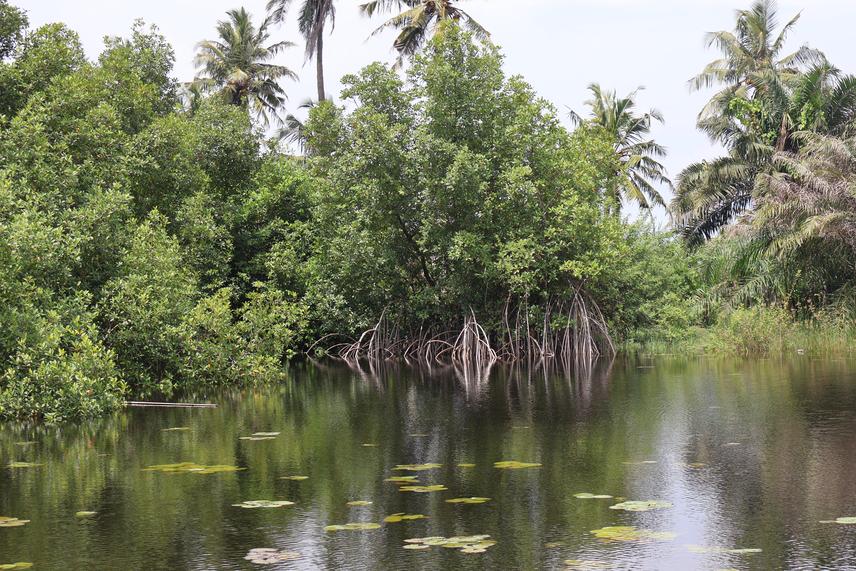
Red Mangrove (Rhizophora racemosa) in Lagos, Nigeria © Onome Ofoman
The study site is on the Western Peninsula of Lagos, where urban development has led to mangrove fragmentation. These mangroves are vital to local communities, who depend on them for shoreline protection, fish and shellfish habitat, fuelwood, and traditional medicines. The area also attracts urban visitors whose activities can place additional pressure on mangroves but also provide opportunities for on-site ecological education. By leveraging existing fragmentation and restoration efforts at this site, this project will provide genetically informed restoration strategies that can be readily adopted by community groups and local organizations to enhance long‑term ecosystem function.
This project uses a combined ecological and social science approaches to address three linked objectives:
1. characterizing genetic and insect diversity in Rhizophora racemosa,
2. experimentally evaluating genetically informed mangrove restoration, and
3. assessing mangrove knowledge, use, and perceptions among residents and urban visitors in the study area.