Julius Nziza


Other projects
24 Jan 2014
The Conservation of Bat Species and their Roosting Habitat in the Volcanic Caves at Musanze District, Northern Rwanda

8 Mar 2018
The Conservation of Diverse Bat Species (Mammalia:Chiroptera) in Volcanic Caves at Musanze District, Northern Rwanda
22 Feb 2021
Conserving the Diverse Bat Species Assemblages at the Musanze Volcanic Caves in the Midst of Misplaced COVID-19 Fears, Northern Rwanda
7 Sep 2023
Enhancing the Protection and Monitoring of Bat Species in Volcanic Caves of Musanze District through Local Community Empowerment and Participation
This project seeks to strengthen bat conservation in Musanze and Burera Districts, areas bordering Volcanoes National Park. These volcanic caves host diverse bat species, including the vulnerable Harrison’s Giant Mastiff Bat (Otomops harrisoni), yet face threats from guano harvesting, garbage dumping, persecution, and tourism-related disturbances. Previous interventions established bat guardian cooperatives, sensitized communities, and drafted a conservation action plan. However, recent challenges - particularly the Marburg outbreak—have strained bat-human relations and reversed some conservation gains.
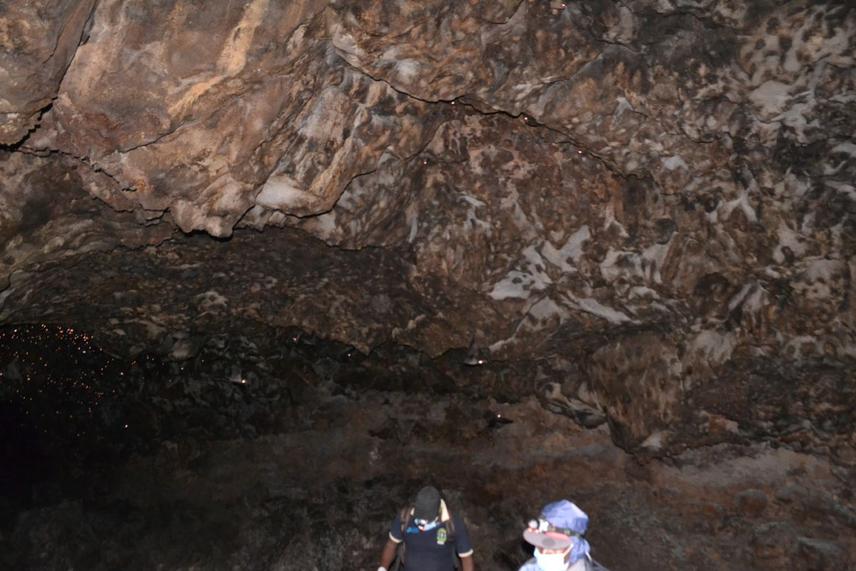
Bat counting in Musanze caves © Nziza Julius
The proposed Completion Grant will consolidate achievements by expanding community sensitization, ecological restoration, and scientific monitoring. Activities include radio talks, communal meetings, and school environmental clubs to improve awareness and reduce persecution. Bat guardians will be supported with incentives and field equipment, while communal dustbins and ecological restoration (planting indigenous trees) will protect cave habitats. Importantly, the project will validate and review the bat conservation action plan to ensure legal protection and policy advocacy.
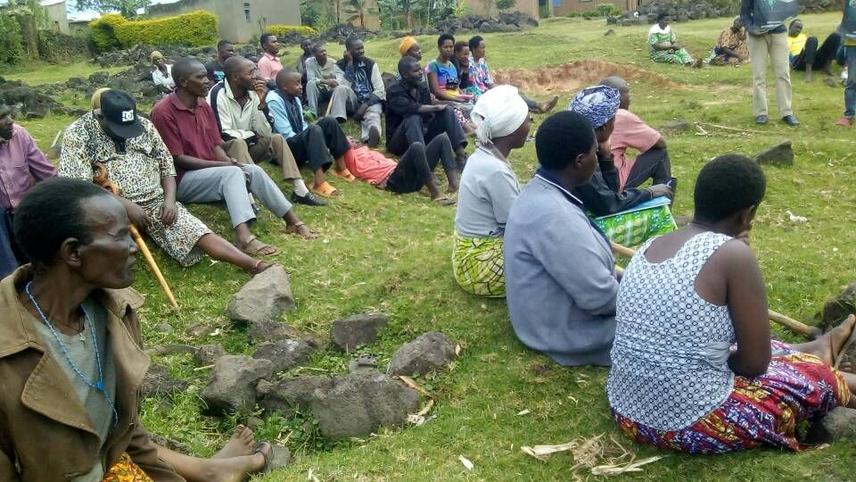
Community members listening to the bats conservation field staff on bats conservation © Nziza Julius
Scientific monitoring will be scaled up through bat tagging to study seasonal movement patterns and fecal sample analysis to assess diet, pollination roles, and parasite prevalence. These studies will provide baseline ecological and health data, informing conservationists and policymakers.
Main Aims
1. Community Sensitization and Engagement
o Strengthen awareness of bats’ ecological and health importance through radio talks, communal gatherings, and school clubs.
o Promote positive behavior change to reduce persecution and foster coexistence.
2. Ecological Restoration and Habitat Protection
o Plant indigenous trees around cave entrances and exits.
o Install communal dustbins to minimize waste dumping in bat habitats.
3. Policy Advocacy and Legal Protection
o Validate and review the bat conservation action plan with stakeholders.
o Mobilize resources and advocate for formal protection of bat caves.
4. Scientific Monitoring and Research
o Tag bats to study seasonal movement and population ecology.
o Collect and analyze fecal samples to understand feeding ecology and health threats