Nguyen Thi Thu Ha


The black-shanked douc (Pygathrix nigripes) is one of Vietnam’s most threatened primates and has been identified as a flagship species for biodiversity conservation. Despite its global significance, there has been no systematic species survey in Ea Sô Nature Reserve, Dak Lak Province, leaving major gaps in knowledge of population status, distribution, and threats. This project aims to address these gaps by conducting the first baseline survey of the black-shanked douc in the reserve, while at the same time strengthening local capacity and awareness for conservation.
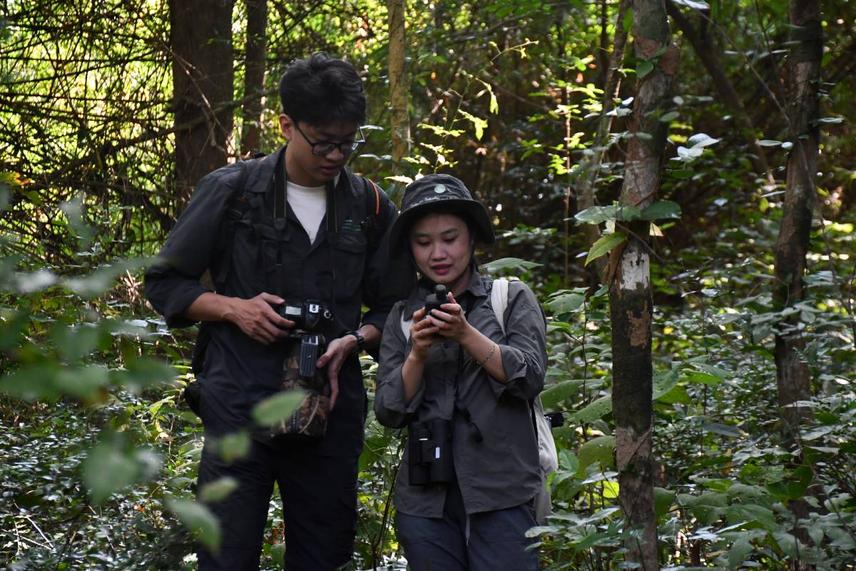
Participating in fieldwork with forest rangers and staff from the Centre for Nature Conservation (CTNC). © Nguyen Thi Thu Ha
The project will combine species-focused fieldwork with participatory approaches. Over 12 days of line transect surveys will be conducted in representative evergreen forest blocks to confirm the presence of douc groups, estimate group size, and document threats such as hunting, snaring, and logging. In parallel, 12 days will be dedicated to community engagement, including at least 50 interviews, three village meetings, and one school event, as well as the distribution of 100 educational posters in hunting households. These activities will provide both ecological data and insights into local perceptions and pressures, creating a comprehensive picture of the species’ status and conservation challenges.
A strong emphasis is placed on collaboration and capacity building. The project is implemented in partnership with the Ea Sô Nature Reserve management and the Center for Nature Conservation and Development (CTNC), which will contribute technical expertise, training, and co-funding. A stakeholder meeting and a final dissemination workshop will ensure that results are shared with local authorities, reserve staff, NGOs, and community representatives. Feedback will be incorporated into revised patrol strategies, with the aim of focusing law enforcement on confirmed distribution areas and hunting hotspots.
The outcomes of this baseline study will be highly practical. It will provide the first scientific evidence needed to identify High Conservation Value (HCV) areas within Ea Sô, support the reserve’s potential recognition as a Key Biodiversity Area (KBA), and guide the design of targeted SMART patrols. At the same time, it will raise local awareness of the black-shanked douc as a priority species for conservation, building support for long-term protection. In doing so, the project will lay the foundation for sustained monitoring, adaptive management, and future investment in one of Vietnam’s most important biodiversity landscapes.