Mercy Ndalila


Other projects
10 Nov 2021
Aspects of Fire Regimes in a Major Kenyan Ecosystem in the Face of Increased Global Vulnerability to Wildfires

Frequent forest fires in Kenya are a serious concern because of their effect on the society and environment. Majority of these fires are due to human activities that are related to inappropriate extraction of forest resources. Mt Kenya forest is a major ecosystem affected by wildfires, whose frequency has increased in recent times, especially in hotspots located in the drier parts. Ontulili Forest is one such forest within Mt Kenya, where fires have destroyed several hectares of forestland, affected biodiversity, and disrupted community livelihoods within and surrounding the forest. Despite the fire risk, there is limited capacity of the local community to manage these fires, and knowledge on restoration of landscapes damaged by wildfires in Mt Kenya remains limited.
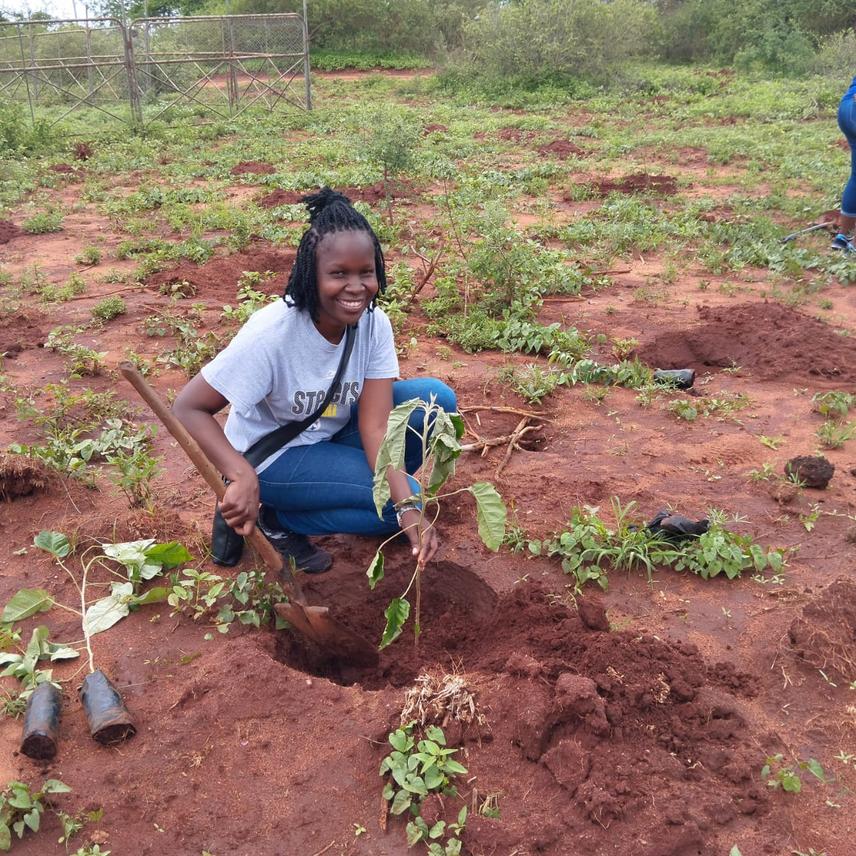
Mercy planting a tree in Lumo Conservancy, Taita Taveta County, during the National Tree Planting Day on 13 November 2023. Photo credit: Mercy Ndalila.
This project builds on my previous works in other areas of Mt Kenya forest (specifically Ragati forest) by supporting post-fire forest restoration and firefighting training. The project engages community members around Ontulili forest to restore areas previously destroyed by recent wildfires in order to preserve critical habitats of wildlife and to maintain and enhance other ecosystem services. The project also plans to use local media to create awareness to a large audience in the greater region, so that human-related threats are hopefully reduced and wildfire readiness of the local communities is improved.
Specific outputs/outcomes of the project include: (1) four hectares of fire-degraded sites reforested with indigenous trees; (2) improved firefighting and fire management capacity of community members living around the nearby forest; (3) increased awareness about wildfires and fire management in the greater region; (4) a reduction in the incidences of fire and the area affected by wildfires; and (6) an increase in biodiversity and in the supply of ecosystem goods and services in the longer term.