Karine Galisteo Lopes

Illegal wildlife trade (IWT) is one of the largest criminal activities in the world, and a major threat to biodiversity globally, leading to population declines and ecosystem problems. Beyond these threats, IWT is a wicked problem often connected with deeply rooted cultural traditions that are hard to change, and socio-economic issues, like poverty and weak governance structures. Combating wildlife trafficking, thus, depends on understanding both the supply and demand sides of the trade chain, and the human behavioural drivers that motivate poaching and wildlife use.
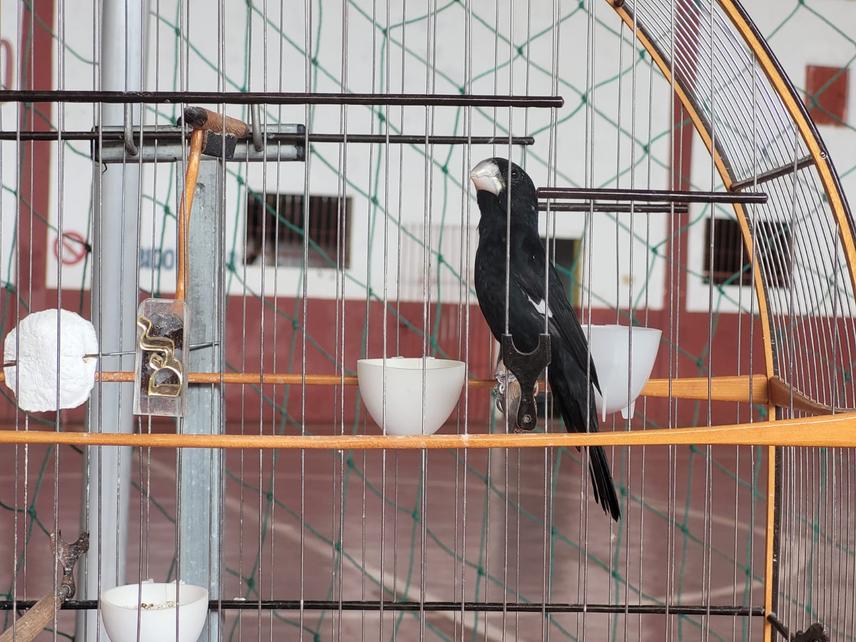
Caged Sporophila maximiliani individual during a singing contest. (c) Liriann Silva.
Brazil has one of the highest avifauna diversity (almost 2,000 bird species) in the world and a strong culture of keeping songbirds, both as pets and for singing contests. The Great-billed seed-finch (Sporophila maximiliani) and the Large-billed seed-finch (Sporophila crassirostris) are highly appreciated for their melodious songs, and frequently targeted by traders. The high demand for these species results in illegal harvesting, which has led to local extinctions of S. maximiliani in Brazil.
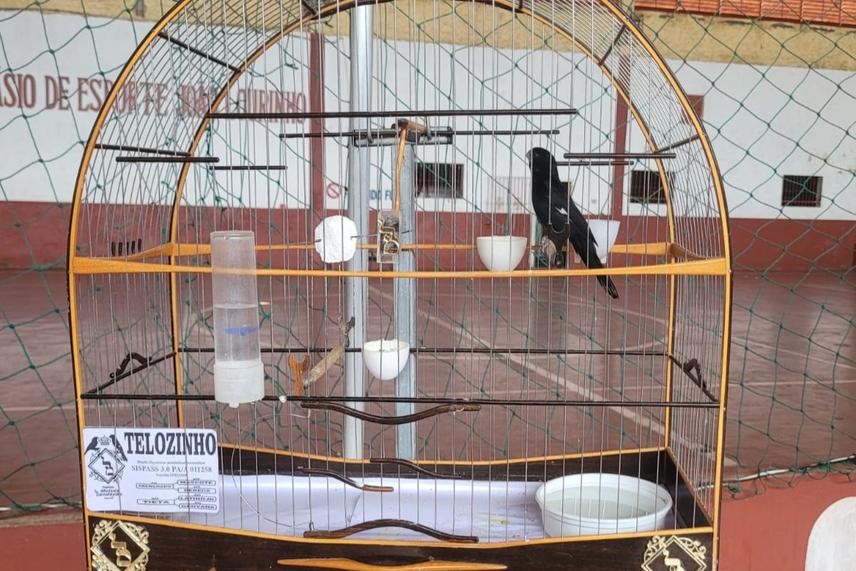
Caged Sporophila maximiliani individual during a singing contest. (c) Liriann Silva.
This project will map the trade routes and final destinations of trafficked individuals of Sporophila maximiliani and S. crassirostris in Roraima state, in the Brazilian Amazon. The Amazon region is particularly important in the context of IWT because of its unique features: it is a hotspot for biodiversity, has the largest proportion of the vulnerable human population in Brazil, and has the fewest agents from public environmental institutions in the country. These conditions create a favourable environment for illegal activities.
Using semi-structured interviews with participants in the supply chain and enforcement agents, this project aims to identify key actors involved in the trade, key points of capture, transit, sale, and final destinations (national and international) of S. maximiliani and S. crassirostris. After that, we will engage with participants of the trade chain and environmental agents to co-create strategies to reduce demand for wild birds.
The results will inform a participatory management instrument in Brazil, the National Action Plan (PAN) for Amazonian Bird Conservation, and support conservation practitioners who rely on the PAN for decision-making and the implementation of conservation strategies.