Juanita Rodriguez Serrano


Colombia protects nearly half of the world’s páramo ecosystems, high-Andean landscapes that regulate water supply for more than 70% of the country’s population, store carbon, and support unique biodiversity found nowhere else on Earth. These ecosystems are increasingly threatened by climate change, agriculture, grazing, and mining, yet many of the ecological interactions that sustain them remain poorly understood. This project addresses a critical knowledge gap by focusing on one of the least studied but ecologically important components of páramo biodiversity: insects.
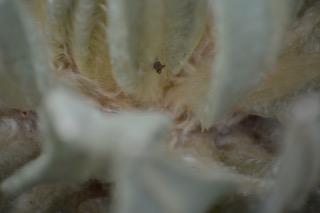
Ecological interactions within the Espeletia microhabitat: An adult specimen of the Membracidae family situated on the underside of a frailejón leaf. © Daniel Zoque
The project investigates treehoppers (Hemiptera: Membracidae), a group of specialized insects that live in close association with Espeletia (frailejones), the keystone plants that structure páramo ecosystems. These insect–plant interactions were first documented more than 70 years ago but have never been systematically updated. Without modern baseline data, it is impossible to detect biodiversity loss, assess vulnerability to climate change, or design effective conservation strategies.
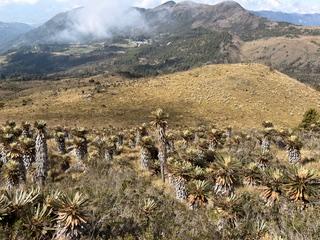
Overview of the sampling station in the Guantiva- La Rusia Páramo Complex: This image illustrates the habitat heterogeneity characterized by dense Espeletia populations and highland wetlands. © Juanita Rodriguez Serrano
Fieldwork will take place across the Eastern Cordillera of Colombia, covering key páramo complexes including Chingaza, Ocetá, Uvita, Almorzadero, and Berlín–Santurbán. Standardized surveys along elevation gradients from 3,000 to 4,200 m will document treehopper diversity, distribution, and host-plant associations. New field records will be integrated with historical museum collections to identify shifts in species ranges, potential local extirpations, and early-warning indicators of environmental change.
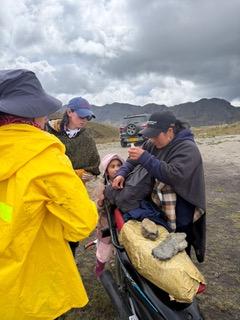
Bridging Science and Community: Sharing our preliminary findings with the inhabitants of the Siscunsí-Ocetá Regional Natural Park. © Berny Bello
A central conservation aim is to establish the first robust baseline for páramo-associated treehoppers in the Eastern Cordillera. Many of these insects are highly specialized, restricted to narrow elevation bands, and dependent on specific Espeletia species. Such traits make them especially sensitive to warming temperatures and habitat degradation. By identifying vulnerable species and their ecological requirements, the project provides essential information for future Red List assessments and national conservation planning.
Beyond data collection, the project strengthens conservation capacity by depositing reference collections in Colombian institutions, publishing open-access biodiversity datasets, and producing site-level summaries for environmental authorities. Workshops and outreach activities with park rangers, students, and local communities will highlight the importance of insect diversity as an indicator of páramo health.
By documenting insect–plant interactions across the Eastern Cordillera, this project contributes directly to evidence-based conservation. It supports the protection of globally significant páramo ecosystems by integrating scientific research, conservation planning, and community engagement, ensuring that management strategies consider not only water and vegetation, but also the fragile insect networks that sustain these high-Andean landscapes.