Himangshu Kalita


This project explores the intersections of gender, community, and conservation within the buffer zones of Manas National Park, Assam, India - a UNESCO World Heritage Site and one of the country’s most biodiverse landscapes, situated at the confluence of the Indo-Burma and Eastern Himalayan biodiversity hotspots. While conservation efforts in the region have made remarkable strides, the park’s surrounding villages - inhabited primarily by Indigenous Bodo and Adivasi communities - are dynamic socio-ecological spaces where people and wildlife, particularly elephants, interact regularly.
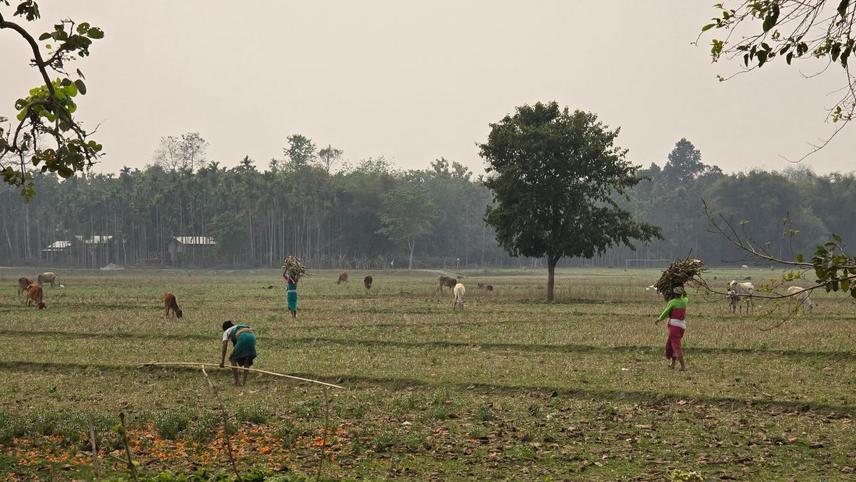
Women collecting firewood and working in agricultural fields in the forest fringe areas, highlighting gendered labour and daily exposure to wildlife habitats. © Himangshu Kalita, 2026
Although this region is celebrated for its rich biodiversity, its long-term ecological resilience depends heavily on the cooperation and wellbeing of the people living around it. These communities face recurring challenges in living alongside wildlife. Yet, conservation responses and compensation schemes remain largely top-down and gender-blind, overlooking how social roles and cultural identities shape experiences and coping mechanisms. Women, for example, are disproportionately affected through loss of livelihood, increased workloads, and reduced mobility, yet their voices are rarely heard in wildlife management and conservation decision-making.
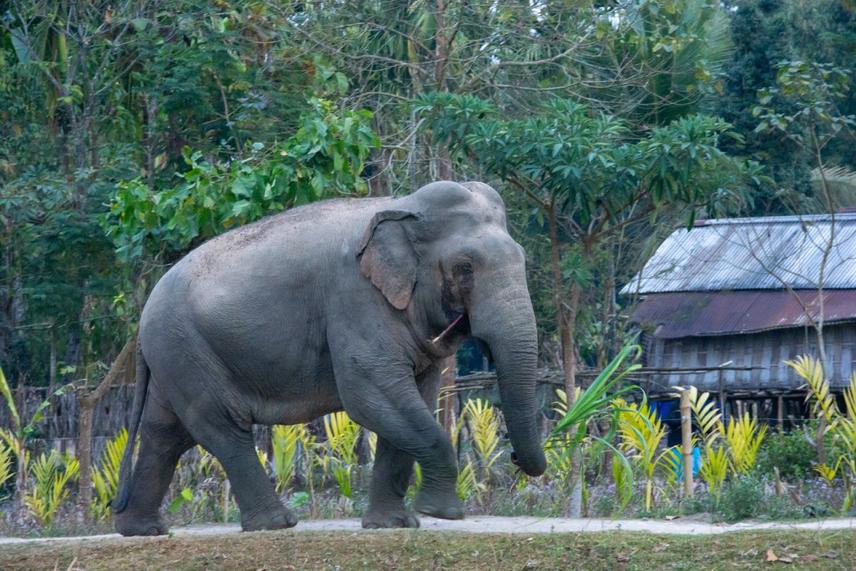
An Asian elephant moving through a village landscape in Assam, illustrating the close spatial overlap between human settlements and elephant habitats and their pathways. © Amlan Aditya Goswami, 2025
The project seeks to document and analyse gendered experiences of human–wildlife conflict using ethnographic methods, semi-structured interviews, and participatory mapping. It will highlight how intersecting identities such as gender, ethnicity, and livelihood influence vulnerability, resilience, and perceptions of wildlife. By centering the experiences of women and marginalized groups, the study aims to highlight local coping strategies and forms of resilience while generating evidence for inclusive, community-based conservation practices that are often invisible in mainstream conservation discourse.
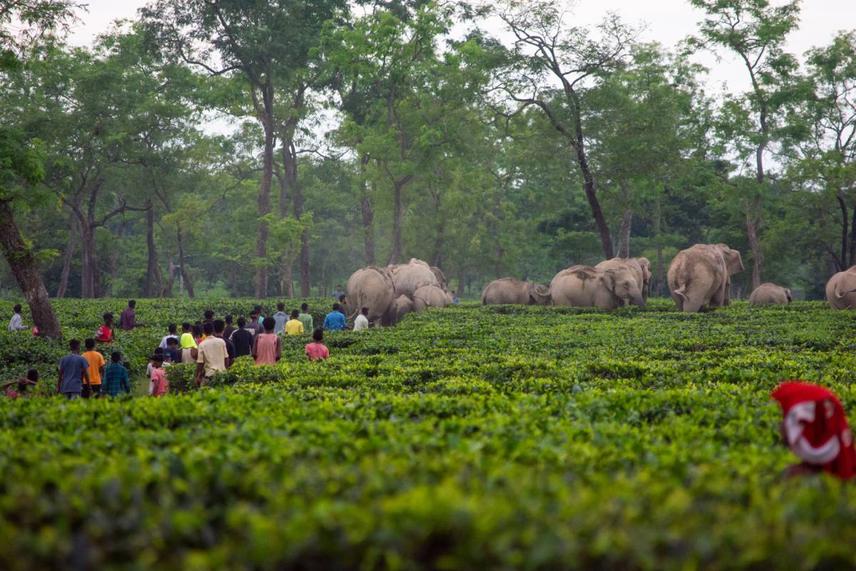
A herd of Asian elephants moving through a tea plantation as local residents gather nearby, reflecting the intensity of human–elephant interactions in shared landscapes. © Amlan Aditya Goswami, 2025
The research will also engage with policy frameworks, assessing how gender and community participation are represented - or neglected - in conservation governance. Findings from the study will inform gender-responsive policy recommendations and contribute to developing an inclusive framework for buffer zone management.
In addition, the project will facilitate community workshops, storytelling sessions, and youth engagement activities to foster dialogue and awareness. These participatory platforms will help bridge trust deficits between local communities and conservation authorities while amplifying Indigenous ecological knowledge.
Ultimately, this research aims to create a replicable model for gender-inclusive buffer zone management that integrates feminist perspectives into conservation science. By linking social justice and ecological sustainability, it will contribute not only to the long-term conservation of the Asian elephant and other threatened species in the Manas landscape but also offer a scalable model for community-driven, gender-responsive conservation across South and Southeast Asia.