Heena Maharjan


Common leopards Panthera pardus, rank as the second most problematic wildlife in Nepal, accounting for 21% conflicts. Between 2015-2019, Gandaki
Province reported 842 Human Leopard Conflict (HLC) incidents, including 44 human attacks (29.5% death and 70.5% injury), and 798 cases of livestock depredations. Leopards are equally facing growing threats from habitat fragmentation, declining prey populations, illegal hunting, and particularly retaliatory killings following human casualties and livestock depredation incidents. Tanahun district has emerged as a major conflict hotspot, recording 16 human deaths and 21 injuries between 2018-2025, and about 65% of leopard deaths accounted for by retaliatory killings (31%-12 leopard deaths/year), lethal control (20%), and poaching for skins and bones. These circumstances highlight an urgent need for science-based mitigation strategies to ensure the safety of local communities while conserving leopards.
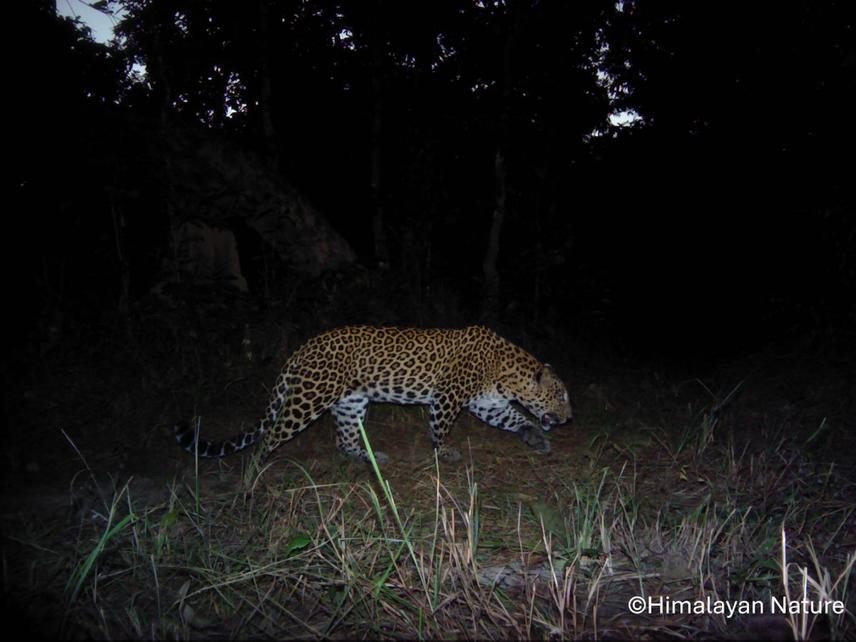
Commom Leopard Captured during Camera Trap Survey © Himalayan Nature
The project broadly focuses on the following objectives to address these issues:
· Assess HLC patterns and identify the conflict hotspot areas in Tanahun.
· Develop a comprehensive and site-specific community-endorsed mitigation plan.
· Capacitated key stakeholders to strengthen local capacity for conflict prevention and response, adopting Training of Trainers approaches (n=15).
· Conduct participatory-based awareness campaigns (school=10 and community=7) targeted to women and children, prioritizing high-risk areas and broadcasting radio jingles within the project sites to promote safety, mitigation measures, and coexistence.
Through systematic conflict hotspot mapping across Tanahun district, this project will generate evidence-based understanding of spatial conflict patterns. This map will guide conservation actions prioritising interventions in the areas of need and optimizing resource allocation for leopard conservation. The mitigation plan will help to improve community preparedness and adoption of conflict mitigation and safeguarding practices by local communities. Furthermore, trained stakeholders will serve as conservation ambassadors, enabling them to facilitate, implement, and disseminate the HLC mitigation plan. They will continue to share their learnings and strengthen local capacity in conflict prevention beyond the project timeline and reach. Information on leopard ecology, safeguarding strategies from potential encounters, conflict mitigation strategies, compensation schemes, and relevant wildlife laws will be disseminated through community outreach and radio campaigns. These initiatives will enhance local stewardship, reduce negative perceptions, and encourage reporting and collaboration in conservation. By combining research, community-driven action, and institutional coordination, this project will help foster coexistence and secure the species’ long-term survival in human-dominated landscapes.