Faith Ngwonam Abongdu Vughosembwom


The project, “Spatio-temporal Assessment of Food Sources and Competition for Food among Primates in the Mount Cameroon and Bakossi Landscapes: Conservation Implications”, seeks to address critical knowledge gaps regarding the availability of food resources and competitive interactions among threatened primates in two of Cameroon’s most important biodiversity hotspots.
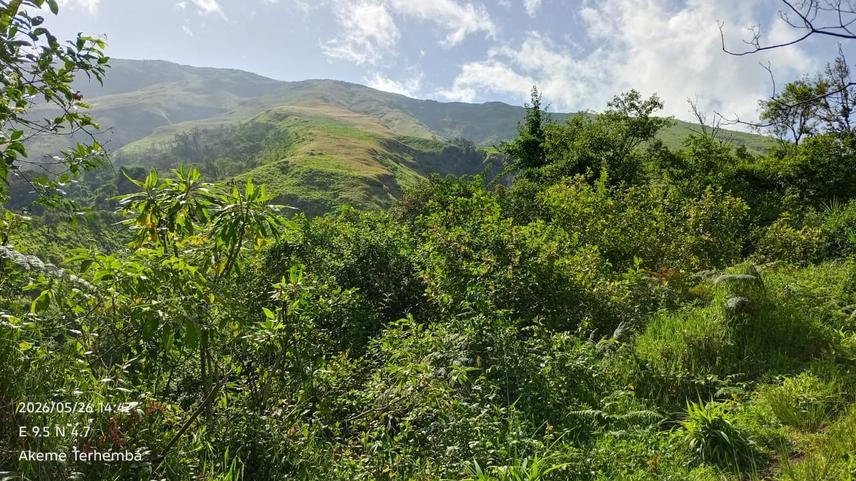
Mount Cameroon landscape (c) Akeme Terhemba
The Mount Cameroon and Bakossi landscapes harbor globally threatened species such as the Drill (Mandrillus leucophaeus), the Nigeria–Cameroon Chimpanzee (Pan troglodytes ellioti), and Preuss’s Red Colobus (Piliocolobus preussi), all of which face increasing threats from habitat loss, agricultural expansion, forest resource extraction, human disturbance, and climate-related environmental changes.
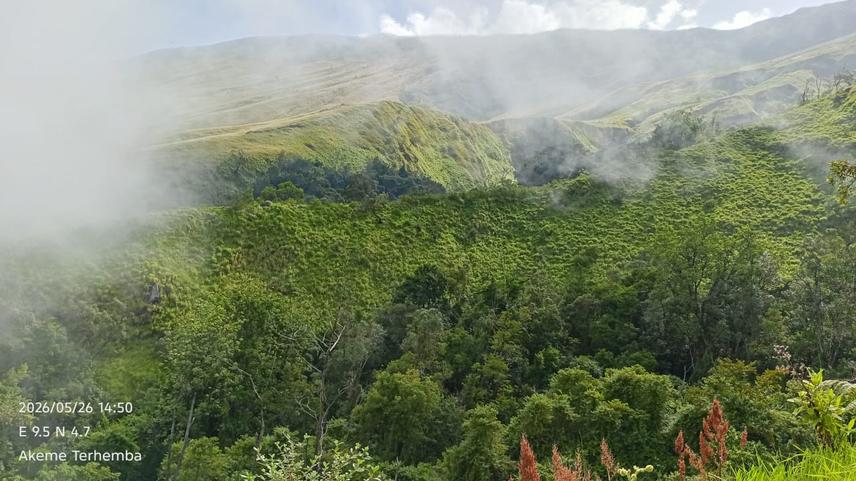
Mount Cameroon landscape (c) Akeme Terhemba
The project aims to investigate how seasonal and spatial variations in food availability influence primate distribution, feeding behavior, and competition for resources. By combining ecological field surveys, phenological monitoring of key feeding tree species, GPS-based spatial tracking, and behavioral observations, the study will generate comprehensive data on feeding hotspots, seasonal food bottlenecks, and habitat-use patterns. These findings will provide a scientific basis for understanding how environmental pressures affect primate survival and ecological interactions within these forest ecosystems.
A major aim of the project is to strengthen conservation management within protected areas, including Mount Cameroon National Park, Bakossi National Park, and the Banyang-Mbo Wildlife Sanctuary. By identifying critical feeding habitats and priority conservation zones, the project will support park authorities in refining management plans, improving zoning strategies, and prioritizing habitat restoration and protection efforts.
The research will also contribute to species-specific conservation planning by highlighting the ecological requirements necessary for the long-term survival of threatened primate populations. Beyond ecological research, the project emphasizes community engagement and conservation awareness. Local communities surrounding these protected areas rely heavily on forest resources for their livelihoods, and their activities significantly influence habitat quality.
Through workshops, awareness campaigns, and participatory discussions on sustainable land-use practices, the project will promote greater understanding of primate conservation and encourage community participation in habitat protection. Ultimately, the project seeks to generate actionable conservation knowledge, strengthen protected area management, reduce anthropogenic pressures on critical habitats, and foster collaboration between researchers, conservation practitioners, and local communities.
By improving the understanding of food-resource dynamics and competition among threatened primates, the project will contribute to enhanced habitat resilience, biodiversity conservation, and the long-term sustainability of one of Central Africa’s most ecologically significant forest landscapes.