Ezra Peter Mremi


Other projects
29 Nov 2023
Monitoring the Sokoke Scops Owl and Usambara Eagle Owl Population, and Awareness Raising in the East Usambara Mountains –Tanzania

This project aims to advance the conservation of two endangered and range-restricted owl species—the Sokoke Scops Owl (Otus ireneae) and the Usambara Eagle-Owl (Bubo vosseleri)—in the East Usambara Mountains of Tanga, Tanzania. These mountains, part of the globally recognized Eastern Arc biodiversity hotspot, support unique forest ecosystems that are increasingly threatened by habitat loss, illegal logging, and negative human perceptions of owls.
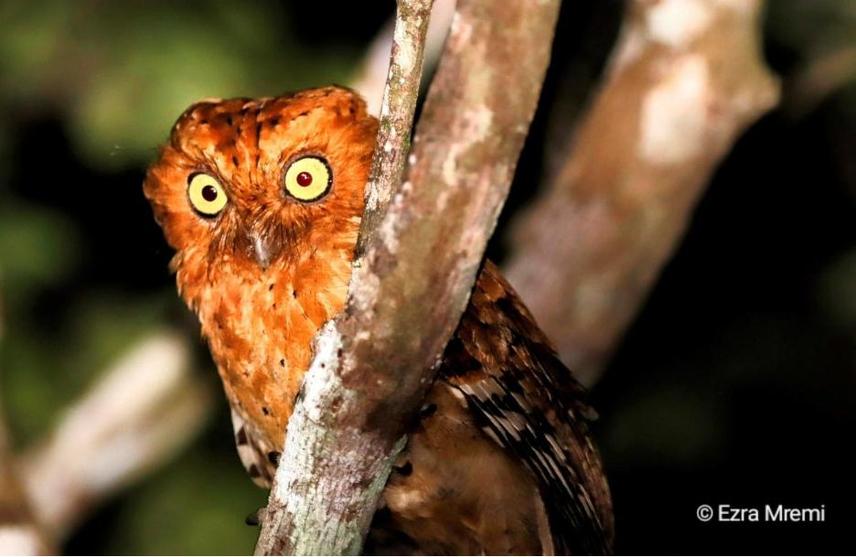
Sokoke Scops owl (rufous morph) © Ezra Mremi
The project will focus on monitoring population trends and habitat use across both lowland and montane forest zones to generate updated data on distribution, breeding activity, and habitat preferences. These findings will be crucial for informing conservation priorities and management actions within the forest reserves of East Usambara. In collaboration with local forest management authorities, the project advises on modified buffer zones and adjusted forest boundaries, ensuring that critical areas supporting owl populations and nesting habitats receive enhanced protection and sustainable management.
To promote coexistence between people and owls, the project conducts community awareness campaigns targeting local villages, schools, and leaders. These campaigns aim to dispel harmful myths and cultural beliefs that associate owls with witchcraft and misfortune, replacing them with an understanding of their ecological role as natural pest controllers and indicators of healthy forests.
In addition, the project implements forest enrichment and restoration activities, focusing on replanting native tree species that have been heavily targeted by illegal loggers. Priority is also given to native tree species known to form natural cavities, which serve as crucial nesting sites for both owl species. To further reduce human pressure on forests, the project provides fast-growing timber tree seedlings to local villagers as alternative sources of wood and income, supporting long-term sustainability.
Key outputs include updated species distribution data, an assessment of key threats, increased local awareness and stewardship, and strengthened collaboration with forest authorities and community groups. Through these integrated actions, the project seeks to secure the long-term protection of these threatened owls and their fragile habitats while fostering a conservation culture within the East Usambara landscape.