Diky Dwiyanto


Lake Poso, an ancient tectonic lake on the island of Sulawesi, is one of the Key Biodiversity Areas (KBAs) due to the uniqueness of its aquatic fauna and high levels of endemism, including so-called species flocks of freshwater shrimp in the genus Caridina (von Rintelen et al. 2009; Klotz et al. 2021). The diversity of lacustrine species of Caridina (N = 9) in Lake Poso comprises species that vary in depth, ranging from those found in shallow areas (1–3 meters) to the species confined to the deeper part of the lake (more than 5 meters), such as C. marlenae and C. mayamareenae. In addition, the exceptional depth of Lake Poso (up to 400 m) provides an ideal environment for studying differences in species composition and genetic divergence along the depth gradient.
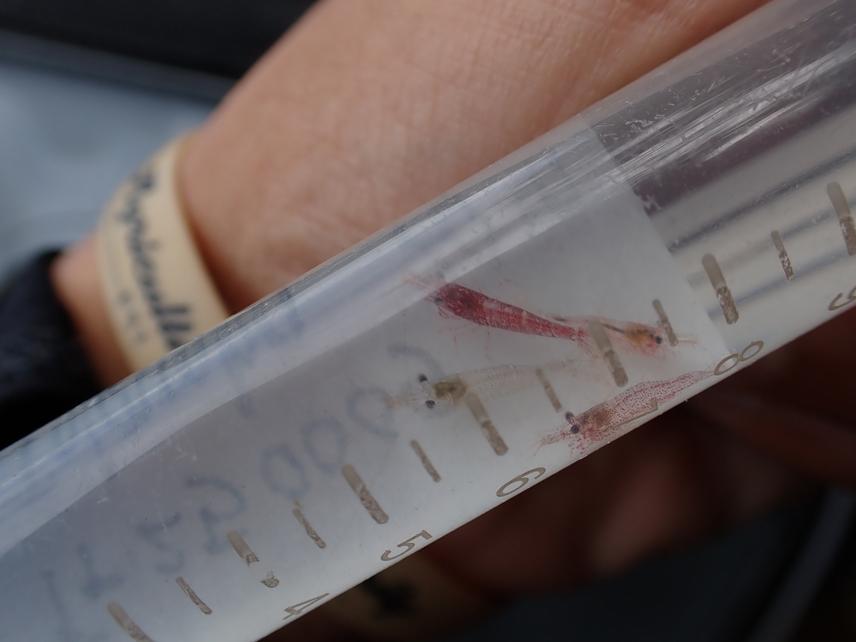
Living coloration of Caridina spp. collected from a trap about 20-30 m depth near Tolambo, east shore of Lake Poso (c) Diky Dwiyanto
However, the spread of non-native invasive species, including Golden Mbuna (Melanochromis auratus), could contribute to the population decline of Caridina through predation (Herder et al. 2022).
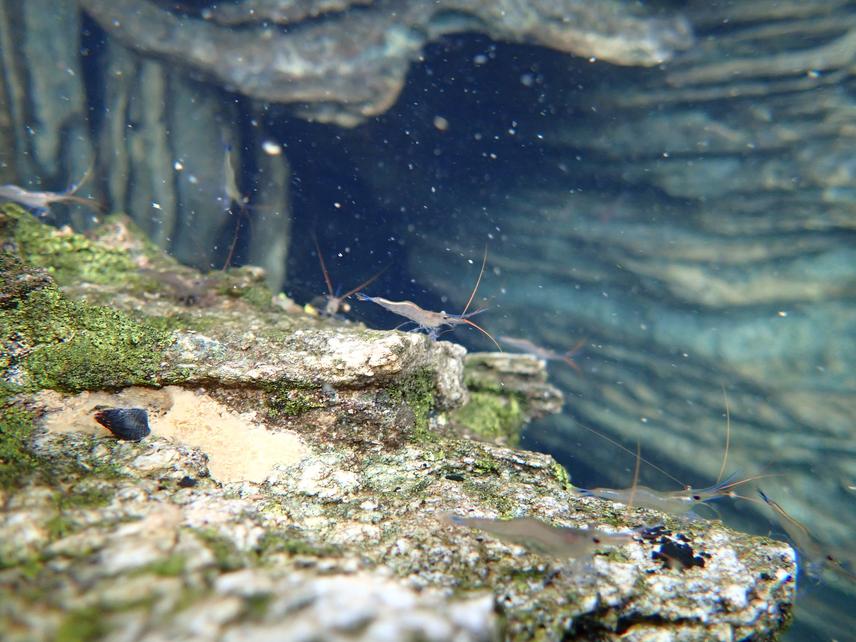
Caridina caerulea photographed in its natural habitat in Lake Poso (c) Basrul Idrus
This project aims to (i) assess the species composition and genetic differentiation of Caridina along a depth gradient, (ii) reduce the population of invasive species through an eradication program and baseline data for mitigation, and (iii) initiate community-led conservation action to conserve the species and habitat of Caridina. A survey of the vertical distribution and genetic connectivity of the Caridina population, using morphological and molecular approaches, will provide initial information on diversity and genetic characterization, and help determine Caridina's ability to adapt to a future eutrophic lake scenario. My previous study reported Caridina from a depth of ~60 m, the deepest record so far for an endemic Caridina living in an ancient lake system.
In this project, comprehensive sampling in Lake Poso will provide a diversity and genetic characterization of shallow- and deep-water Caridina through an integrative approach that combines morphological and molecular data (DNA Barcodes) and low-coverage whole-genome sequencing (lcWGS). For conservation action, community-led mitigation efforts, such as invasive species eradication, the establishment of in-situ conservation or breeding sites, and outreach programs will help save the current shallow-water population of Caridina.