Dickson Matthew


Other projects
27 Jan 2023
Roost Site Suitability Survey and Conservation Campaign for Bat Roost Protection in Plateau State, Nigeria: A Focus on Straw-Coloured Fruit Bats

The Straw-coloured Fruit bat is a keystone species involved in maintaining plant populations through pollination and seed dispersal. Sadly, the population is significantly declining across its range, largely due to persecution, hunting, and roost site destruction.
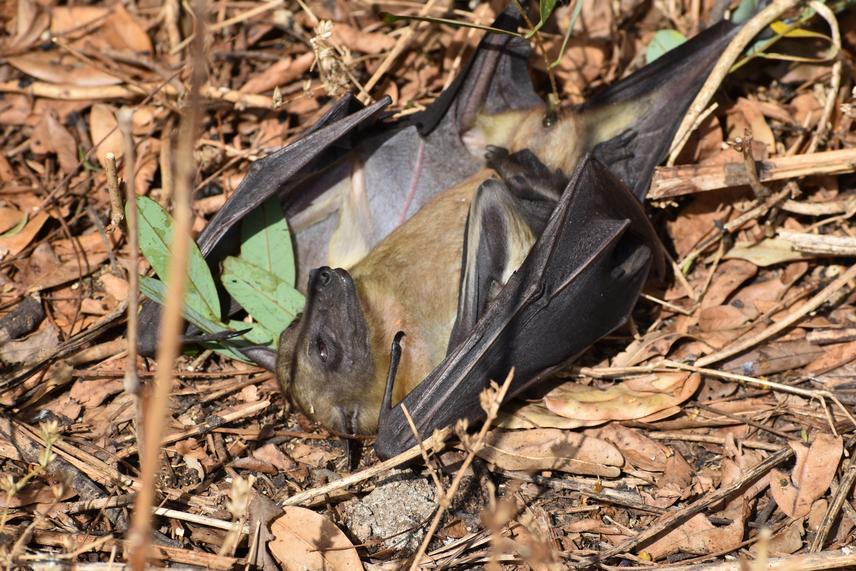
Mother bat with her pup that was brought down with a catapult at one of the roost sites (@ Dickson)
In our previous RSG we started addressing some of these threats by conducting roost site suitability survey and conservation education. We found that historical roosts of Eidolon helvum on the Jos plateau supported a large number of bats with a roost supporting >50,000 individuals at a non-peak period. However, threats (including hunting of pregnant and lactating individuals) at these historical roosts which also serve as maternity roosts are high, leading to a continuous decline in bat population in the roost; a situation that can lead to roost abandonment. Another significant finding was the non-random use of roost sites, despite some similarities in habitat structure between roosts and other sites. This, perhaps implies that the bats do not find other places suitable for long-term roosting sites and destruction of the already available ones may lead to local unavailability of roosts.
This project therefore, seeks to address the threats through targeted conservation efforts and to protect the roosts in collaboration with local authorities. Specifically, we aim to 1) map out and characterized Eidolon helvum roosts in Plateau State, and estimated bat population on each roost, 2) increase awareness for Eidolon helvum conservation needs and change of perception to influence positive attitude towards bats especially among targeted groups, 3) achieve safer day roost condition from minimised hunting activities and habitat destruction; and lastly to 4) initiate a long-term monitoring of Eidolon helvum populations and their habitats to provide valuable data for tracking changes over time and to evaluate the effectiveness of our conservation efforts.