Deu Bahadur Rana


Other projects
8 Mar 2018
Distribution Occupancy, Potential Suitable Habitat and Conservation of Recolonised Wolf in Annapurna Conservation Area, Nepal

The central Himalayan ecosystem of Nepal hosts a unique ecological assemblage of apex carnivores, scavengers, and human communities. Among these, the Himalayan wolf canis lupus chanco, Snow leopard Panthera uncia, and Himalayan Griffon Gyps himalayensis play crucial roles in maintaining ecological balance, while pastoralist communities rely heavily on traditional livestock herding for their livelihood. Despite their significance, the ecological interactions among these species, and their cooccurrence with people, remain poorly understood. Livestock depredation by carnivores, coupled with expanding development activities, is driving significant disturbance and displacement of wildlife, while changing carcass disposal practices threaten vulture populations, raising urgent conservation concerns.
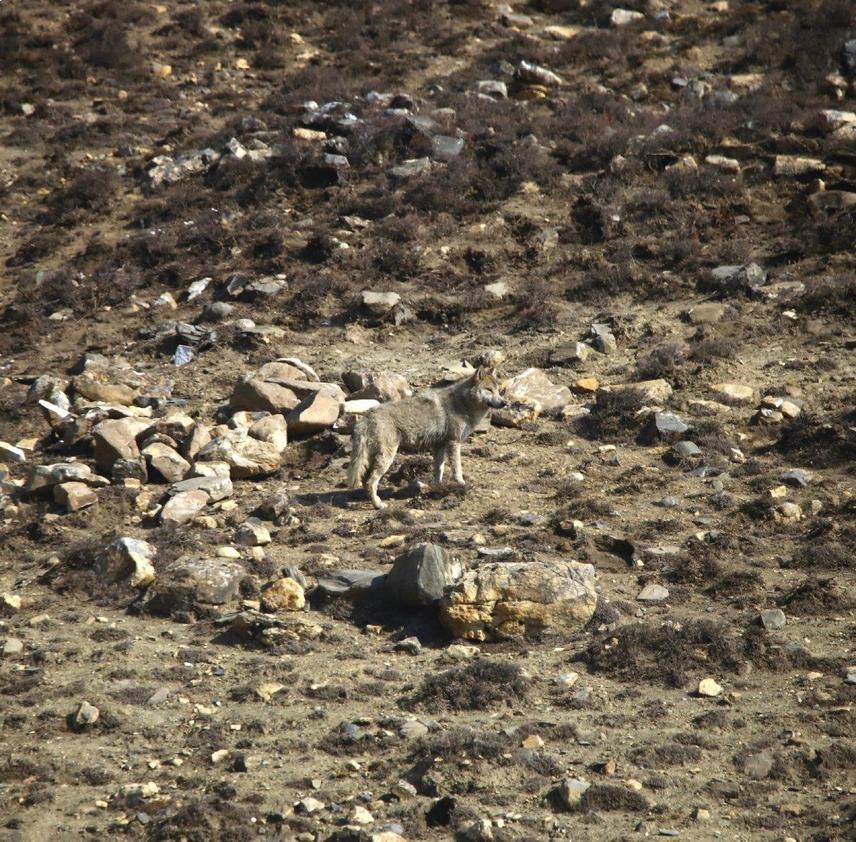
Himalayan wolf - © Deu Bahadur Rana
This project explores the ecological coexistence of apex carnivores, scavengers, and human communities in the Central Himalayas of Nepal, focusing on the Himalayan wolf, Snow leopard, and Himalayan griffon, aiming to generate scientific knowledge while strengthening conservation on the ground. Using advanced ecological monitoring, the study will map where these carnivores and scavengers occur by setting up camera traps, surveying signs such as tracks, scraps, and scats, and observing vulture colonies across a network of 5×5 km² grid cells that cover different habitats, elevations, and grazing areas. Alongside field research, the project will work closely with herders, livestock owners, and community leaders through interviews, focus groups, and participatory mapping to understand human-wildlife interactions, livestock depredation, carcass disposal, and cultural beliefs about these species.
This project combines science with local knowledge to understand and reduce conflict between people, predators, and vultures. Using advanced ecological models, we will study where wolves, snow leopards, and vultures occur, how vultures choose their nesting cliffs, and what shapes people’s attitudes toward them. At the same time, we will work directly with communities and conservation partners to run awareness campaigns, share easy to understand outreach materials, and organise participatory sessions that highlight the crucial roles these species play in keeping Himalayan ecosystems healthy. By integrating research with community action, the project will build local stewardship and promote sustainable ways for people and wildlife to thrive together.