Carolina de la Hoz Schilling


Large-bodied sharks and rays have undergone dramatic population declines across West African waters in recent decades, primarily due to overfishing and a lack of or insufficiently enforced management measures. Despite these regional losses, the Banc d’Arguin National Park (PNBA) in Mauritania may still function as a critical refuge and nursery area for some highly threatened elasmobranch species. However, limited scientific data on their distribution, habitat use, and life-stage specific movement patterns currently hinders effective conservation and management.
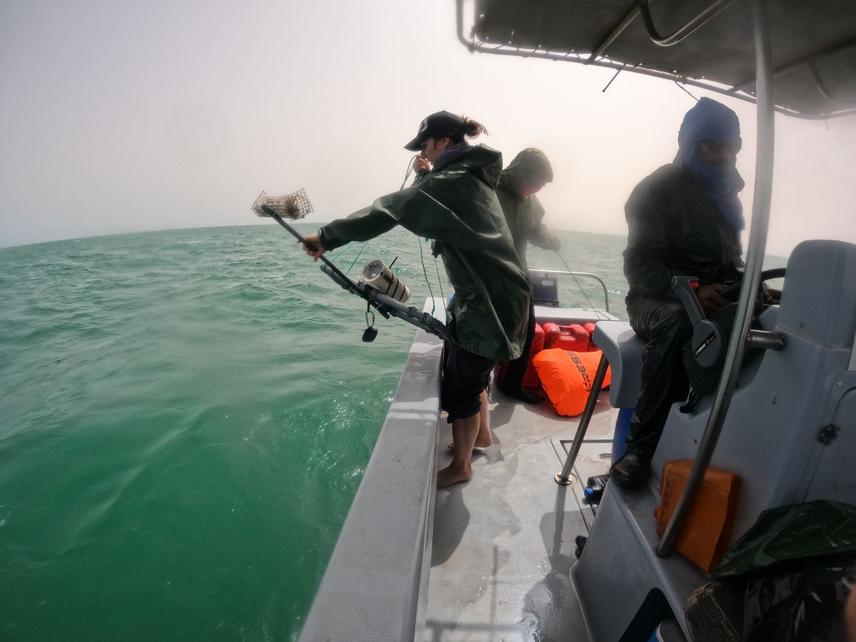
Moments before deploying a pelagic BRUVS structure - ©Ruth Coya 4
This project aims to address these knowledge gaps by generating the first fisheries-independent baseline data on shark and ray diversity, abundance, and habitat use within the PNBA. Focusing on Critically Endangered species such as the blackchin guitarfish (Glaucostegus cemiculus) and the scalloped hammerhead shark (Sphyrna lewini), the project will identify key areas of ecological importance—particularly potential nursery habitats—and assess how these species use the Park’s diverse marine environments over time.
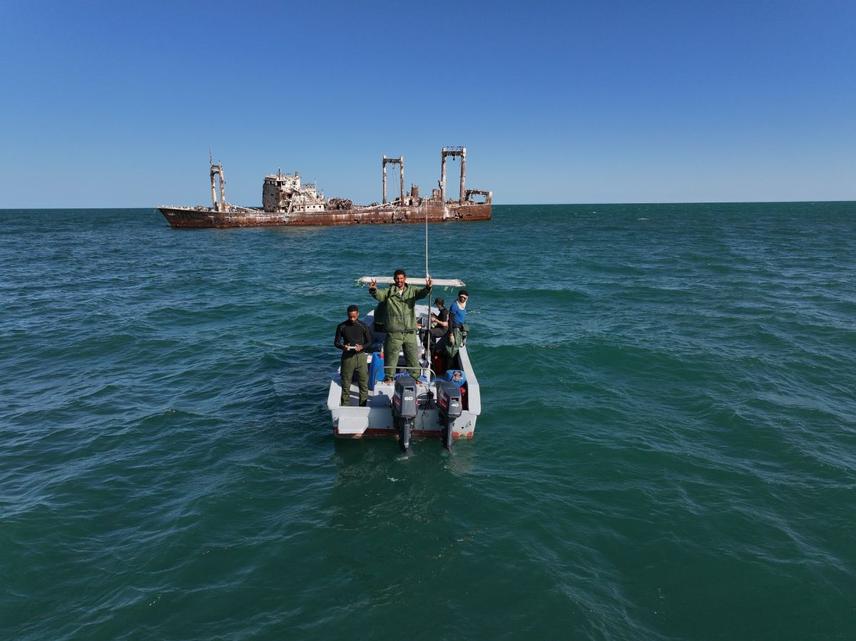
The BRUVS team anchored in front of an old, stranded commercial vessel during deployments ©Mohamed Abou Gueye
The Banc d’Arguin is a globally significant protected area, designated as a National Park, Ramsar site, and UNESCO World Heritage Site. It supports an exceptional diversity of habitats, including intertidal mudflats, seagrass meadows, shallow bays, and channels. The park is also home to the Imraguen, an indigenous fishing community whose livelihoods depend almost entirely on marine resources. While shark and ray fishing is formally restricted, limited enforcement means that vulnerable species continue to be caught, often without adequate monitoring or control. Improving understanding of when and where threatened species are most vulnerable is therefore essential to balancing biodiversity conservation with sustainable resource use.
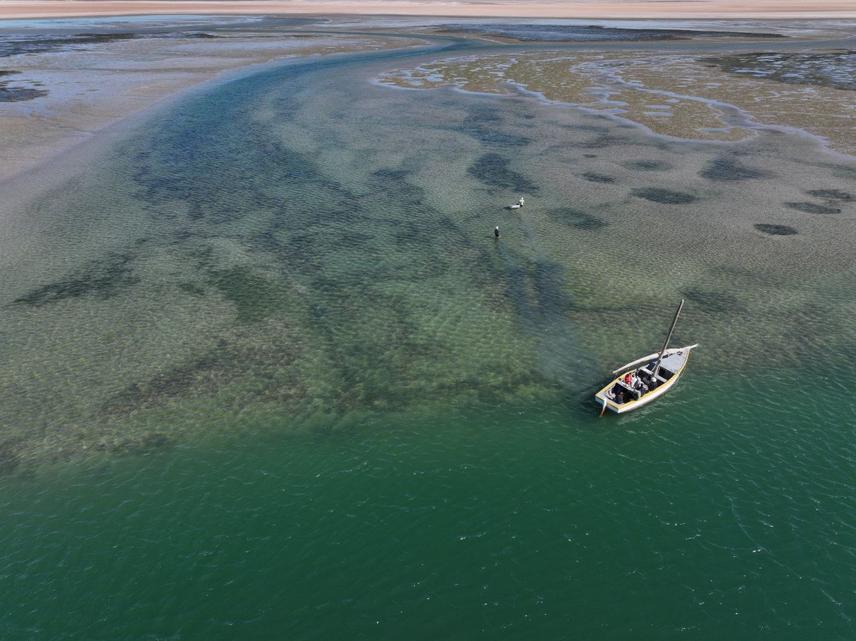
A traditional Imraguen sailboat that is used for guitarfish mark and recapture studies, where collaboration with local fishermen is essential for the success of the project ©Mohamed Abou Gueye
Using Baited Remote Underwater Video Surveys (BRUVS) and targeted mark-recapture studies, this project will document species presence, relative abundance, and juvenile occurrence across multiple sites within the park. The results will support evidence-based conservation planning by informing spatial management measures, such as seasonal or area-specific fishing restrictions, and by strengthening the scientific foundation of the PNBA’s shark and ray conservation strategy.