Byron Ssemambo


Other projects
6 Jul 2021
Influence of Anthropogenic Activities on Wetland as a Habitat for Shoebill (Balaeniceps rex) in Uganda; Case study Lutembe Bay Wetland System, Wakiso District

18 Jun 2024
Ecology, Anthropogenic Threats, People’s Perception and Conservation Status of Grey Crowned Crane (Balearica Regulorum) in Lutembe Bay Wetland, Wakiso District,
The Grey Crowned Crane (Balearica regulorum), Uganda’s national bird and a globally endangered species, is under increasing threat in Lutembe Bay Wetland, a Ramsar site of international importance on the shores of Lake Victoria. Recent surveys and community consultations, including those conducted under our previous Rufford Foundation Project (RSG #43311-2), revealed critical threats including poaching for meat and eggs, wetland degradation, agricultural expansion, and limited awareness of the species’ ecological importance. With only one confirmed breeding site in the area and crane populations under pressure, urgent community-based conservation action is needed.
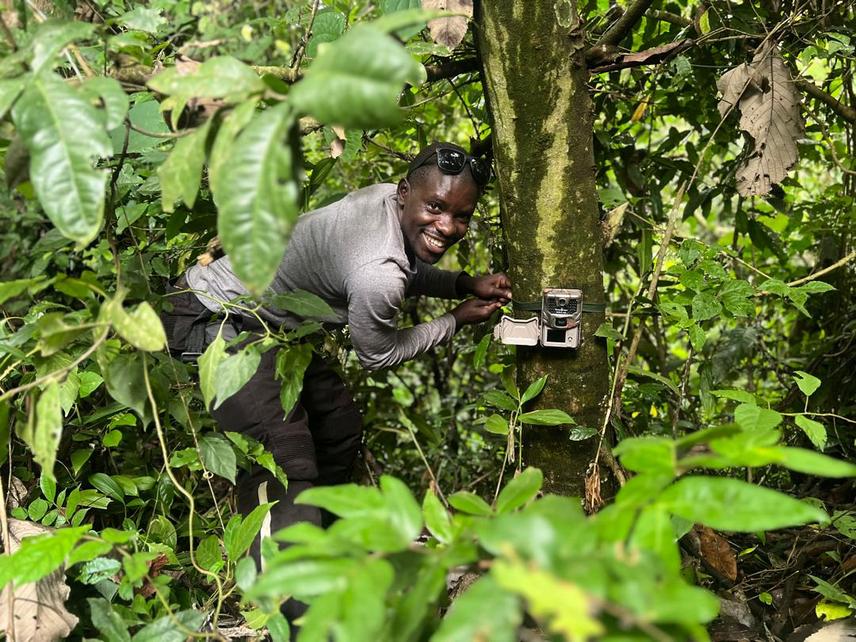
Ssemambo Byron setting up a wildlife trail camera along the transect to monitor Wildlife species © Byron Ssemambo
This project seeks to reduce poaching and egg collection of Grey Crowned Cranes by integrating species protection with livelihood improvement. The central approach is to provide local communities with sustainable income-generating alternatives that directly reduce dependence on cranes and wetland resources. Specifically, the project will:
1. Establish poultry/livestock seedbanks among reformed poachers and forest-edge households to improve household protein access and reduce reliance on bushmeat.
2. Promote beekeeping (apiary farming) by providing training and starter kits, enabling communities to generate income from honey and related products.
3. Strengthen Village Savings and Loan Associations (VSLAs) to improve financial resilience, enhance access to credit, and create a revolving fund to support conservation actions.
4. Support community wildlife monitoring by equipping six local monitors to conduct snare-removal patrols, track poaching incidents, and gather ecological data on Grey Crowned Cranes using ArcGIS Survey123.
5. Raise conservation awareness through six community sensitisation sessions, targeting 300 direct participants across Bulonde, Lutembe, and Nganjo villages.
The project’s main aim is to align biodiversity conservation with community well-being. By addressing poverty and protein insecurity as the root causes of poaching, while simultaneously building capacity for community-led monitoring and stewardship, the project will create a win-win situation where both people and cranes benefit thus contributing to co-existence.
Therefore, by the end of the 12-month implementation period, we expect to establish 30 functioning apiaries, 30 households engaged in livestock seedbanks, 3 active VSLA groups, and a trained team of community monitors in monitoring of the threats. These outcomes will contribute to reducing poaching pressure, improving household income and food security, and increasing local pride and stewardship for the Grey Crowned Crane and its wetland habitat.