Brasil Canales Gordillo


Cloud forests are among the most endangered ecosystems on Earth, covering less than 1% of Mexico’s land area despite harboring exceptional biodiversity. These forests face severe threats, particularly from land-use change, which disrupts the ecological specificity of their species. Another major threat is poaching, driven by the rarity and beauty of many organisms. A striking example is the Mexican Alligator Lizard (Abronia graminea), frequently collected and sold illegally within and beyond Mexico.
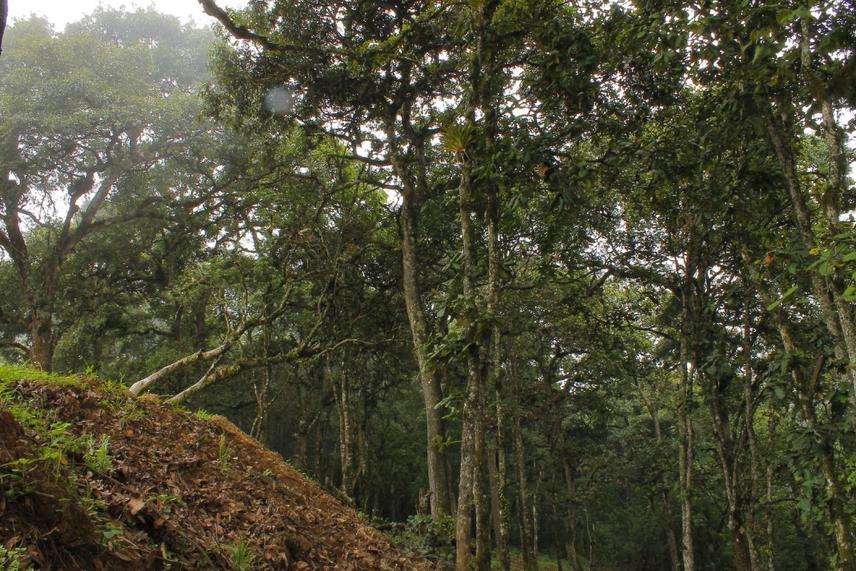
Cloud forest where Mexican Alligator lizards live. © Brasil Canales-Gordillo / FES Iztacala
This project addresses these challenges through five interconnected goals.
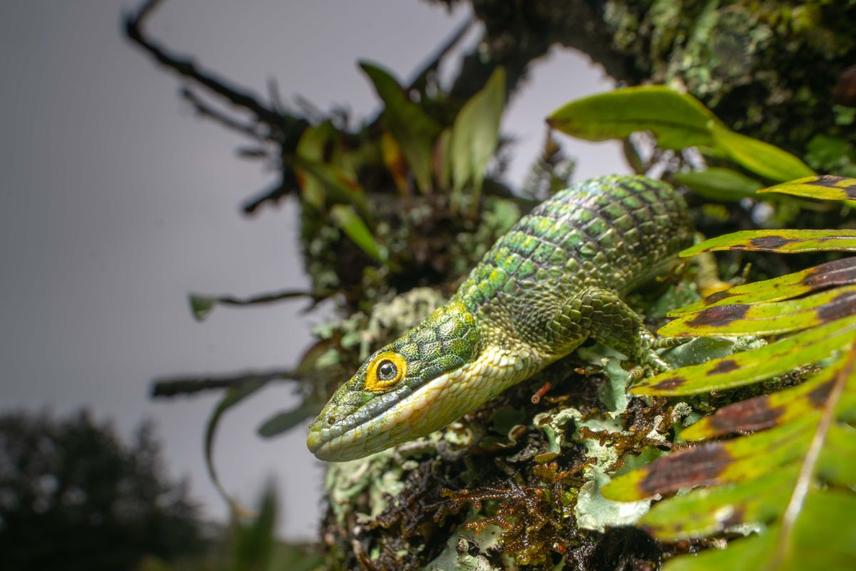
Mexican alligator lizard perched on epiphytic vegetation in Veracruz, Mexico. © Zahir Santillan / FES Iztacala
- Quantifying habitat degradation effects: We will compare degraded and pristine populations of A. graminea, modelling abundance, growth, survival, litter size, and recruitment. Using these data, we will construct integral projection models (IPMs) to estimate population growth rates. Perturbation analyses will identify the demographic processes most critical for persistence. Additionally, life table response experiments (LTREs) will reveal which vital rates explain differences between populations.
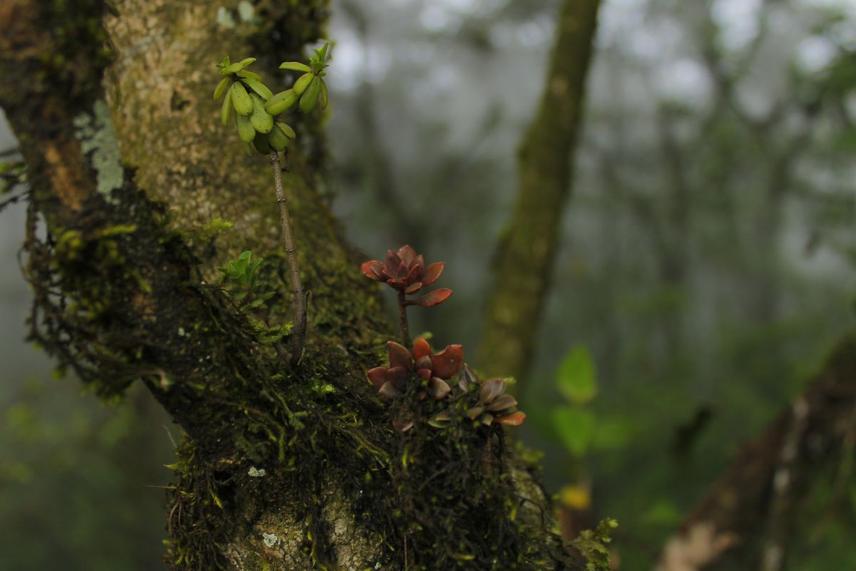
Epiphytes on a tree, some of them succulents from the Echeveria genus. © Brasil Canales-Gordillo / FES Iztacala
- Understanding poaching dynamics: A sociological study will be conducted using snowball sampling to gather information on poaching activities and assess their impact.
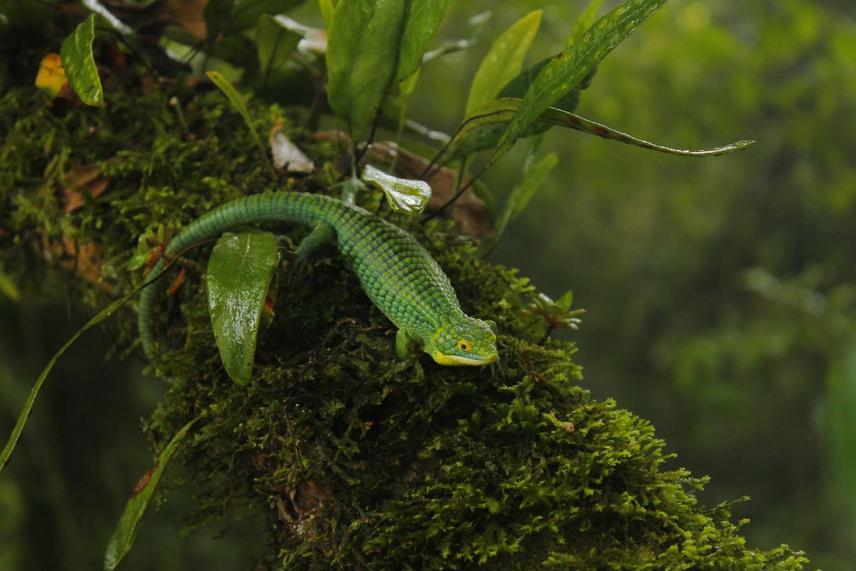
A female pregnant Mexican alligator lizard on a tree covered by epiphytes. © Brasil Canales-Gordillo / FES Iztacala
- Modelling poaching effects: Data from questionnaires will be incorporated into IPMs by “removing” individuals to simulate poaching pressure. We will test scenarios of random versus selective poaching, focusing on whether targeting specific size classes (e.g., adults) has stronger consequences for population growth.
- Changing perceptions in future generations: Field observations suggest that adults are resistant to altering their views on poaching. Therefore, we will focus on children and adolescents through school workshops. Activities will highlight the importance of biodiversity, forests, and A. graminea. Students will also learn to identify local plants and animals, laying the foundation for ecotourism initiatives.
- Science communication and outreach: To broaden impact, we will produce a short documentary showcasing the project’s process, the role of A. graminea, and the potential of ecotourism as a conservation strategy.
By integrating ecological modelling, sociological research, education, and outreach, this project aims to generate actionable knowledge for conserving A. graminea and its cloud forest habitat, while fostering community engagement and sustainable alternatives to poaching.