Armel Morona Flogène Mahevitra


The coastal waters of Nosy Be, north-western Madagascar, constitute a key feeding ground for whale sharks (Rhincodon typus), which are attracted by high prey availability during the warm season, from September to December. During this period, whale sharks are frequently observed (in 98% of cases) in association with mackerel tuna (Euthynnus affinis) and seabirds (Sternidae), feeding on schools of baitfish (Diamant et al., 2021).
This seasonal presence has driven the development of a thriving ecotourism industry, attracting more than 8,000 visitors in 2019 and generating approximately USD 1.5 million for the local economy (Ziegler et al., 2021). However, since 2022, an alarming decline in the number of whale sharks observed at Nosy Be has been recorded: 147 individuals in 2019, 108 in 2022, 88 in 2023, 42 in 2024, and only 38 in 2025 (Madagascar Whale Shark Project Report, 2025).
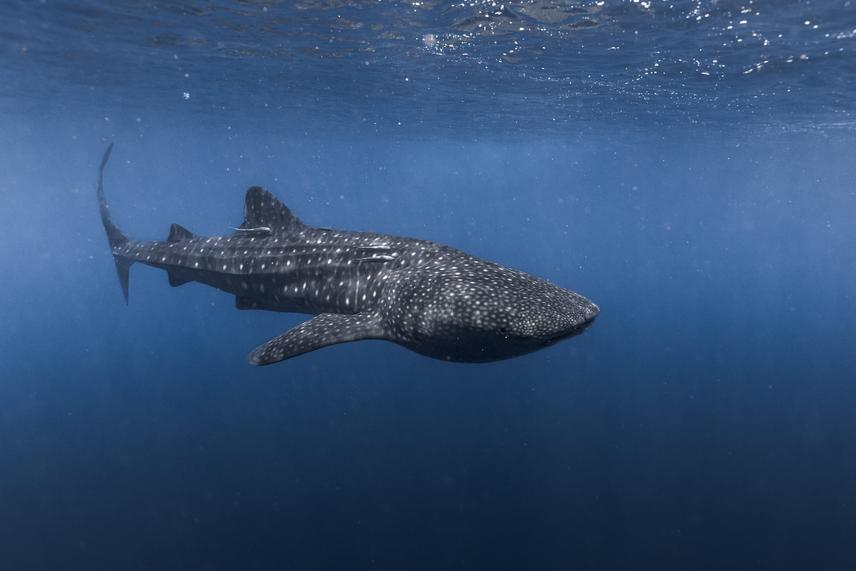
A photograph of a whale shark (Rhincodon typus) taken in the marine waters of Nosy Be, Madagascar, in October 2025 © Anthony Colas
The causes of this decline remain poorly understood. Three main hypotheses are currently considered: (i) changes in environmental parameters (water temperature, salinity, chlorophyll-a concentration, and ocean currents), (ii) a decrease in prey availability, and (iii) the impacts of human activities, particularly tourism and fishing.
To date, no comprehensive study has examined the combined influence of these factors on whale shark occurrence at Nosy Be. This project aims to address this knowledge gap by providing key data on prey availability, associated environmental conditions, and human pressures, in order to improve understanding of the drivers of whale shark presence and to support the development of appropriate conservation measures.
To achieve these objectives, 26 boat-based surveys will be conducted during the warm season, from September to December 2026, using a 10-m vessel to observe and collect data on whale shark occurrence. These occurrence data will be integrated with satellite-derived environmental parameters collected over the same period. In parallel, prey availability and composition will be assessed through the sampling of baitfish and zooplankton during the same surveys.
A total of 20 sampling sessions will be conducted for each prey type, evenly distributed between areas with and without whale shark presence. Finally, anthropogenic impacts will be assessed through direct observations of tourism activities, surveys on incidental whale shark catches, and monitoring of local fishing practices targeting their main food resources, particularly baitfish.