Andrés Ramos Roldán


The cloud forests on the foothills of Cofre de Perote, in central Veracruz, Mexico, have lost an estimated 90% of their original extent to agriculture, real estate expansion, illegal charcoal production, and increasingly frequent wildfires. Within the fragments that remain grows a striking group of orchids from three unrelated lineages, Acineta, Mormodes, and Lepanthes, each of which has independently evolved golden colouration. Despite their rarity and restricted ranges, none have been assessed for the IUCN Red List, and basic ecological data on them are largely absent.
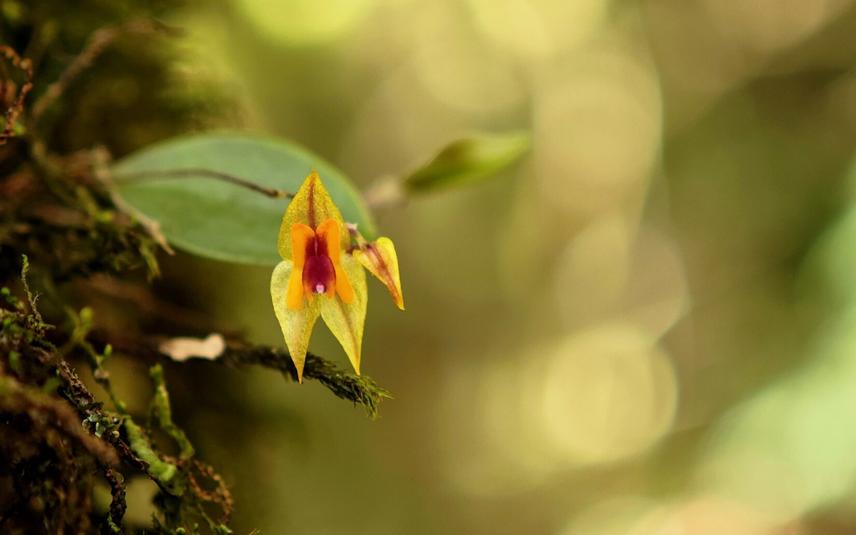
Lepanthes salvaterrae in situ in the Cofre de perote. © Andrés Ramos
El Oro del Cofre works to change that. Over twelve months we will survey the orchid populations that persist across these forest fragments, recording where each species grows, on which host trees, and under what canopy conditions. This fieldwork will produce the first systematic baseline for the target species and support formal IUCN Red List assessments for at least two of them, the first global conservation evaluations these orchids have ever received.
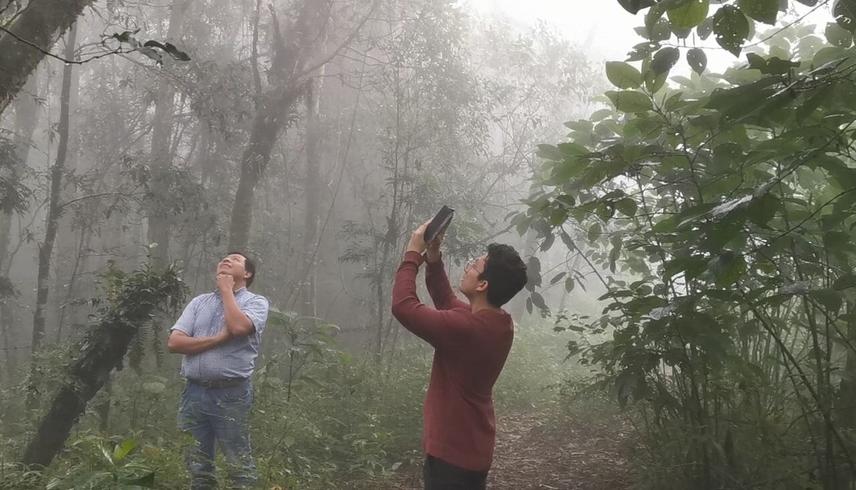
Surveying epiphytic orchids on host trees during fieldwork. © Orchidarc
The project pairs this survey work with direct conservation action at the Orchidarc Reserve, a protected cloud forest site we manage within the study area. The reserve holds around fifty native orchid species, three of them listed as endangered on Mexico's national Red List, and includes the mature riparian forest that Acineta depends on. There we are propagating Acineta barkeri from existing stock and running monitored reintroduction trials in protected habitat where illegal collection and clearance are controlled. Mormodes populations are being monitored to build baselines, while our work on the micro-endemic Lepanthes focuses on genetic sampling and taxonomic resolution, feeding an international phylogenomic collaboration.
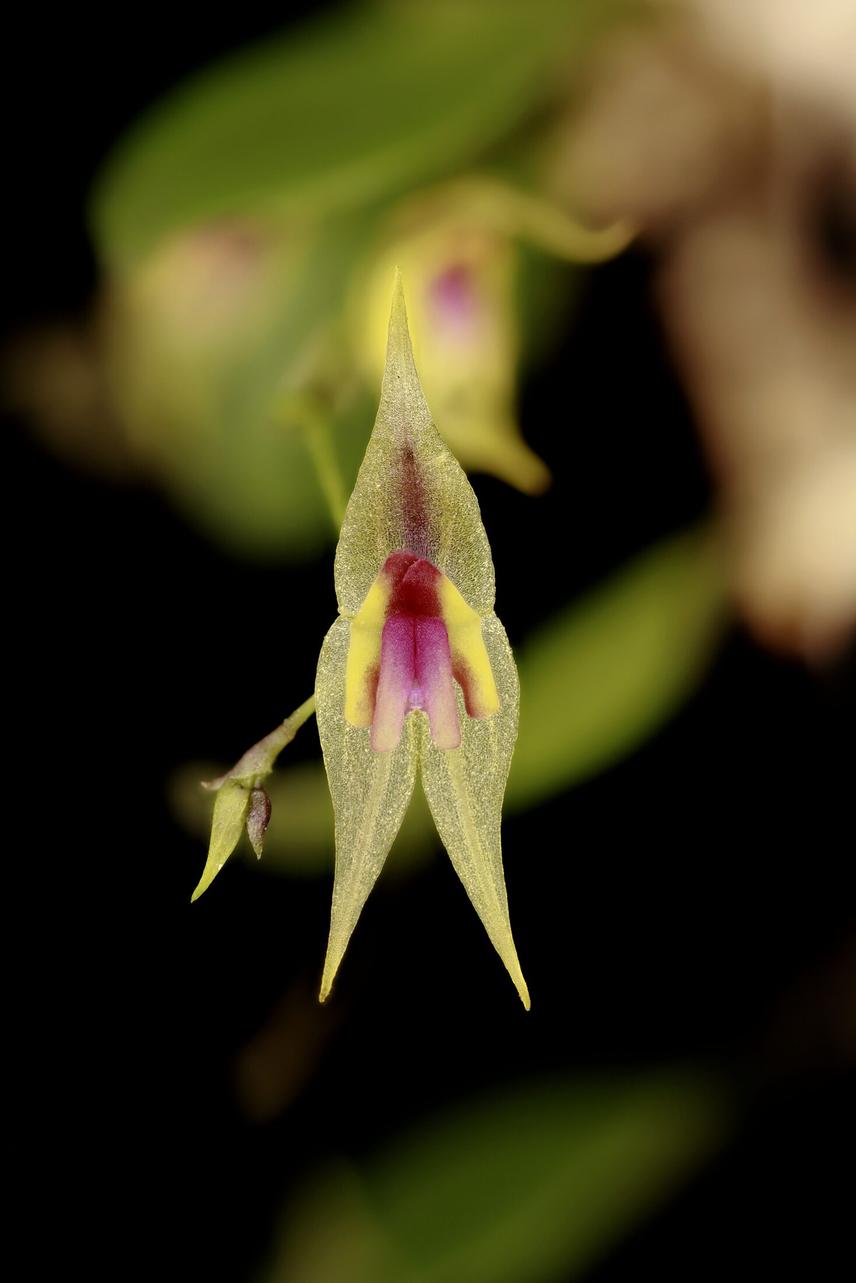
A micro-endemic Lepanthes from the study region © Andres Ramos
The human side matters just as much. The project supports and trains a core field collaborator as an independent survey lead and IUCN Red List assessor, building lasting capacity in a region that has very few, and it formalises our long-standing relationships with local ejido landholders, whose stewardship is essential to any conservation that outlasts the grant. Our aim is durable: permanent Red List assessments, a trained local team, and secured populations of some of Mexico's most threatened orchids.