Agriphina Machaninga

Other projects
18 Mar 2024
Fostering Human-Elephant Coexistence in Villages Surrounding Tarangire National Park

Tarangire National Park, located in northern Tanzania, hosts one of the largest populations of African savannah elephants (Loxodonta africana). While this makes it a critical conservation landscape, it also creates challenges for local communities, as elephants frequently raid crops and damage property. Human-elephant conflict (HEC) has therefore become a pressing issue, threatening both livelihoods and conservation.
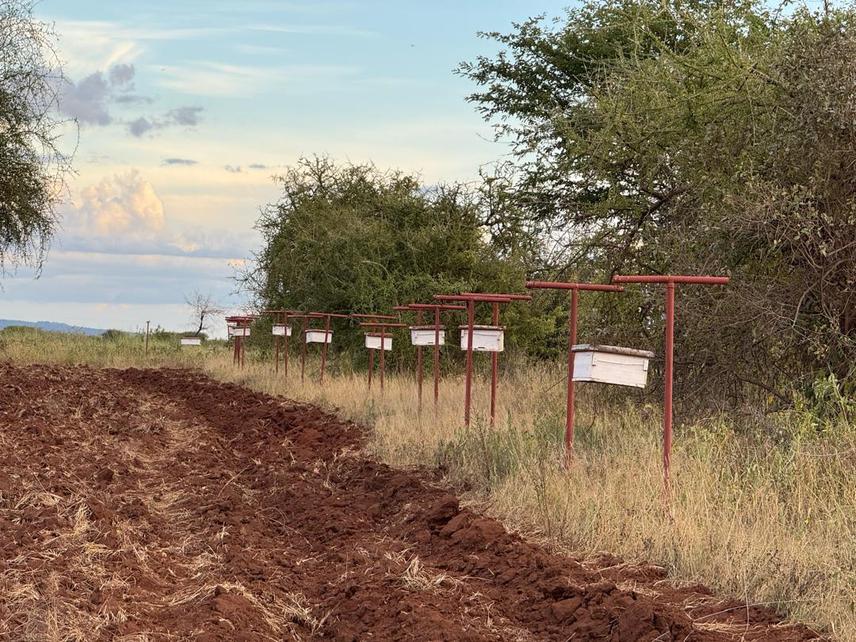
Beehive fence picture taken during the dry season, showing the arrangement and design of hives strategically placed along the boundary to deter elephants. © Kaiza Rutachwamagyo Kaganzi
Building on the success of a first Rufford-funded project, which introduced beehive fences as a natural and community-friendly deterrent, this second phase aims to monitor and enhance long-term coexistence solutions. The project focuses on three complementary strategies:
a) Monitoring and Strengthening Beehive Fences by assessing their effectiveness through camera traps, field data collection, and community monitoring to refine and sustain this eco-friendly deterrent.
b) Introducing Chilli-Based Elephant Deterrents through training women’s groups and schoolchildren on how to prepare and apply chilli grease, bricks, and rope barriers. These methods are low-cost, locally sourced, and empower vulnerable community members to actively protect their crops.
c) Supporting Community-Based Honey Enterprises by strengthening the Community-Based Organization (CBO) formed in the first phase by improving honey value addition, branding, and marketing. This will provide sustainable income, linking conservation directly to improved livelihoods.
The initiative reduces retaliatory killings of elephants by offering non-lethal, practical solutions to conflict while also empowering communities with skills and economic incentives. By integrating ecological monitoring, education, and enterprise development, the project fosters long-term coexistence between humans and elephants.
In addition to supporting conservation outcomes, the project contributes to the implementation of Tanzania’s Human-Elephant Coexistence Strategy (2020–2024), which emphasizes community-driven, multi-pronged approaches. The knowledge and evidence generated will be shared locally through workshops, nationally at conferences such as TAWIRI, and internationally via scientific publications and online platforms.
Ultimately, this project demonstrates how conservation and community development can be intertwined to promote resilience, reduce conflict, and ensure the survival of endangered species alongside thriving rural communities.