Adela Hemelikova


Pulau Banyak, off the west coast of Sumatra, is one of the most important marine conservation areas in western Indonesia. Its coral reefs, seagrass meadows, mangroves and remote beaches support threatened marine megafauna, including green turtles, hawksbill turtles and dugongs.
Long-term conservation work in the archipelago has already strengthened protection of nesting beaches and helped reduce illegal turtle egg take. As for sea turtle research several activities (identification of genetic nesting stocks, nesting ecology, satellite telemetry) have been done as part of the two projects supported by Rufford Foundation. However, much less is known about what happens beyond the beaches, where turtles and dugongs forage, move and face threats at sea.
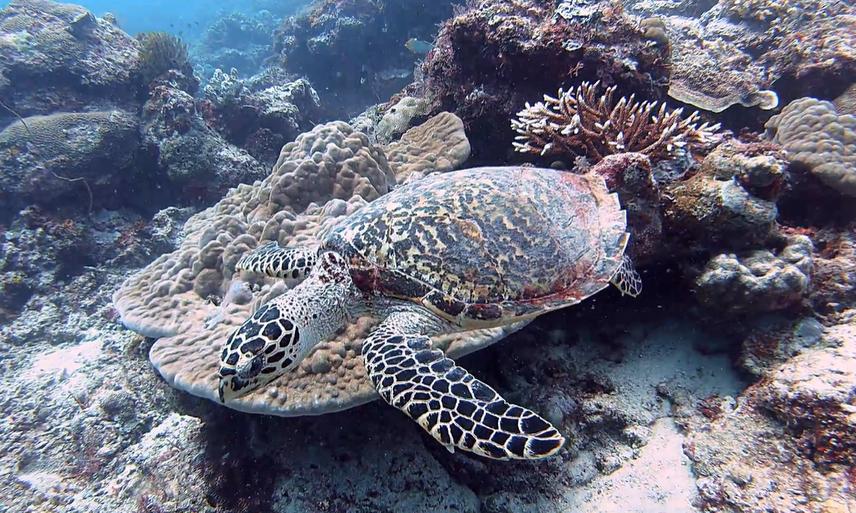
Juvenile and adult hawksbill turtles are commonly found in the local coral reefs (c) Pavel Zoubek
This project will expand conservation from nesting beaches to critical foraging habitats in Pulau Banyak (Aceh Province), and neighbouring waters of South Nias (North Sumatra Province). Using standardized drone surveys, habitat assessments and a pilot capture-mark-recapture study, the project will generate the first systematic baseline data on the at-sea distribution, habitat use and population demography of sea turtles and dugongs in these areas. These data will help identify important foraging sites, improve understanding of ecological connectivity between nesting and feeding areas, and support science-based conservation planning.
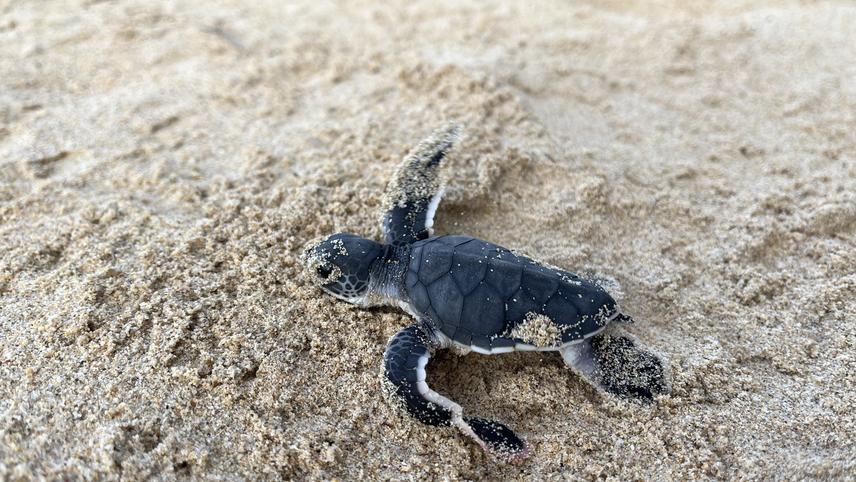
The archipelago is one of the most important nesting sites of green turtles in the region (c) Adela Hemelikova
The project will also strengthen protection at sea. Regular monitoring presence will help deter potential illegal fishing, bycatch and targeted capture of protected species, while observations will be shared with local authorities and integrated into existing conservation and response systems. The work will build on established local partnerships.
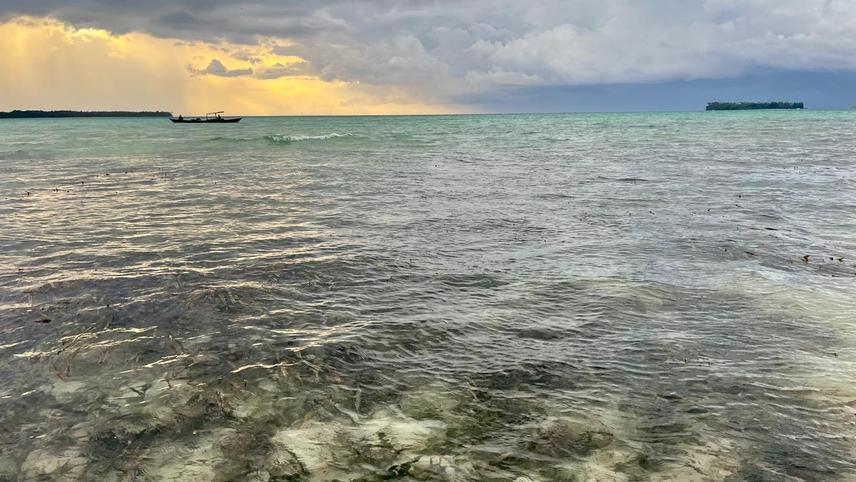
Seagrass meadows are important for both sea turtles and dugongs for feeding (c) Adela Hemelikova
A central aim is to create long-term local capacity. Fishers, students, government representatives and local conservation staff will be trained in drone monitoring, species identification, data collection and turtle capture-mark-recapture methods. By involving the people who depend on and manage these waters, the project will strengthen stewardship, create conservation-linked livelihood opportunities and provide a sustainable foundation for long-term community-led conservation of marine megafauna and the coral reef and seagrass habitats they depend on.