Sara Arsenijević


Bats are effective bioindicators due to their ecology and their ability to accumulate pollutants. Their health and population trends reflect overall ecosystem integrity, making them valuable bioindicators for monitoring the impacts of environmental contamination.
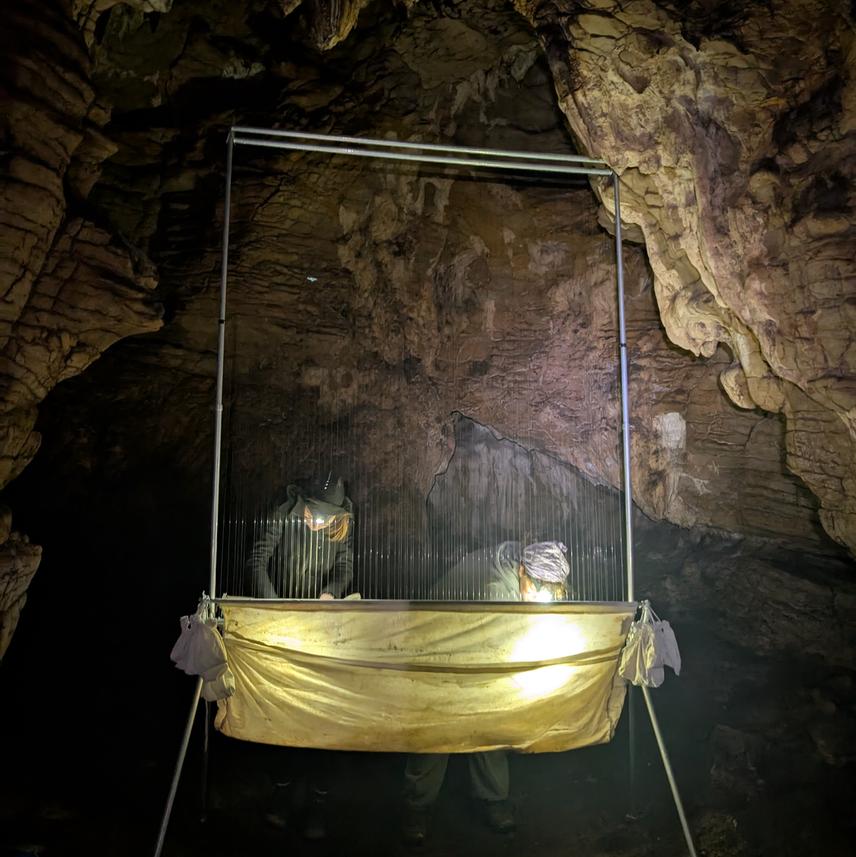
Team members with a harp trap for bat capture ©Jelena Burazerović
This project focuses on Miniopterus schreibersii (Schreiber's Bent-winged Bat), a cave-dwelling bat widely distributed across the Balkans. This species is listed as Vulnerable on the IUCN Red List, reflecting the threats it faces from habitat loss, disturbance, and environmental pollution. In Serbia, large colonies inhabit caves that are often located near mines, quarries, or industrial zones, making them particularly exposed to anthropogenic impact. The aim of the project is to determine the degree and seasonal dynamics of exposure to contaminants in these populations, providing valuable insights into regional conservation challenges.
By measuring the bioaccumulation of toxic elements and assessing potential genotoxic effects, parasite load, and immune responses, the project will provide an integrated evaluation of bat health under anthropogenic pressure.
The expected outcomes will confirm the role of Miniopterus schreibersii as potential bioindicator species, underlining the need for long-term monitoring of its populations in pollution-exposed areas. Beyond advancing scientific knowledge, the project emphasises biodiversity conservation and sustainable resource management, showing how bat research contributes to ecosystem protection and environmental awareness. It will also deepen understanding
of pollution’s effects on bats and support conservation planning by providing recommendations to cave managers and authorities to mitigate environmental impact.